
Acropolis of Lindos
- Where
- Rhodes, Aegean
- Directions
- Directions
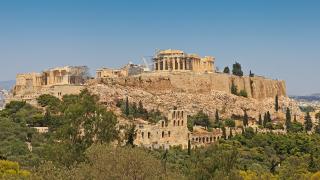
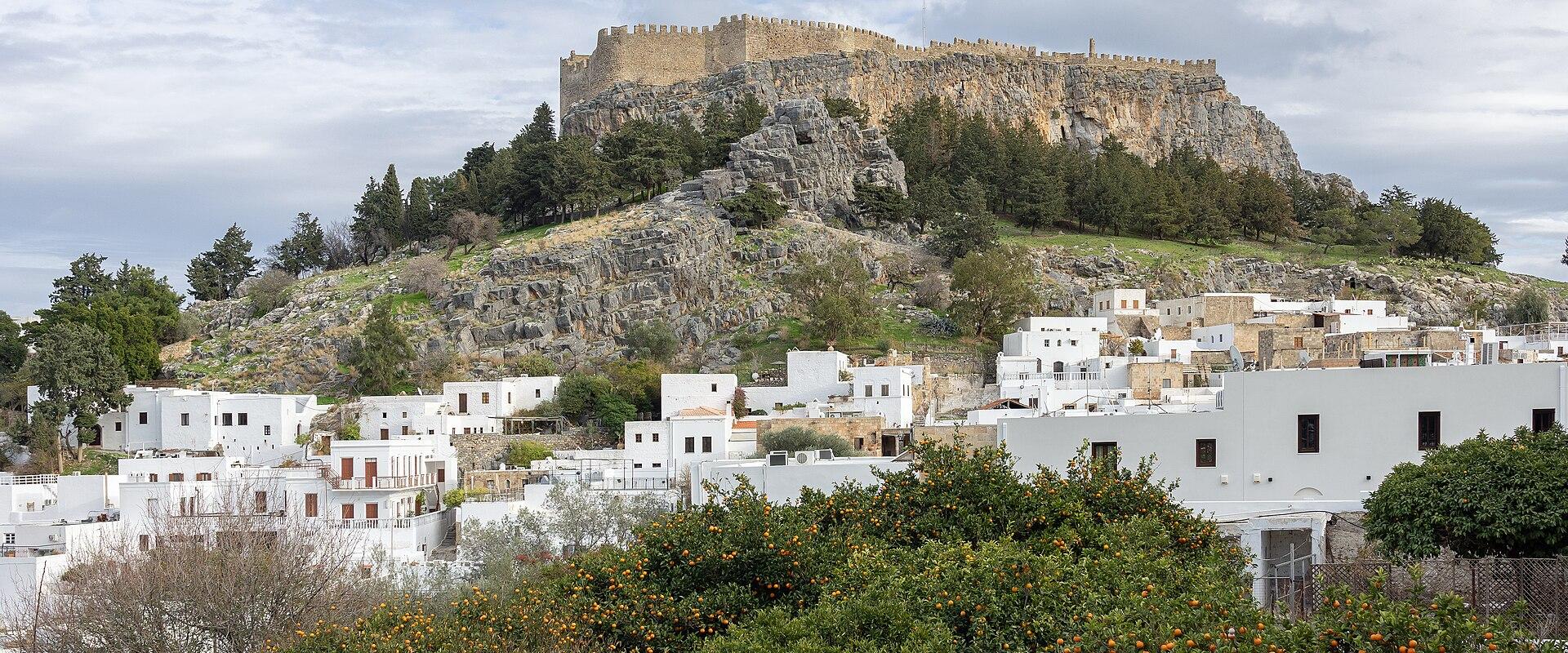
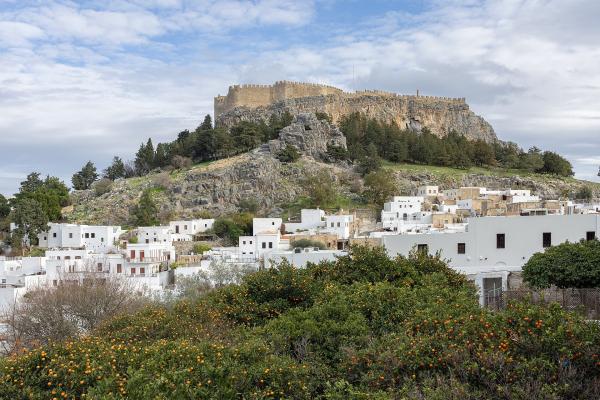
The Acropolis of Lindos is a limestone crag rising roughly 116 metres above the sea on the eastern coast of Rhodes’ island, with the whitewashed village of Lindos spread out at its foot. Lindos was one of the three ancient cities of Rhodes, founded by the Dorians, and its sanctuary of Athena Lindia was famous across the Greek world long before the island's cities merged into the city of Rhodes in 408 BC. The sculptor Chares, creator of the Colossus of Rhodes, was a native of Lindos. During the siege of Rhodes by Demetrius Poliorcetes at the end of the fourth century BC, the island's cities stood together and held out, and the later monuments here reflect that wealth and confidence.
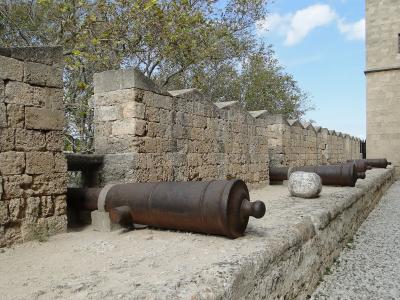
The climb begins in the village, along a steep stepped path that most people walk, though donkeys have long carried those who prefer not to. Near the foot, an ancient rock-cut relief of the stern of a ship, carved in the second century BC, sits on the cliff beside the path. Higher up, the walls of the medieval fortress built by the Knights Hospitallers wrap around the summit, and inside them you pass through a succession of layers: a Byzantine chapel dedicated to Saint John, the Knights' headquarters buildings, and finally the ancient sanctuary itself.
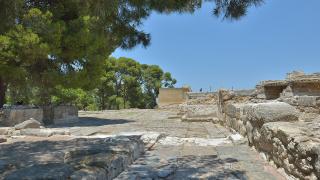
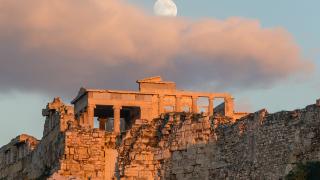
The ancient parts are what give the hill its character. A broad stairway leads up to a grand entrance, the Propylaia, and beyond it stands the Doric Temple of Athena Lindia, rebuilt in the fourth century BC after an earlier temple burned. A long colonnaded stoa, shaped like an L, runs along the front of the platform in the Hellenistic style, and its columns frame the sea below. The temple platform is small, but the height and the sea beyond it make it feel monumental.
The view is superb in every direction. To the east lies the open Aegean Sea, and just beside the village below is the round harbour known as Saint Paul's Bay, a sheltered inlet where tradition says the apostle landed. The coast to the south curves toward Pefki and Lardos, and on clear days Turkey's coast and the neighbouring islands are visible.
Practical advice matters here. Shade is scarce, the stone steps are polished and slippery, and the Rhodian summer sun is strong, so early morning or late afternoon is more comfortable than midday, when tour groups from the nearby coach parks arrive. Good shoes, water and a hat are sensible, and the site has its own entrance and rules separate from the village lanes, which are full of shops and tavernas. Anyone interested in the Dodecanese and its layered past will find in Lindos a compact, readable example of how Dorian, Hellenistic and medieval history sit on one hill.
Categories
More photos coming soon
Nearby Attractions
Other places to visit in Rhodes
Questions people ask
Quick Facts
Best Time to Visit
May to June and September to October offer warm, pleasant weather with fewer crowds for ideal sightseeing and beach relaxation.