







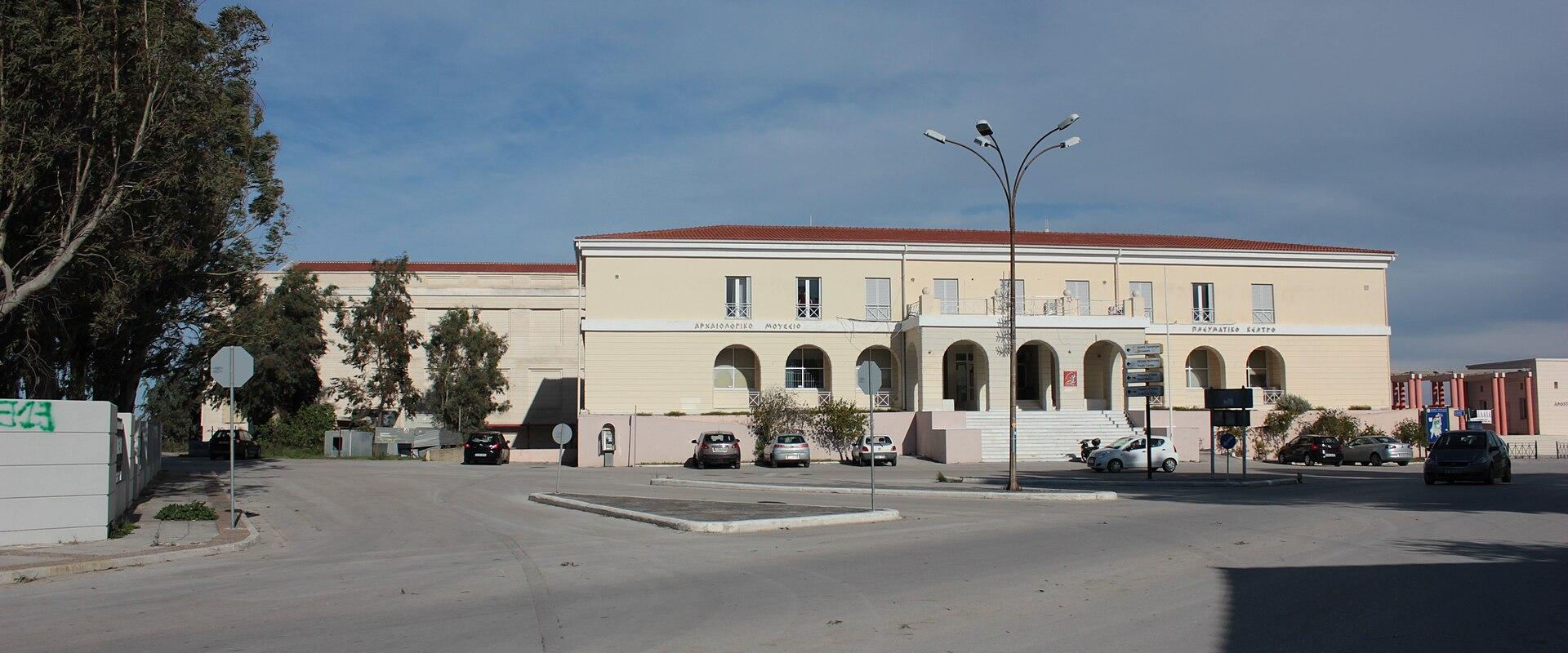
Lefkada Archaeological Museum
- Where
- Lefkada, Ionian Islands
- Directions
- Directions
The Archaeological Museum of Lefkada is housed in a modern building near the seafront promenade of Lefkada Town, close to the lagoon and the floating bridge at the start of the causeway. It is a compact museum, and it shows what the archaeology of a small island can reveal about its place in the ancient world. The collection covers many thousands of years, from the Middle Paleolithic period, when early hunters used the caves and hills of the Ionian region, to the late Roman era, so a visit takes you through a long sweep of local history in a short time.
The most famous name in Lefkada's archaeology is Wilhelm Dörpfeld, the German archaeologist who worked with Heinrich Schliemann at Troy and later excavated in Greece. Dörpfeld came to Lefkada in the early twentieth century, convinced that the island was the Ithaca of Homer's Odyssey, and he spent years excavating on the island, mainly in the area of Nidri, on the east coast. The idea that Lefkada, and not the modern island called Ithaki, was Homer's Ithaca is still debated, and most scholars reject it, but his work uncovered important Early Bronze Age graves and settlements, and the museum devotes a room to his excavations and finds. Dörpfeld remained attached to the island, lived there in his later years, and is buried at Nidri.
Other galleries show the later history. Visitors can see painted pottery, bronze tools, jewellery, coins, lamps and sculpture from the Greek, Hellenistic and Roman periods, many from the ancient city of Lefkas on the mainland coast, and from cemeteries around the island. Small objects, such as terracotta figurines and glass bottles, give a feeling of daily life, while inscriptions and burial gifts hint at beliefs and customs.
The museum is small and uncrowded, and a visit usually takes less than an hour. It can be combined with a walk through the old town and along the lagoon, where fishermen and herons are a common sight, and with the Santa Maura fortress at the head of the causeway. For travellers interested in the Homer debate, it offers a view of how a theory shaped the exploration of an island, and it also provides context for the island's beaches and villages.
Opening days and times follow the Ministry of Culture's schedule, with a weekly closing day and closures on national holidays, so check before going. Tickets are inexpensive, and labels are in Greek and English. The museum is a good choice on a hot afternoon or a windy day.
Categories
More photos coming soon
Nearby Attractions
Other places to visit in Lefkada
Questions people ask
Quick Facts
Best Time to Visit
May to October offers warm, dry weather ideal for swimming and exploring.