
- Where
- Mykonos, Aegean
- Directions
- Directions
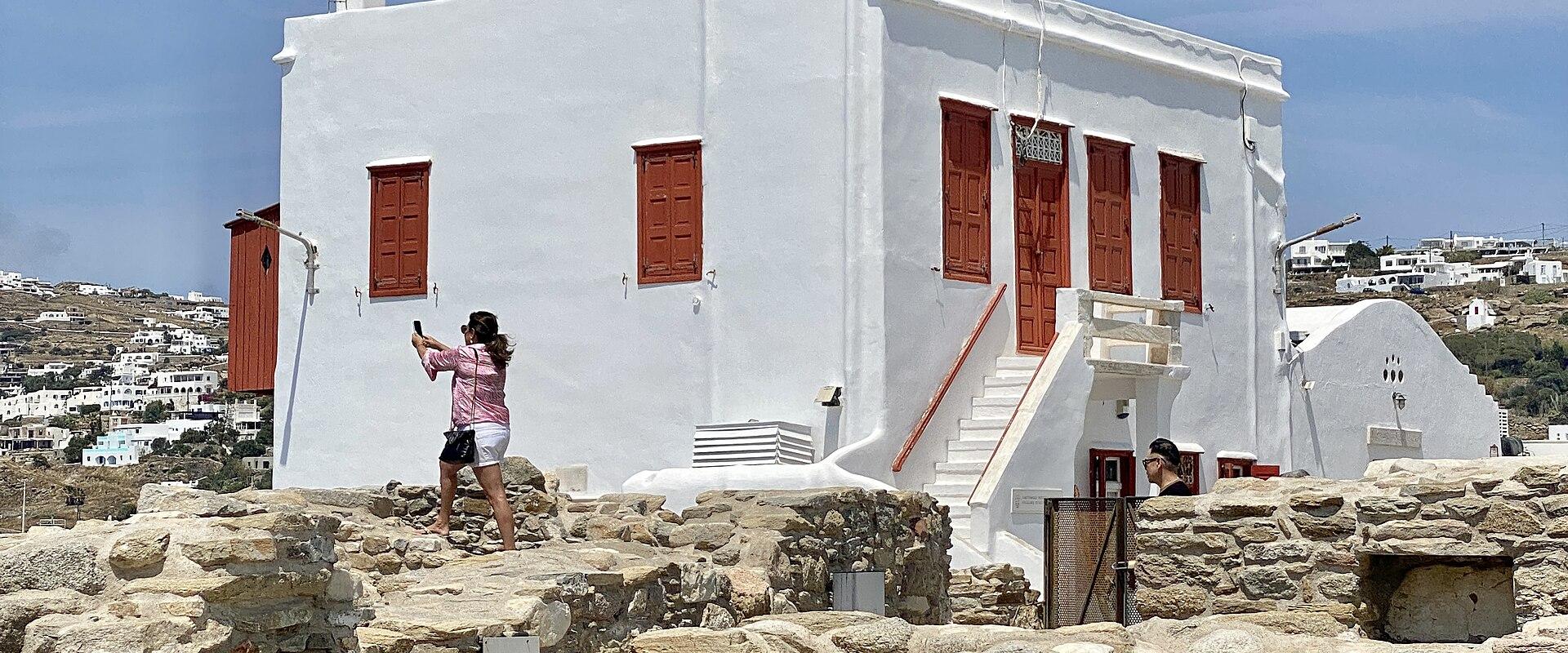
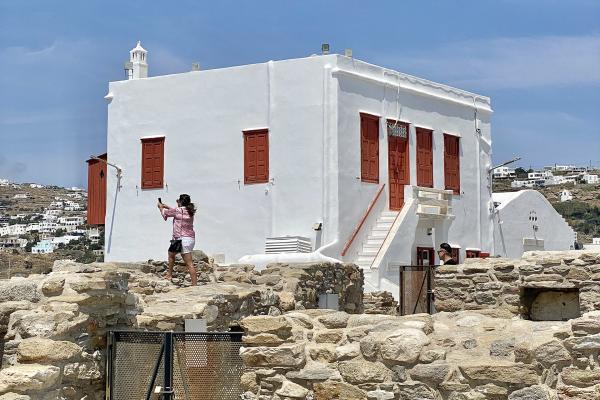
Whitewash is what makes Mykonos Town, or Chora, look the way it does. Houses, chapels, steps, courtyards and even the edges of the pavements are painted in lime wash, and the result is a continuous pale surface that catches the light from morning to dusk. The wash is applied with a brush and renewed regularly, and it has practical value, since lime reflects heat and works as a mild disinfectant. Doors, shutters and balconies are picked out in blue, green, red or brown, a custom shared across the Cycladic islands.
The lanes of Chora twist and branch with no obvious grid, and many of them end at a courtyard or in a blind alley. Local tradition says they were laid out to confuse pirates who raided the Aegean in earlier centuries, and a second reason is likely to be shelter from the strong meltemi wind that blows across the island in summer. Whichever explanation you prefer, the effect is intimate: you can walk for ten minutes and keep reaching a corner you have not seen. The rounded edges of the walls and the stepped streets are part of the style.
Look for the details. Flat roofs with low parapets were built to collect rainwater, outdoor staircases lead to upper floors, and small chapels with domes sit at corners. Pots of flowers and bougainvillea spill over the walls, adding colour to the white. The area has around four hundred chapels across the island, many of them private family chapels, and several are found within the town. Panagia Paraportiani, near the waterfront, is the best known, a cluster of whitewashed chapels merged into one irregular form.
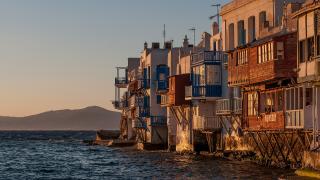
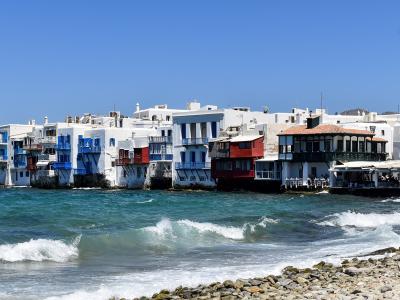
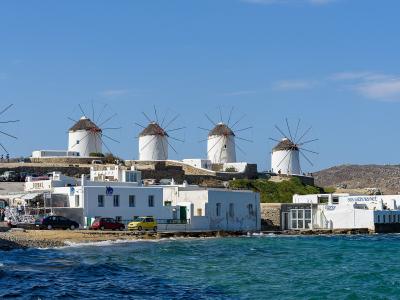
The lanes also hold boutiques, galleries and cafes, so the town is as much a place to browse as to admire architecture. On the seafront, Little Venice has the older merchant houses at the water's edge, and the row of windmills at Kato Mili stands on the ridge above. The Old Port, in front of the town, gives a good starting point for a walk.
Early morning is the quietest time, with shopkeepers hosing down the pavements and sunlight raking across the walls. In midsummer the lanes fill by midday and are crowded in the evening. Floors are marble or stone and can be slippery, and in the labyrinth the best strategy is to walk without a plan, since every route ends up near the water.
Categories
More photos coming soon
Nearby Attractions
Other places to visit in Mykonos

Questions people ask
Quick Facts
Best Time to Visit
May through September offers warm, dry weather ideal for swimming and exploring.