
- Where
- Naxos, Aegean
- Directions
- Directions
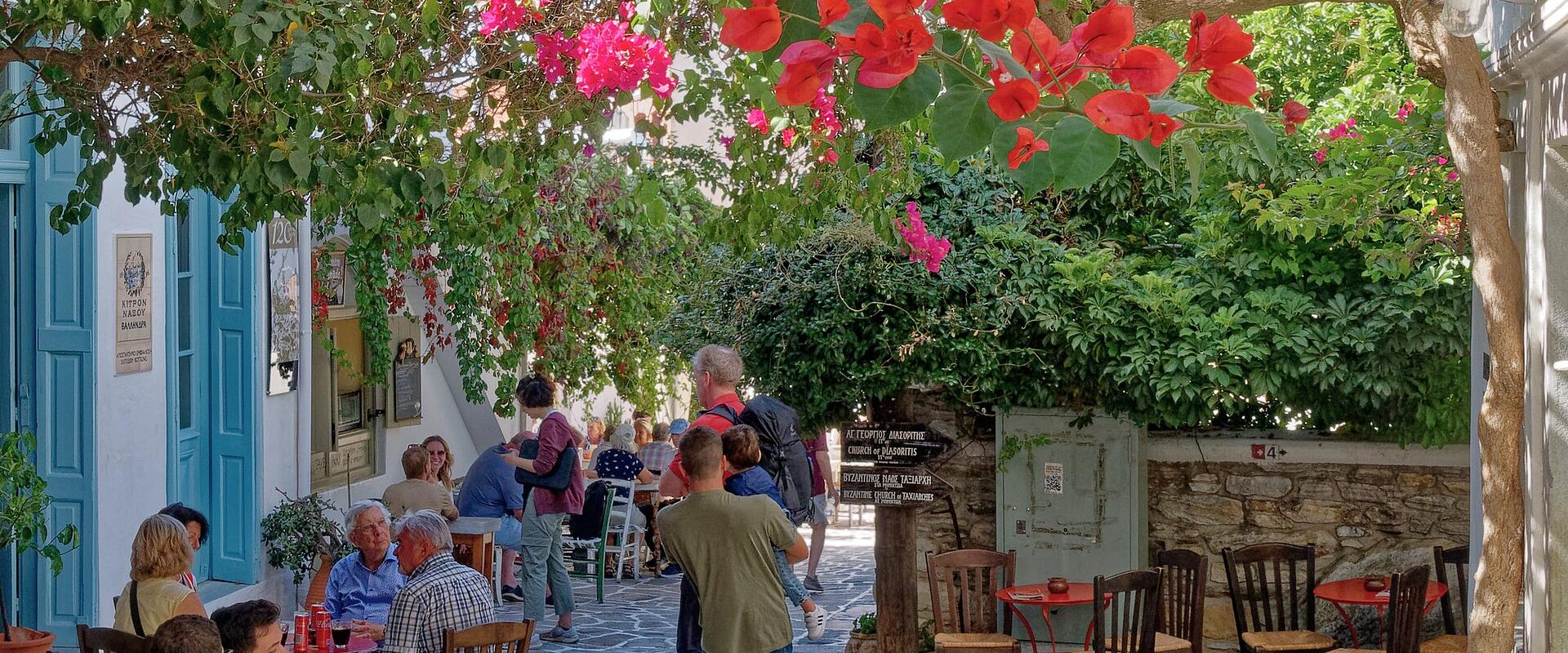
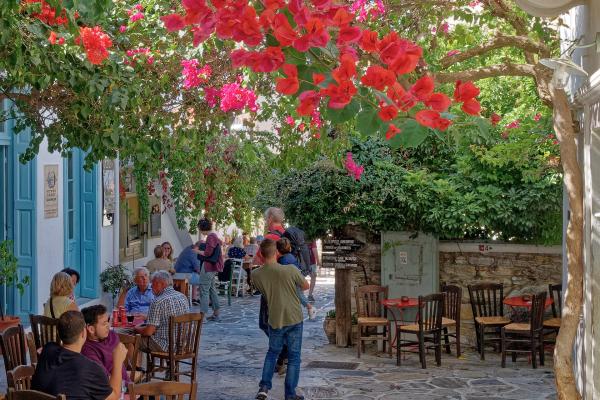
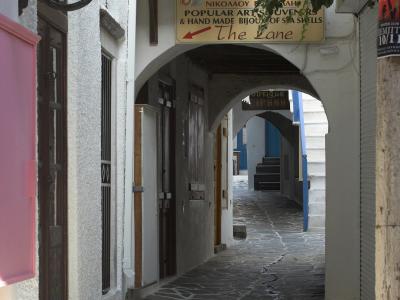
Apeiranthos is a mountain village on the slopes of Mount Fanari, on Naxos, at an altitude of roughly 600 metres, and it has a very different feel from the seaside towns below. The lanes, steps and squares are paved with grey and white marble from the island's own quarries, polished by centuries of footsteps, and houses are built of stone, many with stone towers and arched passageways. The marble lanes shine when wet, and the village feels more like a small mountain town on the Greek mainland than a typical island settlement.
Its history is shaped by refugees. In the seventeenth century, settlers from Crete arrived in the area, bringing their own customs, and the local dialect and some traditions still show Cretan influence. The village also grew behind the defences of Venetian towers, built when Naxos was part of the Duchy of the Archipelago, and some of these fortified houses remain, including the tower known as Zevgoli. The mix of Venetian, Cretan and Naxian traditions gives the place its character. One of its most famous sons was Manolis Glezos, the resistance fighter who, with a friend, tore down the Nazi flag from the Acropolis in 1941.
Apeiranthos has five small museums within easy walking distance, which is unusual for a village its size. They cover Archaeological, Geological, Natural History, Visual Arts and Folklore themes, and each is housed in an old building. Together they give a good picture of the island's ancient finds, its minerals and emery, its plants and animals, and the work of local artists, and they show how people lived in the mountains. Opening times vary through the year, so ask locally.
Walking is the best way to see the village. The main street, with its tavernas and cafes, runs along the slope, and side lanes branch off with staircases and doorways. Local sweets, cheese, honey and embroidery are sold in shops, and the tavernas serve dishes such as grilled meat and local cheeses. From the upper terraces you can see across the valley to the neighbouring peaks and, on clear days, the sea far below.
Apeiranthos sits about thirty kilometres from Naxos Town, and the drive climbs through the island's interior past villages such as Filoti and Halki. The air is cooler than on the coast, which is welcome in summer, but a light layer is useful in the evening. Shoes with grip are essential on the polished marble, particularly after rain.
Categories
More photos coming soon
Nearby Attractions
Other places to visit in Naxos
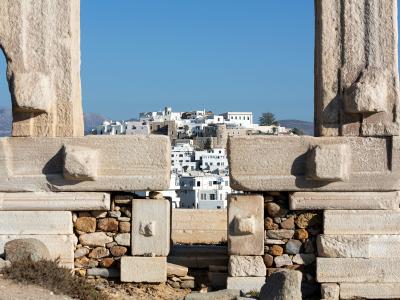
Portara
From €3 Ancient Ruins · Monuments
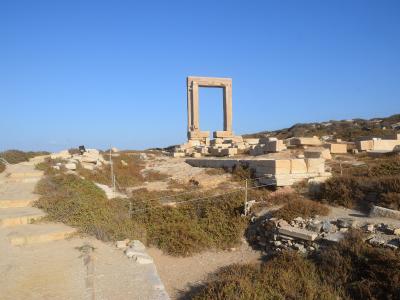
Porta (Portara) - Temple Of Apollo
Unfinished 6m marble temple in Naxos
Free Ancient Ruins · Monuments
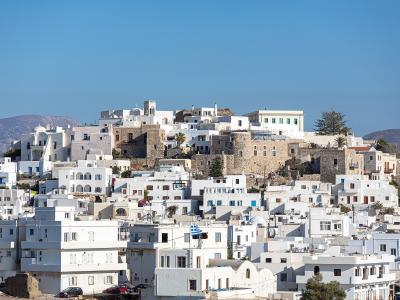
Kastro (Castle) Of Old Town
Venetian pentagonal fortress in Naxia, Chora
Castles · Fortifications
Naxos Town (Chora) / Old Town
13th-century Venetian fortress in the Greek isles
Castles · Historic Districts
Questions people ask
Quick Facts
Best Time to Visit
May to October offers warm, dry weather, with June and September ideal for fewer crowds.