







- Where
- Kefalonia, Ionian Islands
- Directions
- Directions
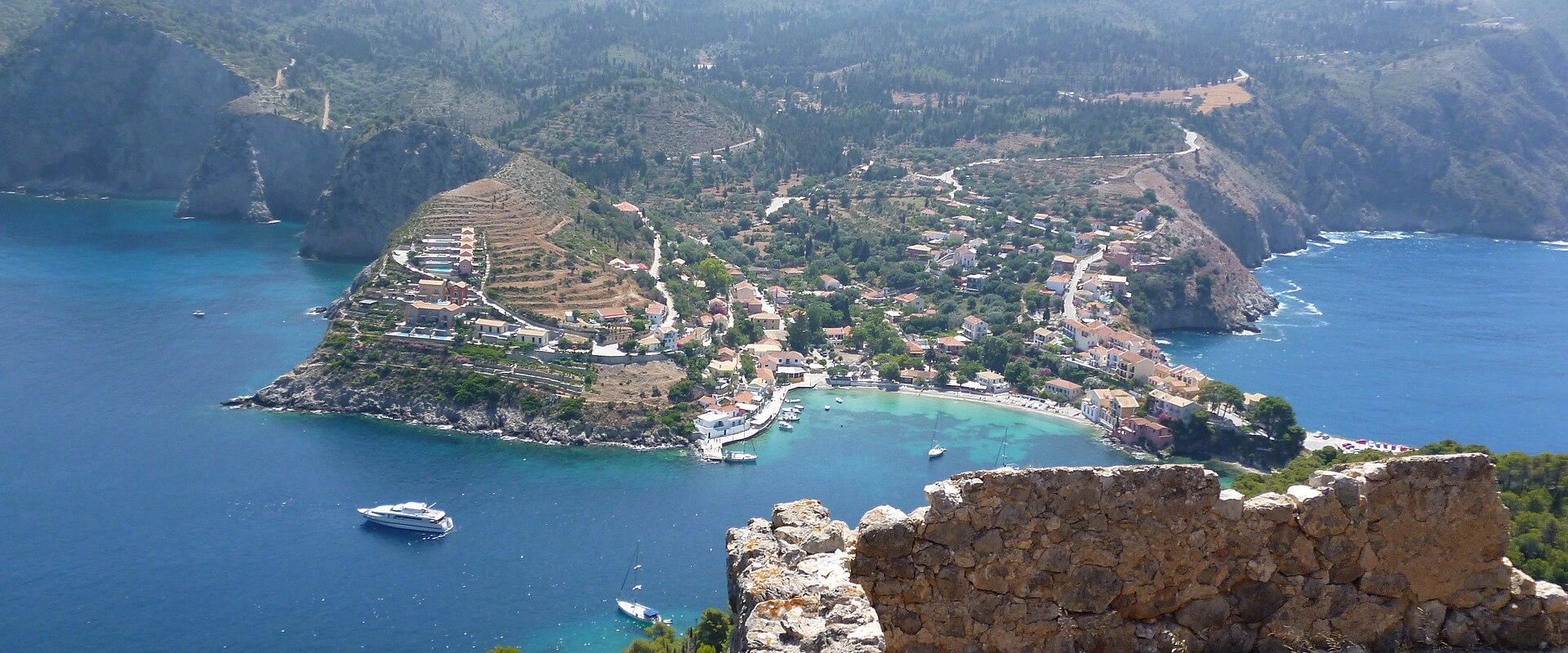
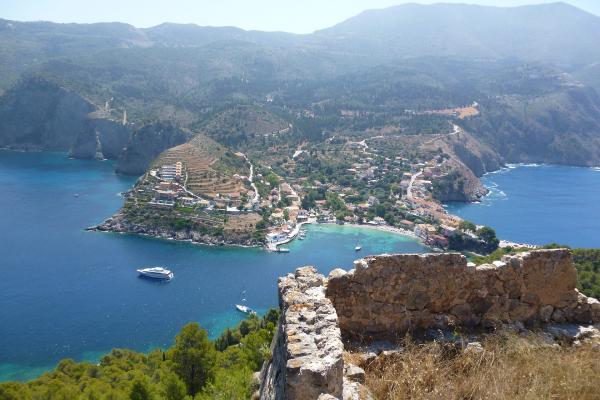
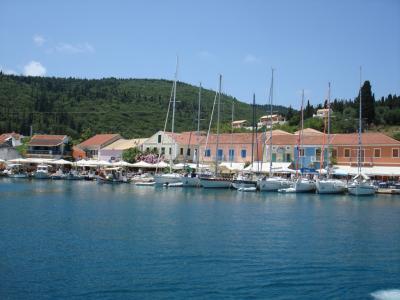
Assos sits on a narrow neck of land in northwest Kefalonia, a small village of pastel houses ringed by the sea and backed by a rocky hill topped with a Venetian fortress. The setting is one of the most photographed on the island: a sheltered bay with clear turquoise water, a harbour with a few tavernas, and a green peninsula that rises to the castle, joined to the mainland by a thin isthmus. The village is tiny, with only a few dozen year-round residents, and its quiet character is a large part of its appeal.
The houses are mostly low and brightly coloured, with ochre, pink and pale blue walls, red tiled roofs and bougainvillea spilling over gates and balconies. The architecture reflects the village's Venetian heritage and the rebuilding that followed the earthquake of 1953, which damaged much of the island, including Assos. The old lanes are short and narrow, leading from the harbour to a small square with a few cafes and shops, and a handful of older churches survive among the houses. A simple stroll along the quay, with boats moored beside the water, is enough to take in the place.
The fortress above the village was built by the Venetians in the late sixteenth century to protect the coast from pirates, and it was used for several centuries. Its walls enclose a large area of pine woodland on the hilltop, with the ruins of barracks, a church and storerooms. The path to the castle climbs for about a kilometre from the village, with views over the bay and across the Ionian Sea, and the walk takes between half an hour and an hour up and down. Few visitors go beyond the first stretch, so the upper part is often quiet.
Visitors may recognise the village from the film of Louis de Bernières’ novel Captain Corelli’s Mandoline, which was shot on Kefalonia, and adds to the sense of familiarity for those who know it. The beaches nearby include a small pebble beach by the harbour, and the great curve of Myrtos Beach lies a short drive to the south. Boat trips and kayaks are available in summer for those who want to see the coast from the water.
Assos is best visited early in the morning or in the evening, when tour buses have left, and a late lunch in a harbour taverna is a pleasant way to end the day. The road to the village is narrow and winding, so drive carefully.
Categories
More photos coming soon
Nearby Attractions
Other places to visit in Kefalonia
Questions people ask
Quick Facts
Best Time to Visit
May to October for warm, dry weather ideal for swimming and exploring.