







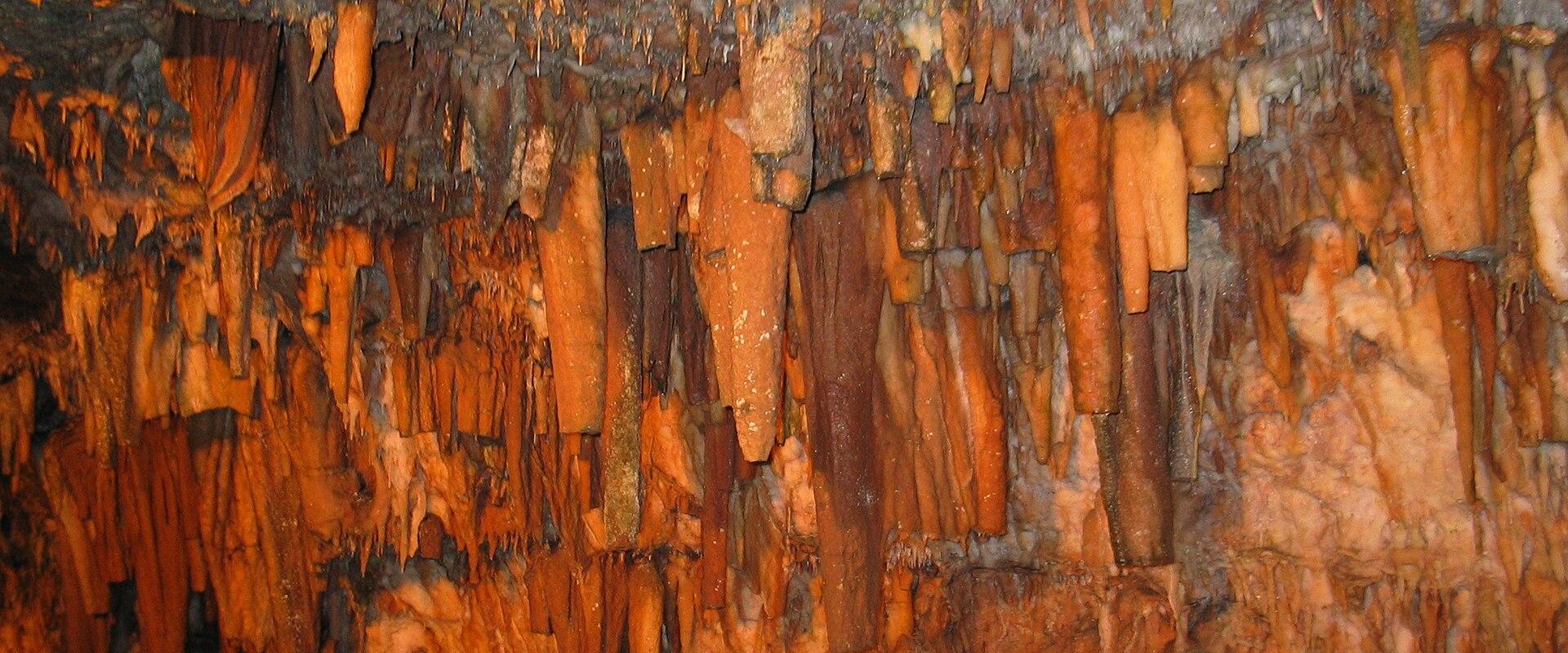
Drogarati Cave
- Where
- Kefalonia, Ionian Islands
- Directions
- Directions
A few kilometres from the harbour town of Sami on Kefalonia, a flight of steps leads down into Drogarati Cave, one of the best-known natural sights on the island. Unlike many caves that have always had an open mouth, this one stayed hidden for most of its history. The entrance was revealed by an earthquake roughly three centuries ago, which brought down part of the ground above the chamber, and the cave was explored and opened to the public much later.
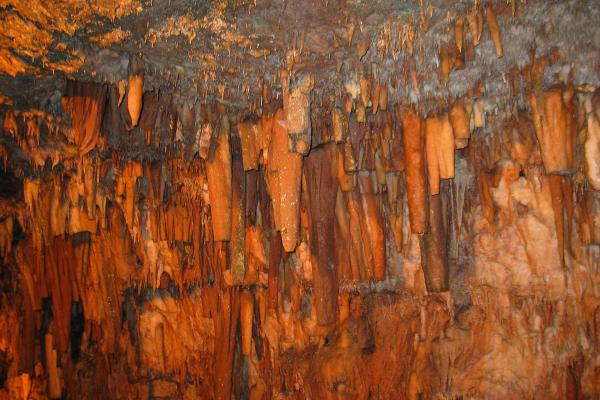
The route starts near the surface and drops by stairs to a depth of about sixty metres. At the bottom is a large, rounded hall with a high vaulted roof, filled with stalactites, stalagmites and thick curtains of limestone. The formations are said to have grown over an enormous span of time, and the cave is commonly described as around 150 million years old, though the speleothems themselves are far younger than the rock they hang from. The lighting picks out textures and colours in the stone, and the quiet, damp air gives the place a church-like stillness.
One part of the cave has a name of its own, the Royal Balcony, an upper gallery that looks down over the main hall. It is known for its acoustics, and concerts have been held in the cavern for decades because sound carries so cleanly through the open space. If your visit coincides with an event, you will find the hall set out with seating, but on an ordinary day the stairs and platforms are the only structures. Only a portion of the system is open, and the farther passages are kept closed to protect the formations.
The temperature stays cool and fairly constant through the year, so a light layer is useful in July even though the surface is hot. The steps can be damp and slippery, so non-slip shoes are a good idea, and the climb back up takes some effort. The cave is less suitable for anyone who finds stairs difficult.
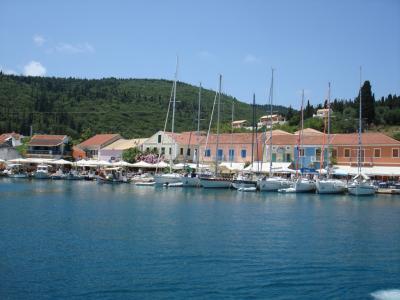
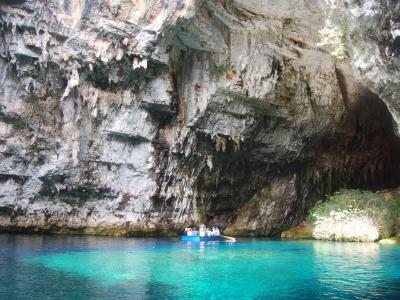
Drogarati is easy to combine with other stops around Sami, since Melissani Cave and its lake lie only a short way off, and many people see both in the same morning. The pairing shows two different faces of the island's limestone geology, one dry and decorated, the other open to the sky and filled with water. Beaches and tavernas near Sami are good places to rest afterwards, and the coast road leads on toward Myrtos Beach and the villages of the north, with the Ionian Sea never far away.
Categories
More photos coming soon
Nearby Attractions
Other places to visit in Kefalonia
Questions people ask
Quick Facts
Best Time to Visit
May to October for warm, dry weather ideal for swimming and exploring.