







- Where
- Crete, Crete
- Directions
- Directions
On a low hill a few kilometres south-east of Heraklion, among olive trees and cypresses, lie the remains of the largest Bronze Age palace on Crete. Knossos was the centre of the Minoan civilisation, which flourished on the island in the second millennium BC. Visitors often start with the history: the first palace was built around 1900 BC and was rebuilt on a grander scale after earthquake destruction in about 1700 BC. The site was inhabited, in one form or another, for thousands of years before that, and the later Greeks remembered it as the seat of the legendary King Minos.
Myth is part of its pull. The story of the Minotaur, the bull-headed monster kept in the labyrinth designed by Daedalus and killed by Theseus, is often linked to the complex plan of rooms, corridors and stairways at Knossos. Whether or not the myth preserves a distant memory of the palace, the tangle of storerooms, light wells and passages around the central court makes it easy to understand how the legend arose.
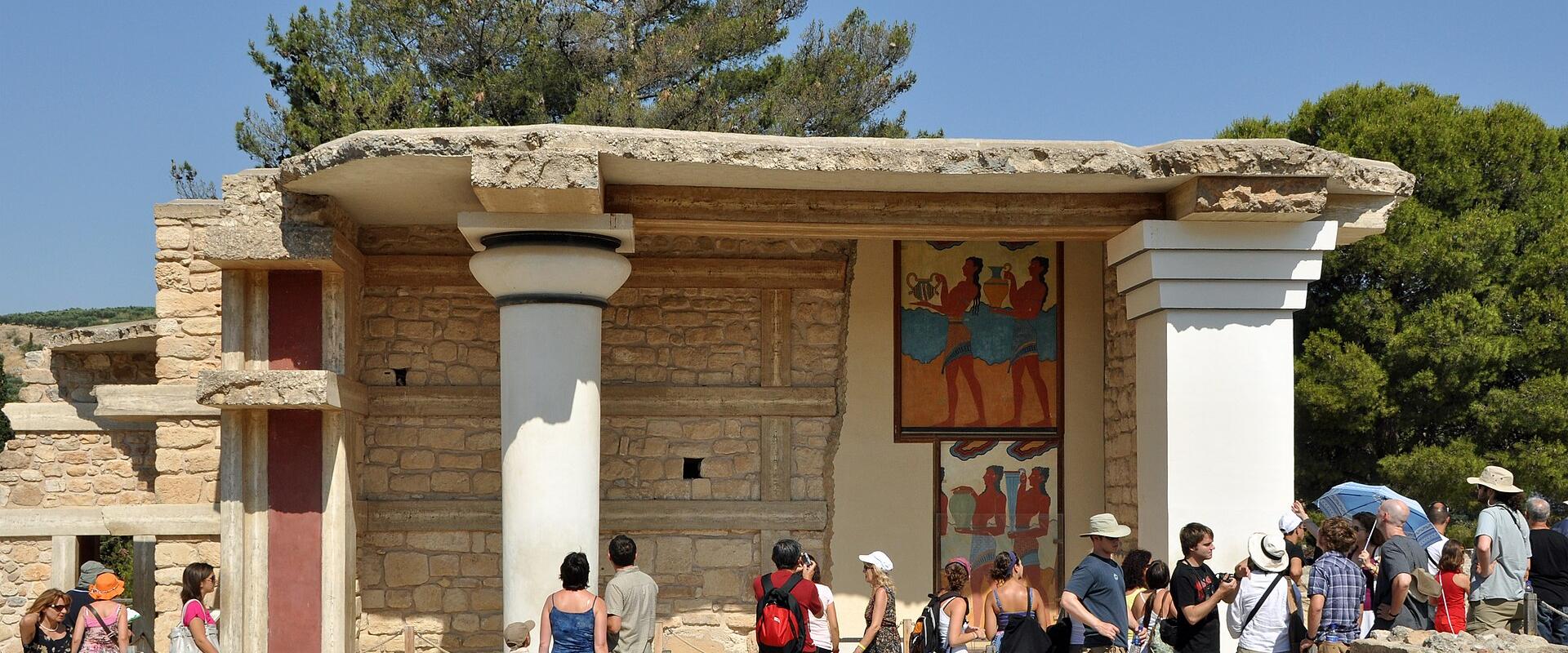
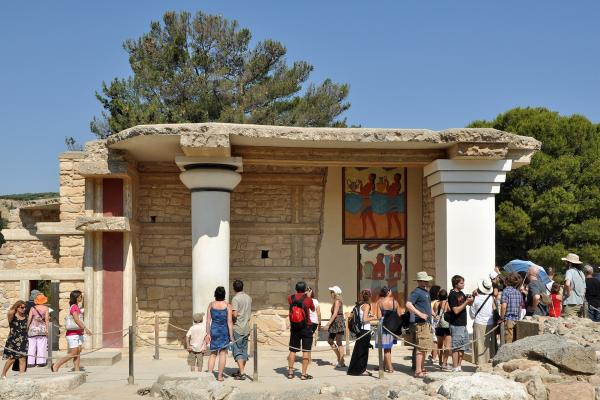
The modern look of the site owes much to Sir Arthur Evans, the British archaeologist who began excavating in 1900. He and his team, among them the Swiss artist Piet de Jong, rebuilt parts of the palace in concrete, restored columns in the distinctive Minoan form that narrows toward the base, and painted them in red and black. The reconstruction is controversial: it gives visitors a vivid sense of the original architecture, yet some of it is interpretation rather than fact. The wall paintings on view are copies, and the originals, including the Prince of the Lilies and the leaping bull fresco, are in the Heraklion Archaeological Museum, which is an essential companion to a visit.
The highlights include the Throne Room, with its alabaster-like gypsum seat and griffin paintings, the Grand Staircase with its several flights, the great storage magazines lined with huge clay jars, and the West Court with its raised walkways. The north entrance, with the bull fresco copy, gives a good sense of the building's ceremonial side.
Most visitors spend between one and a half and two hours here. The site is largely unshaded, so summer visits are hot and busy, and arriving early or late is wise. Guides at the gate or a prior reading of the site layout make the maze of rooms much easier to understand.
Categories
More photos coming soon
Nearby Attractions
Other places to visit in Crete
Samaria Gorge
A 16-kilometre gorge in the White Mountains of Crete
Gorges · Nature Reserves
Hania Old Town
Venetian Old Town in Chania, Crete
Fortifications · Historic Districts
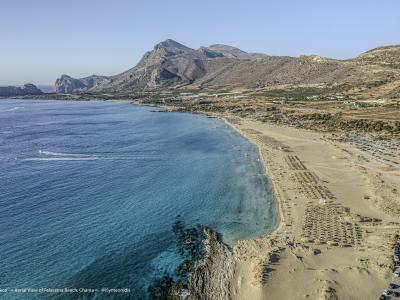
Falasarna Beach
Ancient Dorian harbor site and sandy beach
Beaches
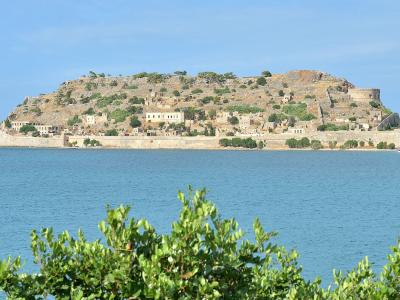
Spinal Island
Venetian fortress on a islet in Elounda Bay
Natural Landscapes
Questions people ask
Quick Facts
Best Time to Visit
May to October offers warm, dry weather ideal for beaches and exploration.