
Ancient Fortifications of Sounion
- Where
- Sounio, Attica
- Directions
- Directions
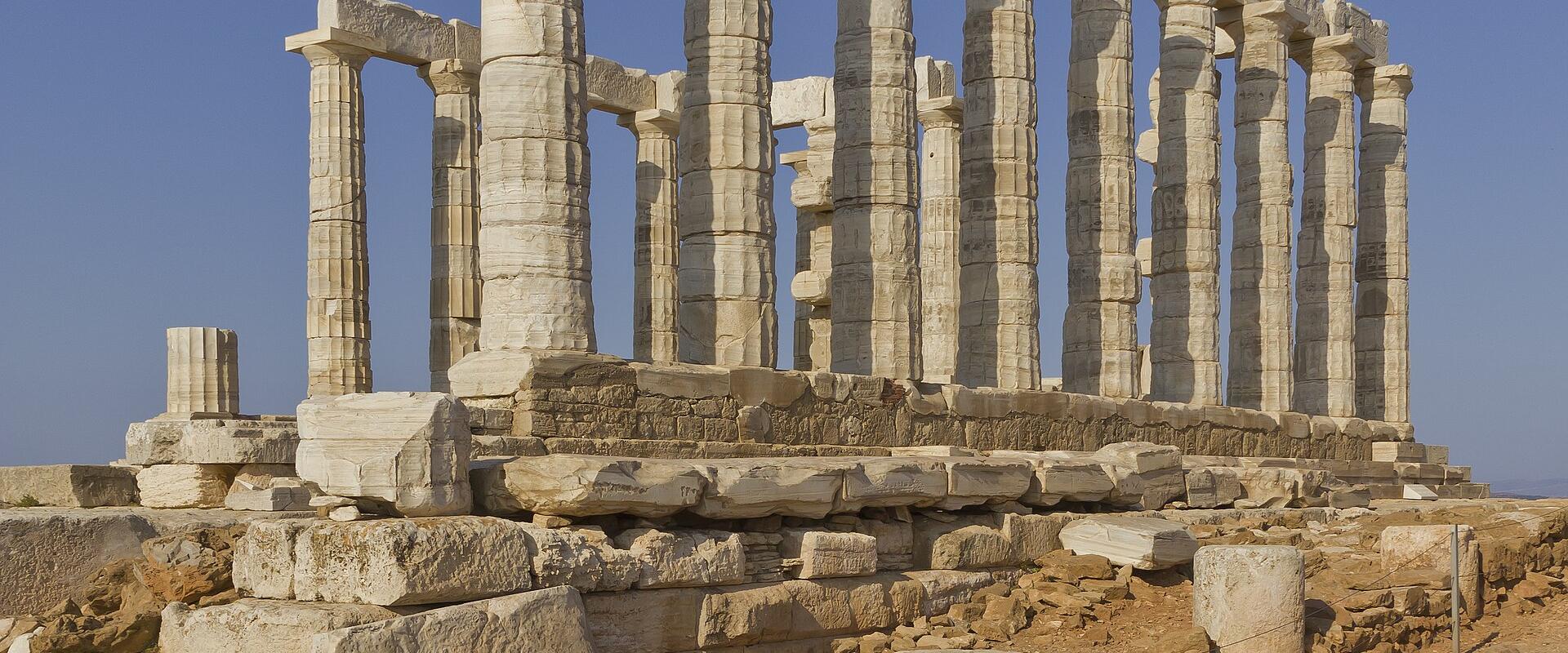
The Ancient Fortifications of Sounion are the walls and towers that once enclosed the sanctuaries at the southern tip of the Attica Peninsula, above the Aegean Sea. The Athenians built them in the late fifth century BCE, around 413 BCE, during the Peloponnesian War, when a Spartan force occupied Decelea in northern Attica and the sea route became more vital. Much of the grain for Athens came by ship from the Black Sea and passed along this coast, and the cape was a point where a fleet could be watched and attacked. By walling the headland, the city made sure that the sanctuary and the ships sheltering beneath it could not be seized.
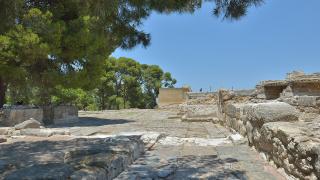
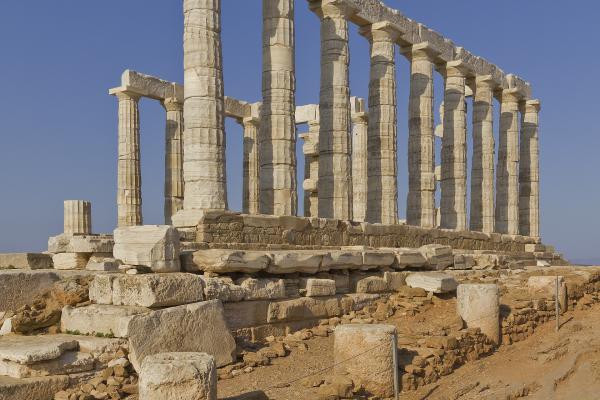
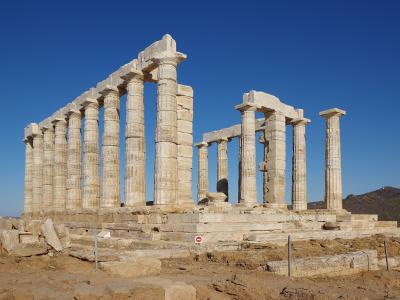
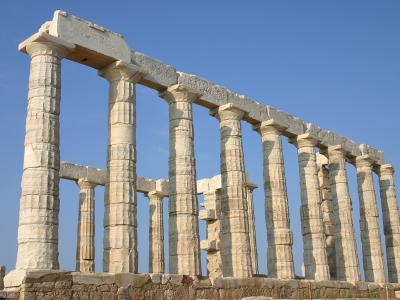
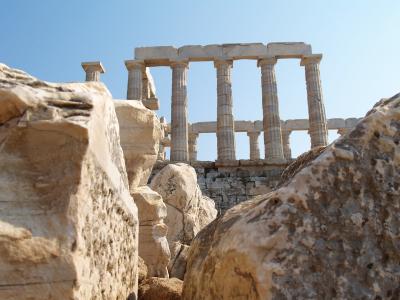
The circuit wall runs around the top of the cliff and the seaward side, with square towers at intervals and a gateway on the landward side. The masonry is built of local stone, with courses that show the careful planning of a military project completed in haste. Remains of ship sheds and a small dock near the shore recall that Athenian warships also used the cape. The walls enclose both the Temple of Poseidon and the nearby Temple of Athena Sounion, so a visit to the fortifications takes in the whole sanctuary rather than a single building.
Visitors can walk along stretches of the wall and see foundations of towers, with views down the cliff to the sea. The stone for the temples came from quarries at Agrileza, a few kilometres away on the landward side, and the white marble is visible in the nearby buildings. The Laurion silver mines, which supplied the wealth that built the Athenian navy and the monuments of Pericles, lie inland, and the story of the cape fits into the larger history of the region.
Standing on the headland, you can imagine the strategic importance of the position. From here Athenian lookouts could see ships approaching from the islands and the open sea, and signals could be sent to the city. The ancient writers mention Sounion as a landmark for sailors, which fits what the visible remains show.
Plan for a short, exposed walk with little shade, wind that can be strong, and sun that is intense in summer. Sturdy shoes are advisable on uneven stone. Late afternoon is popular because the temple and the walls take warm colours, though early visits are quieter. Allow about an hour for the whole site, with extra time if you wish to follow the wall in detail.
Categories
More photos coming soon
Nearby Attractions
Other places to visit in Sounio
Questions people ask
Quick Facts
Best Time to Visit
April to June and September to October offer mild weather and fewer crowds for visiting Sounio.