
Temple of Poseidon at Sounion
- Where
- Sounio, Attica
- Directions
- Directions
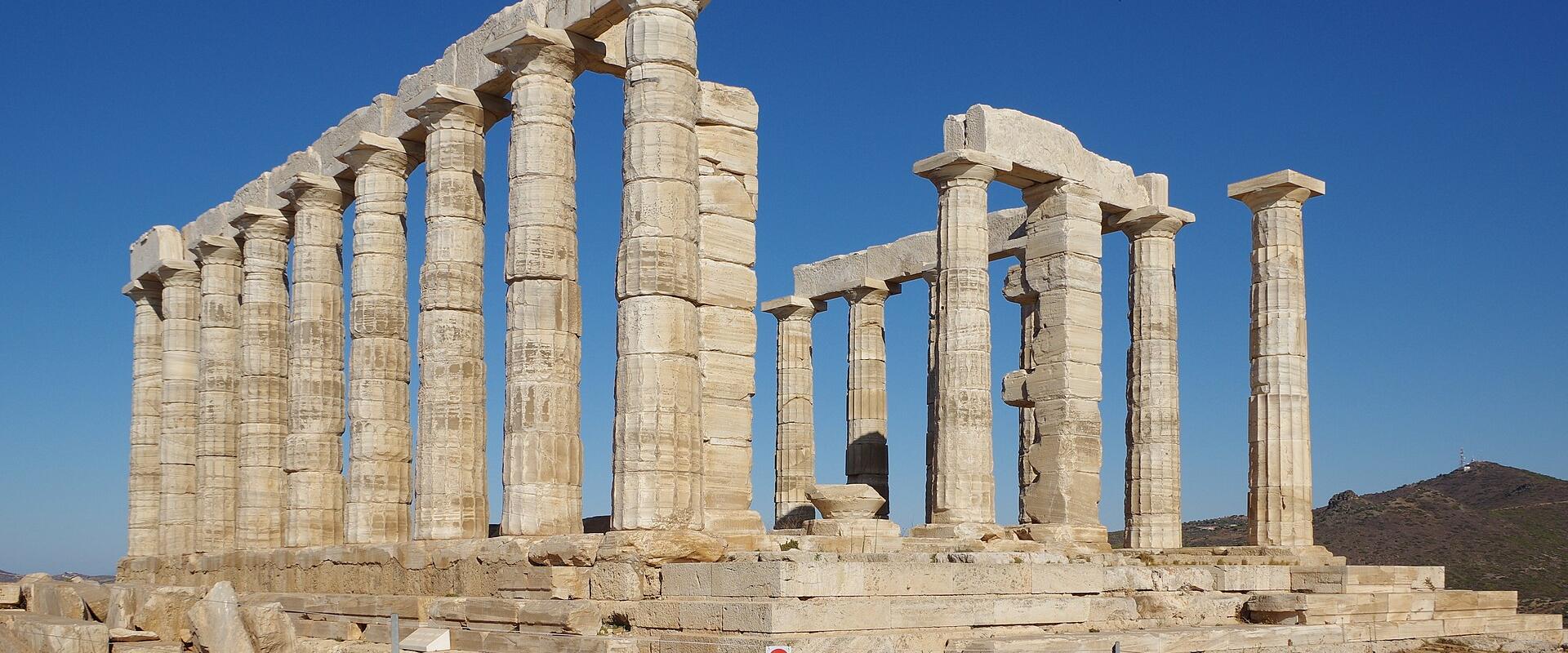
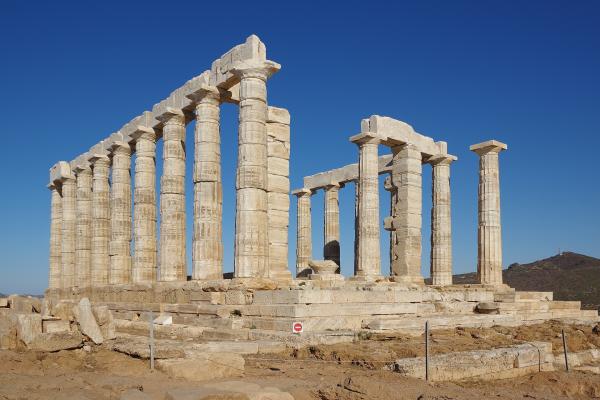
The Temple of Poseidon stands on the southern tip of the Attic peninsula at Cape Sounion, on a headland that drops steeply to the Aegean Sea. Sailors approaching Attica from the south would see its white marble columns long before they reached land, and in the ancient world the cape was both a landmark and a sacred place for the ancient Athenians. People worshipped Poseidon here from early times, and the sanctuary was walled and fortified as part of the defence of Attica during the Peloponnesian War.
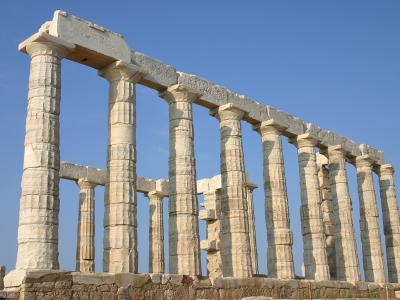
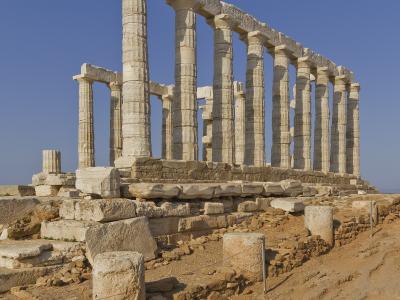
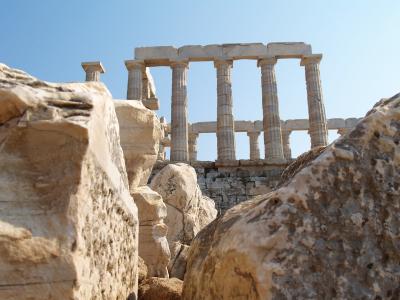
The temple you see belongs to the Periclean building programme of the mid fifth century BCE, roughly the same decades as the Parthenon, and it replaced an earlier unfinished temple destroyed in the Persian invasions. It is Doric in style, built of local marble, and originally had thirty-four columns around a rectangular platform; today fifteen remain standing, some in good repair, with the rest fallen or missing. Slender, fluted and slightly tapering, the columns look lighter than those of many other Greek temples, which suits the exposed position. The architect is not securely known, though some scholars link the design to the same workshop that produced the Temple of Hephaestus in Athens.
One famous detail is the graffiti. Visitors have carved their names into the marble for centuries, among them Lord Byron, who is said to have cut his name into a column in 1810. Access is now fenced so you cannot get close to the columns, and carving is of course forbidden.
The walk is short but atmospheric. A path rings the headland and leads to the temple platform, with sea on three sides and views toward the islands of Kea, Kythnos and Makronisos on clear days. Remains of fortification walls and the foundations of other buildings, including a smaller sanctuary dedicated to Athena nearby, can be seen around the site, and a small cafe and shop sit at the entrance.
The drive from central Athens runs along the coast road past the Saronic Gulf beaches, taking about an hour and a half depending on traffic. Many visitors time their arrival for late afternoon and stay for sunset, which turns the marble orange and is the busiest period; going earlier gives you more space and cooler air in summer. The site is exposed, with little shade, so a hat and water matter, and the wind off the cape can be strong.
Categories
More photos coming soon
Nearby Attractions
Other places to visit in Sounio
Questions people ask
Quick Facts
Best Time to Visit
April to June and September to October offer mild weather and fewer crowds for visiting Sounio.