







Archaeological Site of Ancient Messene
- Admission
- Full €15, Reduced €8. Free on specific dates/Sund.
- Hours
- Summer (Apr–Oct): Daily 08:00-20:00; Winter (Nov–Mar): Mon, Wed–Sun 08:30-15:30 (Closed Tu...
- Where
- Kalamata, Peloponnese
- Directions
- Directions
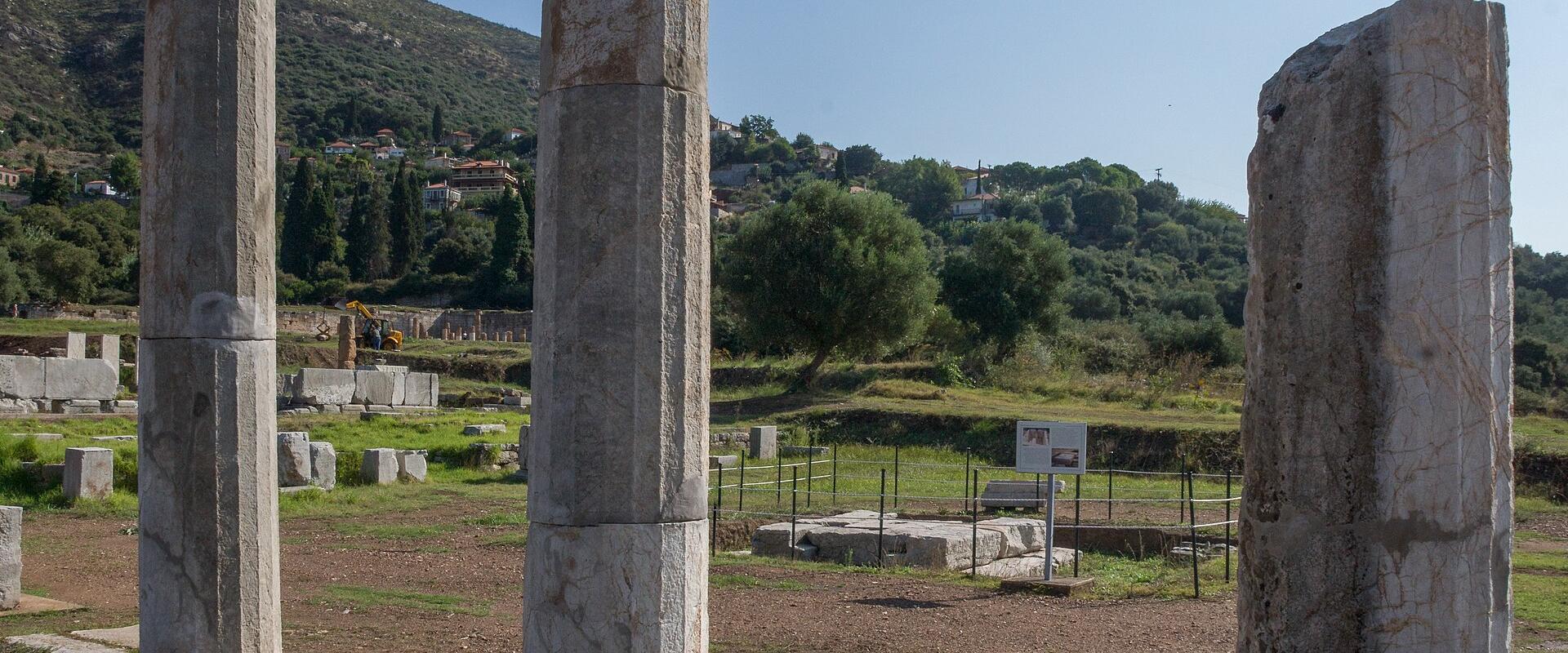
The Archaeological Site of Ancient Messene lies on the slopes of Mount Ithome, about twenty-five kilometres northwest of Kalamata, near the village of Mavromati, and it is one of the best preserved and most extensive ancient cities in Greece. It was founded in 369 BC by the Theban general Epaminondas, after the Thebans defeated the Spartans at the battle of Leuctra, and it became the capital of a liberated Messenia, whose people had lived under Spartan domination for generations. The new city was planned with care and was surrounded by a circuit of walls about nine kilometres long, with towers and monumental gates.
The walls are among the best examples of Greek military architecture, and the Arcadian Gate, a double gate with a circular courtyard, is still impressive, with a stone lintel and part of the road leading to it. Inside, the city had a grid of streets, an agora and public buildings, which now stand across open meadows and olive groves among wildflowers. The sense of walking through a whole ancient city, rather than a single monument, is what sets Messene apart.
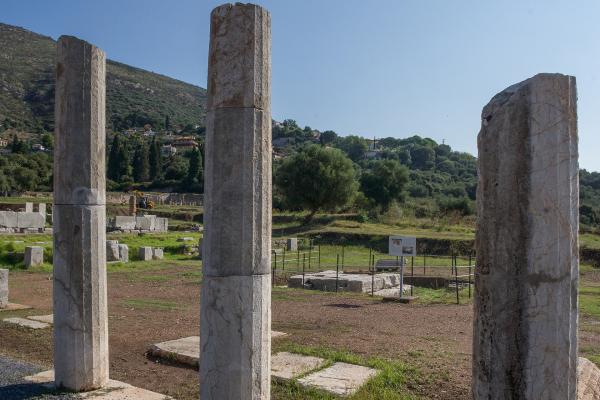
The most remarkable monument is the Asclepieion, also spelled Asklepieion, a large complex dedicated to Asclepius, the god of healing. It has a central courtyard surrounded by colonnades on four sides, with a temple, an altar, rooms for sacrifices and meetings, and a council hall called the Ekklesiasterion. Nearby are a small theatre, the Odeon, a roofed Hellenistic hall for music and meetings, a fountain house known as the Fountain of Arsinoe, and the Sanctuary of Zeus, together with shrines to other gods. The stadium, on the lower ground, is one of the best preserved of its period, with a long track surrounded on three sides by a colonnade of Doric columns, some of them re-erected.
Much of the architecture dates from the Hellenistic period, and the quality of the stonework is high. Statue bases carry inscriptions, and the museum on site displays sculptures and finds from the excavation, which began in the early twentieth century and continues today. The village of Mavromati is a pleasant place for lunch, and a path leads up Mount Ithome to the ruins of a monastery and the ancient acropolis.
Allow at least three hours, since the site is large and involves a good deal of walking over uneven ground. Shade is limited, so bring water and a hat, and wear sturdy shoes. The site has a cafe, shop and parking. Opening days and hours change with the season, so check before going. Spring, when the meadows are in flower, is a particularly good time.
Categories
More photos coming soon
Hours & Fees
- Open
- Summer (Apr–Oct): Daily 08:00-20:00; Winter (Nov–Mar): Mon, Wed–Sun 08:30-15:30 (Closed Tuesdays).
- Admission
- Full €15, Reduced €8. Free on specific dates/Sund.
Hours and prices change, especially out of season. Check with the venue before you go.
Nearby Attractions
Other places to visit in Kalamata
Questions people ask
Quick Facts
Full €15, Reduced €8. Free on specific dates/Sund.
Best Time to Visit
Greece enjoys a Mediterranean climate with warm summers and mild winters, making it ideal for visiting year-round.