







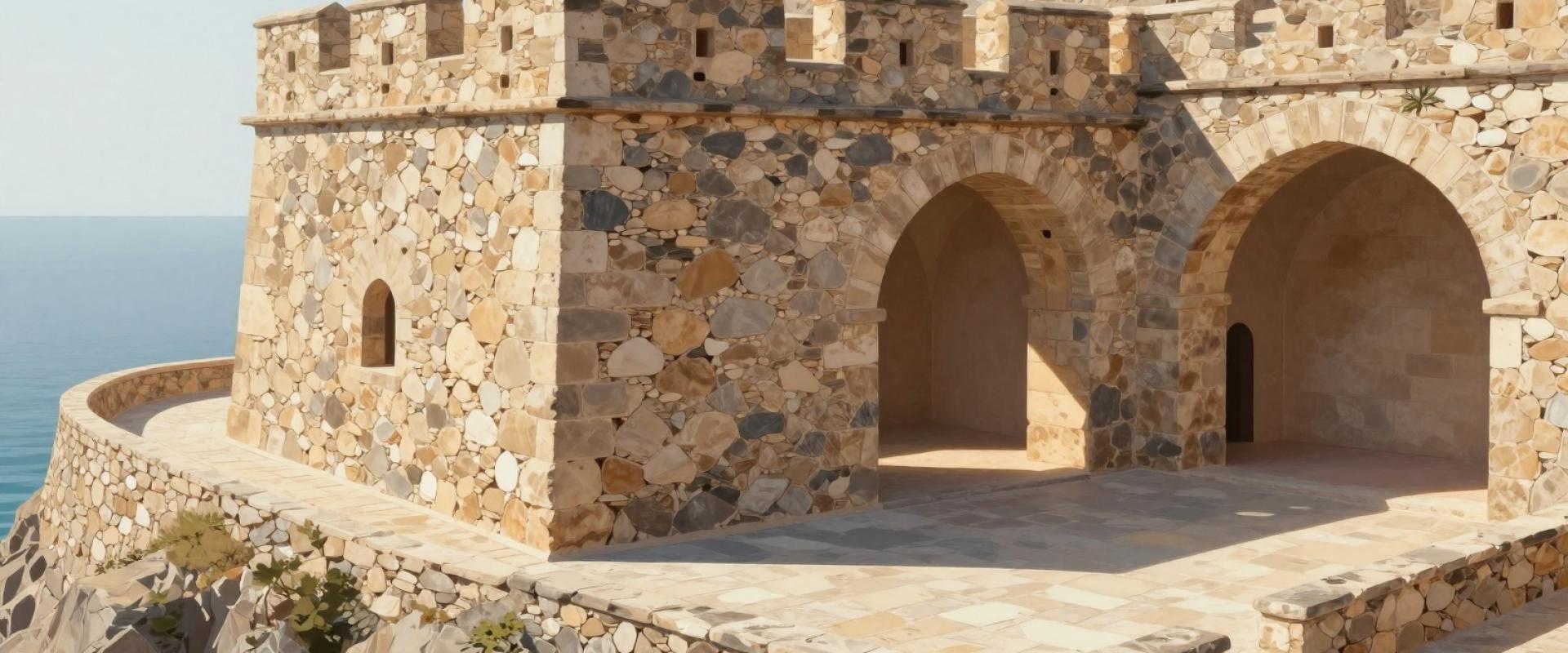
Castle of Monemvasia (Upper Town Churches)
- Where
- Monemvasia, Peloponnese
- Directions
- Directions
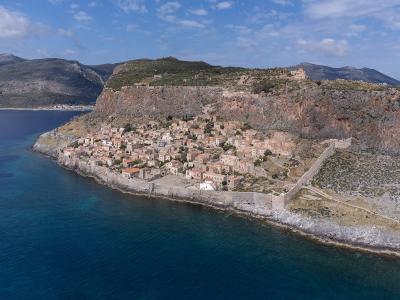
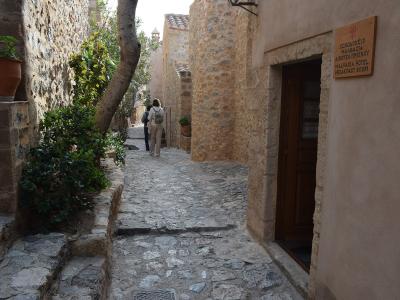
The Castle of Monemvasia sits on a huge rock of limestone that rises from the sea off the southeastern coast of the Peloponnese, joined to the mainland by a narrow causeway of about 400 metres, and its name comes from the Greek words for single entrance. The town was founded in the sixth century; a later chronicle says settlers from the mainland took shelter on the rock after Slav raids, though archaeology does not fully confirm this, and over time it became one of the most important fortresses and ports of the Byzantine world. A Lower Town lies at the foot of the rock on the seaward side, while the Upper Town, the Kastro, stands on the summit plateau, a wide area of ruins.
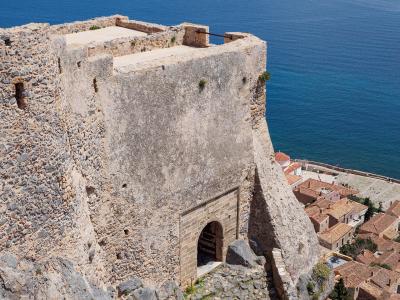
The path to the Upper Town is a winding stone ramp that climbs from the lower town in zigzags. It takes about twenty to thirty minutes, with steps that can be slippery and almost no shade, so sturdy shoes and water are important. You pass through a gate and onto the plateau, where crumbling walls, cisterns, the foundations of houses and paths among low scrub and wildflowers show how large the town once was. The Upper Town is now largely a quiet ruin.
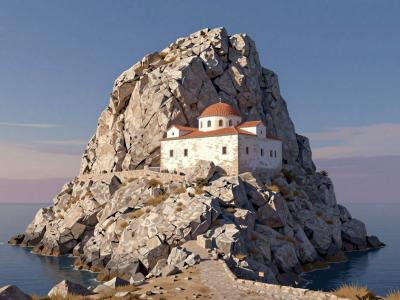
The main church of the plateau is the Church of Agia Sophia, Holy Wisdom, built around the mid-twelfth century on the very edge of the cliff; it was originally dedicated to the Virgin Hodegetria and was restored in 1958. It is a domed church of the octagonal type, and the position, with the sea far below, makes it one of the most dramatic churches in Greece. The church has been restored, and inside, traces of wall paintings and carved details remain. A few other smaller chapels, together with the remains of Venetian and Ottoman buildings, show how the town changed hands. Monemvasia was held by the Venetians from the 1460s until the Ottomans took it in 1540, and again from 1690 to 1715, with Ottoman rule in between and after.
The views are the main reward. From the walls and the church terrace, the sea stretches in every direction, with the coast of Laconia curving away and the Lower Town clustered below. On clear days, the horizon seems immense, and the light at sunset gives the stone a golden glow.
Monemvasia was famous for its sweet Malvasia wine, exported across Europe in the Middle Ages, and the poet Yannis Ritsos was born here. The Lower Town has shops, cafes and tavernas, and the causeway gives access from the mainland. Allow at least two hours for the Upper Town, take water, and go early in summer. Opening hours vary, so check locally before you go.
Categories
More photos coming soon
Nearby Attractions
Other places to visit in Monemvasia
Questions people ask
Quick Facts
Best Time to Visit
May to October offers warm, dry weather ideal for exploring the historic site.