







Chora Castle (Kastro)
- Where
- Monemvasia, Peloponnese
- Directions
- Directions
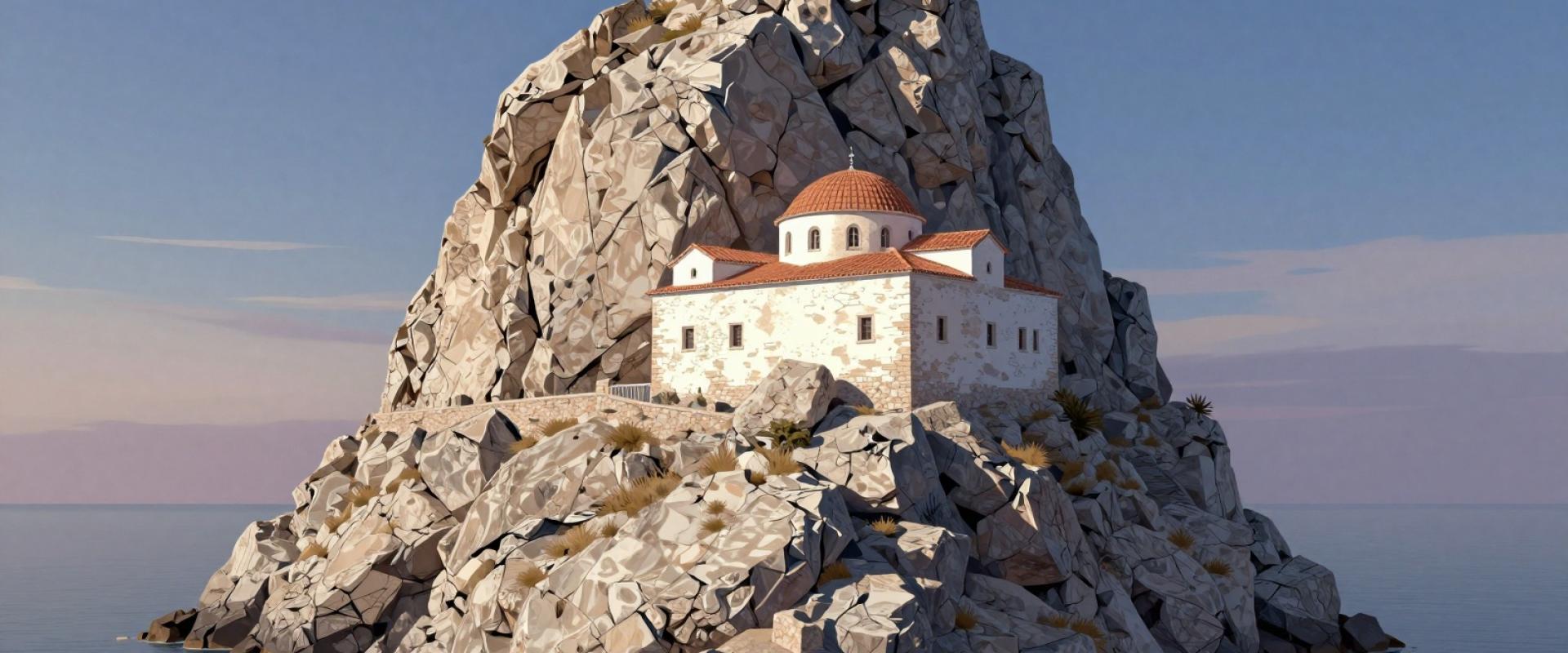
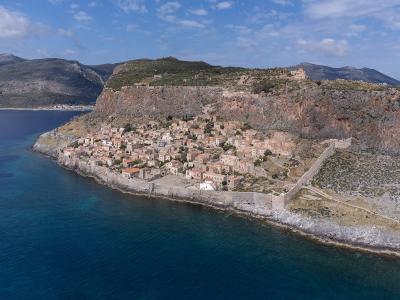
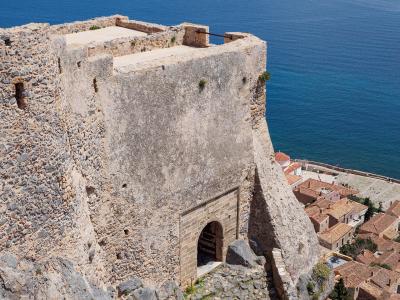
Monemvasia is a rock rather than an island in the strict sense. It was split from the mainland by an earthquake in the fourth century, and what remains is a single steep crag joined to the Laconian coast by a narrow causeway. The name itself is often traced to the Greek words for single entrance, a good description of the one gate that leads through the walls. On top of the rock the Kastro, the Chora Castle, spreads across a high plateau above the cliffs, with the sea on three sides and the sound of wind everywhere.
People settled the rock in the late sixth century, when communities from the Peloponnese took refuge from invasions, and the settlement grew into one of the strongest Byzantine fortress towns. It was long a trading port, and later passed between rulers: the Franks took it after a siege in the thirteenth century, the Byzantines recovered it, and the Venetians and Ottomans held it in turn. The layers show in the walls, gates and buildings, and the Kastro remained inhabited for centuries.
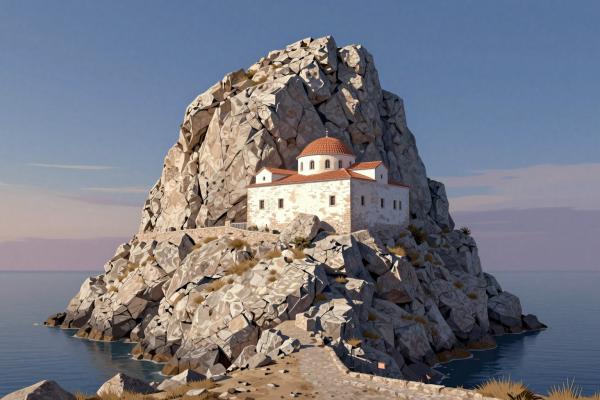
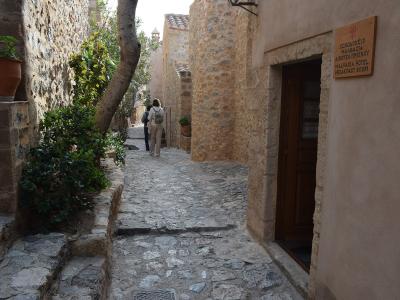
Today the Upper Town is largely quiet ruins and a few restored buildings, and it is reached by a steep, zigzagging path from the lower town. At the top you find the Church of Agia Sophia, built on the very edge of the cliff in the twelfth century, with a plain, strong profile against the sky and a drop directly beneath it. Other remains include old houses, cisterns, the walls and the ruins of the Venetian fortifications, spread over a wide, windswept area where you can walk freely at your own pace.
It is hot and exposed in summer, so a morning climb or a late afternoon visit is better, with water and sun protection. The ground is rough and the path has many steps, so sturdy shoes help. The best seasons are spring and autumn, roughly April to June and September to October, when the weather is mild and crowds are thinner. Allow around two hours to see the plateau properly.
The climb rewards you with views of the Laconian Gulf and the long causeway, and it gives an ideal introduction to the whole Monemvasia complex. Afterwards, return to the Lower Town for lunch, the Monemvasia Folklore Museum and a walk along the sea walls.
Categories
More photos coming soon
Questions people ask
Quick Facts
Best Time to Visit
May to October offers warm, dry weather ideal for exploring the historic site.