History and Cultural Heritage
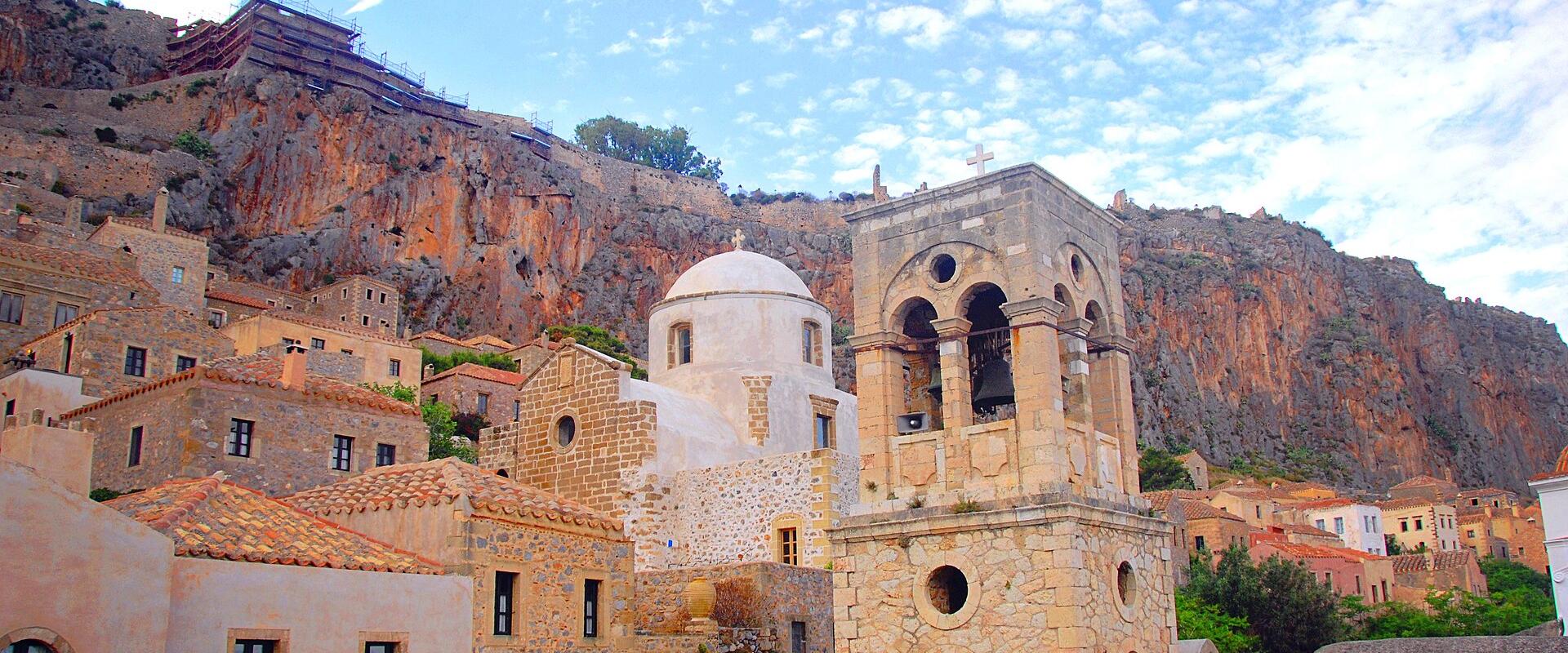
Monemvasia's history is defined by its strategic isolation and resilience. The town was founded in the sixth century; a later chronicle says its first inhabitants came from Sparta after a Slav raid, although archaeology does not fully support that account. Tradition holds that an earthquake in 375 AD separated the limestone rock from the mainland, leaving a narrow strip of land as the only approach, and the name Monemvasia comes from the Greek words for single and approach. Its natural fortification made it a stronghold and a major Byzantine commercial and naval centre, and it withstood a Sicilian fleet in 1147. The Franks of the Principality of Achaea took it after a long siege in the thirteenth century, and it returned to the Byzantines in 1262. It later passed to the Venetians in the 1460s and fell to the Ottomans in 1540, then was held by Venice again from 1690 to 1715, followed by a second period of Ottoman rule. The town surrendered to the Greeks on 23 July 1821 during the War of Independence. Each ruler left a mark on the architecture, and the Byzantine churches remain among its most important monuments.
Main Attractions
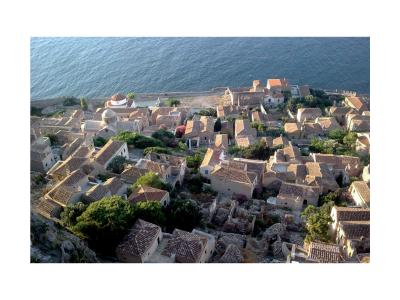
The town has two sections, the Lower Town and the Upper Town. The Lower Town is largely pedestrian, a maze of narrow cobbled alleys lined with historic buildings, boutique hotels and tavernas, retaining the charm of a medieval village. The Upper Town on the summit plateau is reached by a winding stone path that climbs from the Lower Town to a fortified gate; there is no cable car. It is home to the church of Hagia Sophia, a Byzantine church of about the mid-twelfth century standing on the edge of the cliff, with views over the sea and coastline. The plateau also holds ruins of fortifications, cisterns and houses from the Byzantine, Venetian and Ottoman periods. The Monemvasia Archaeological Collection, housed in the former mosque on Elkomenos Square in the Lower Town, displays architectural sculpture, ceramics and smaller finds. Beyond the rock, village folklore museums in the surrounding countryside illustrate the traditional life of the area. The dramatic cliffs and clear water make the setting itself a key attraction.
Activities
Walking through the Lower Town is the main activity, with its historic streets and architecture, peaceful car-free atmosphere and photography. The climb up to the Upper Town and the church of Hagia Sophia rewards visitors with sweeping views, though the path is steep and has little shade, so wear sturdy shoes and bring water. Swimming and sunbathing are possible at beaches near the modern settlement of Gefyra, a short distance from the rock. Boat trips along the coast are a way to see the town from the sea. Monemvasia was famed in the Middle Ages for its sweet Malvasia wine, and an international Malvasia festival is held in the town in autumn.
Getting There
Monemvasia lies in the southeastern Peloponnese, roughly three to four hours by road from Athens, via the motorway towards Tripoli and Sparta and then regional roads. The Lower Town is entered across the causeway, and cars are left outside the gate in parking areas near the causeway and in Gefyra. From Gefyra it is roughly a 20-minute walk to the castle gate. Public transport is limited: KTEL Laconia buses run from Sparta, and journeys with changes from Athens can be long, so renting a car is recommended for flexibility, especially to see nearby beaches and villages. Plan transport ahead, particularly in peak season.
Best Time to Visit
The best time to visit Monemvasia is the shoulder seasons of April to June and September to October, when the weather is mild and the crowds are smaller. Spring brings flowers and comfortable temperatures, while autumn offers warm days and clear skies. July and August are the peak season, with hot weather and crowds, particularly in the Lower Town, and higher prices. Winter, from November to March, is mild but can be rainy, and some businesses close, making it suitable for a quiet visit. For a balance of good weather and tranquility, late spring and early autumn are the best choices.
Best time to visit
May to October offers warm, dry weather ideal for exploring the historic site.
What to see in Monemvasia
Our picks first.
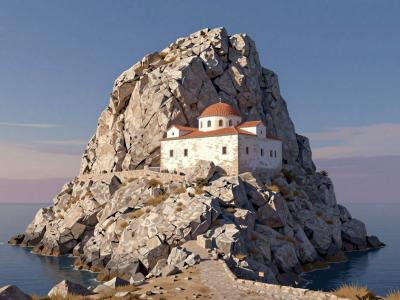
Chora Castle (Kastro)
Historic Sites & Ruins
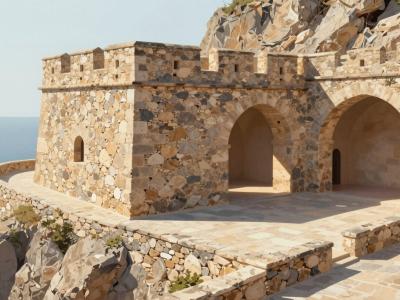
Castle of Monemvasia (Upper Town Churches)
Historic Sites & Ruins · Religious Heritage
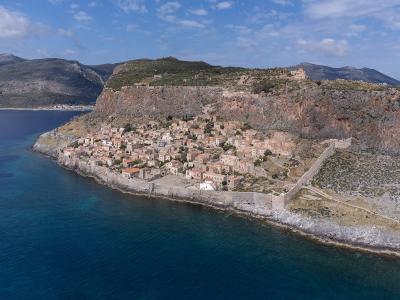
Castle Viewpoint (Kastro Terrace)
Historic Sites & Ruins
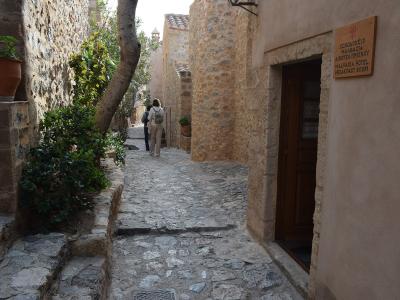
Local Tavernas in Lower Town
Urban & Local Life
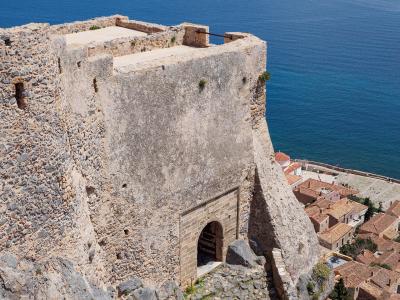
Lower Town (Kato Poli)
Churches · Historic Districts
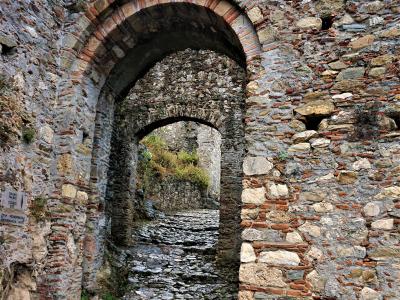
Monemvasia Folklore Museum
Free Local History Museums · Museums
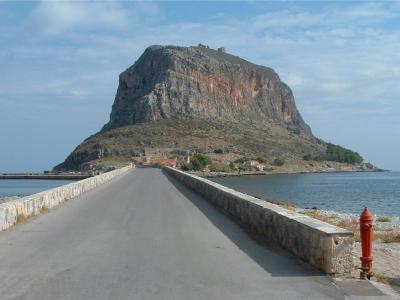
The Causeway
Free Natural Landscapes
Upper Town (Kastro)
Historic Districts
Monemvasia by interest
The same sights, grouped by what you came for.
Did you know?
Checked facts about Monemvasia, each with its source.
-
History
First Fortress Liberated in 1821
On July 23, 1821, the fortress of Monemvasia was the first Greek fortress in the Peloponnese to be liberated by Greek independence fighters, marking a decisive moment in the struggle against Turkish occupation.
Source: Monemvasia.gr
Planning a visit to Monemvasia
Good to know
- Currency
- EUR
- Language
- Greek
Quick Facts
Book your stay
Questions people ask
More places in Peloponnese
Peloponnese
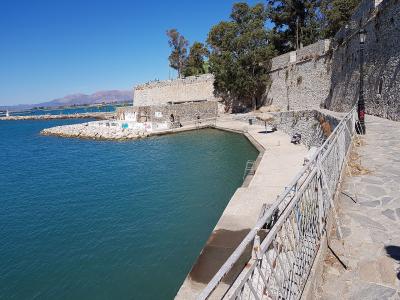
Nafplio
First capital of Greece in Argolic Gulf
Peloponnese
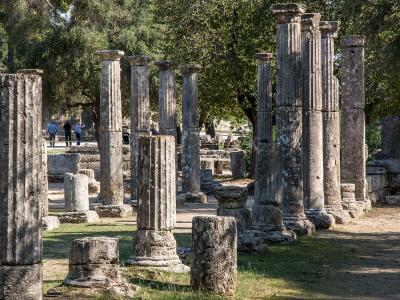
Olympia
Ancient site of the Olympic Games in the Peloponnese
Peloponnese
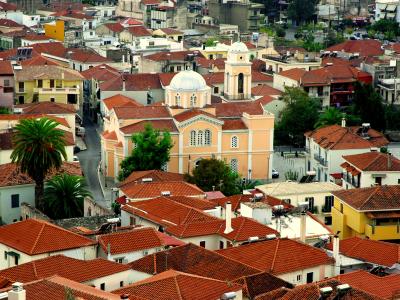
Kalamata
Coastal city in the Peloponnese known for olive oil and ancient ruins
Peloponnese
Foloi
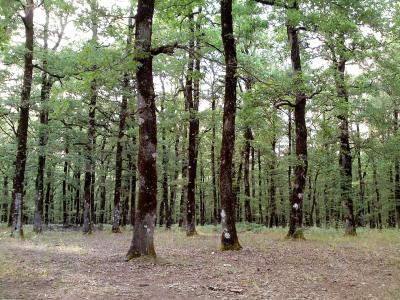
Oak-covered plateau in inland Ilia, with Natura 2000 forest above Ancient Olympia