







- Admission
- Paid admission required
- Hours
- Open during guided tour times.
- Where
- Milos, Aegean
- Directions
- Directions
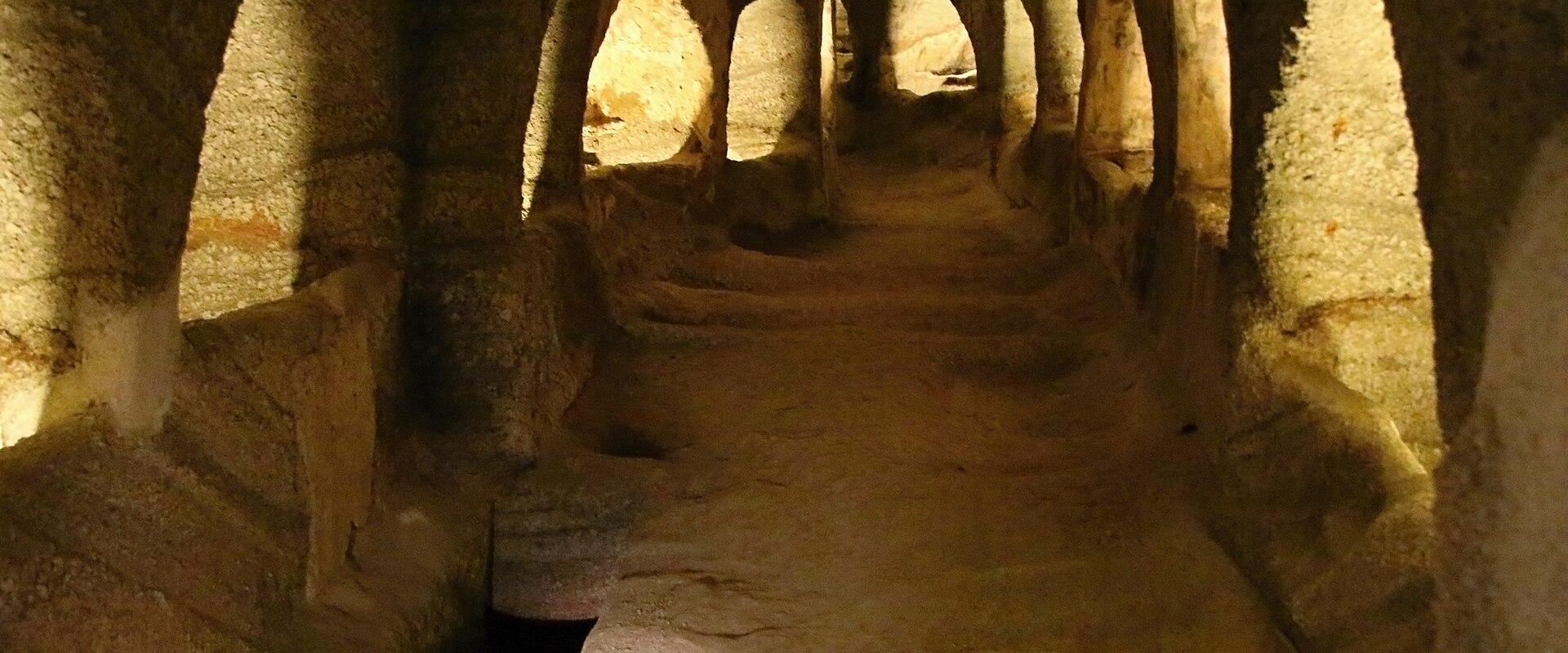
On the hillside above the village of Trypiti, a narrow opening in the rock leads down into the only catacombs in Greece, the burial places of the early Christian community of Milos. The Catacombs of Milos date from about the second to the fifth centuries AD, when the island was part of the Roman world and Christianity was spreading. They rank among the most important early Christian monuments in the Mediterranean, and they are a rewarding place to visit for anyone interested in the history of the religion.
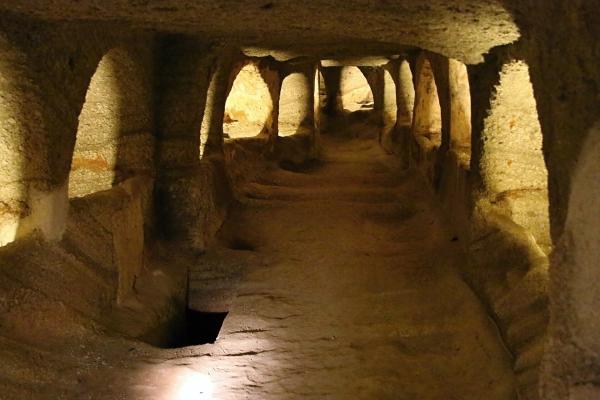
The tunnels are cut into soft volcanic rock, a pale tuff that is easy to carve, and they form a network of corridors lined with burial niches. Along the passages, arched recesses, called arcosolia, were carved into the walls to hold the bodies of the dead, each one a small, shelf-like tomb sealed with a slab. Other graves were cut into the floor, and some chambers served as places for family gatherings or ceremonies. The galleries are narrow and low in places, and the air is cool and still, which gives the visit a hushed atmosphere.
The catacombs were rediscovered in the nineteenth century, and the surviving sections have been restored and made safe for visitors. Entry is by guided visit, and the tours are short, about a quarter of an hour, with a guide explaining the layout and how the community used the space. Visitors enter in small groups, so queues can build up in busy weeks, and the passages are not suitable for anyone with severe mobility problems or claustrophobia. Inscriptions and simple painted symbols in places offer clues to the beliefs of those buried here.
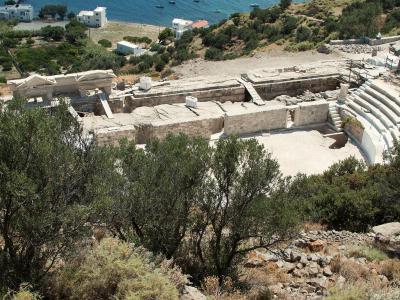
The village setting adds to the interest. Trypiti, also known as Tripiti, sits on a slope above the sea with views over the bay of Milos, a line of old windmills and a small ancient theatre nearby. The famous statue known as the Venus de Milo was found close by in 1820,. A short walk leads from the catacombs to the remains of the ancient town and the Roman-era theatre, and the village of Plaka lies above.
Because the passages can feel warm and airless in summer, it is best to go in the morning or late afternoon, and to wear sturdy shoes with good grip. The site is a short drive from the port of Adamas, with parking in the village. Visitors should check opening times locally, as tours follow a schedule and the site is closed on some days.
Categories
More photos coming soon
Hours & Fees
- Open
- Open during guided tour times.
- Admission
- Paid admission required
Hours and prices change, especially out of season. Check with the venue before you go.
Nearby Attractions
Other places to visit in Milos
Questions people ask
Quick Facts
Best Time to Visit
May through September offers warm weather, with June and September providing the best balance of comfort and fewer crowds.