







- Admission
- Free
- Hours
- Open 24/7 (outdoor public area)
- Where
- Milos, Aegean
- Directions
- Directions
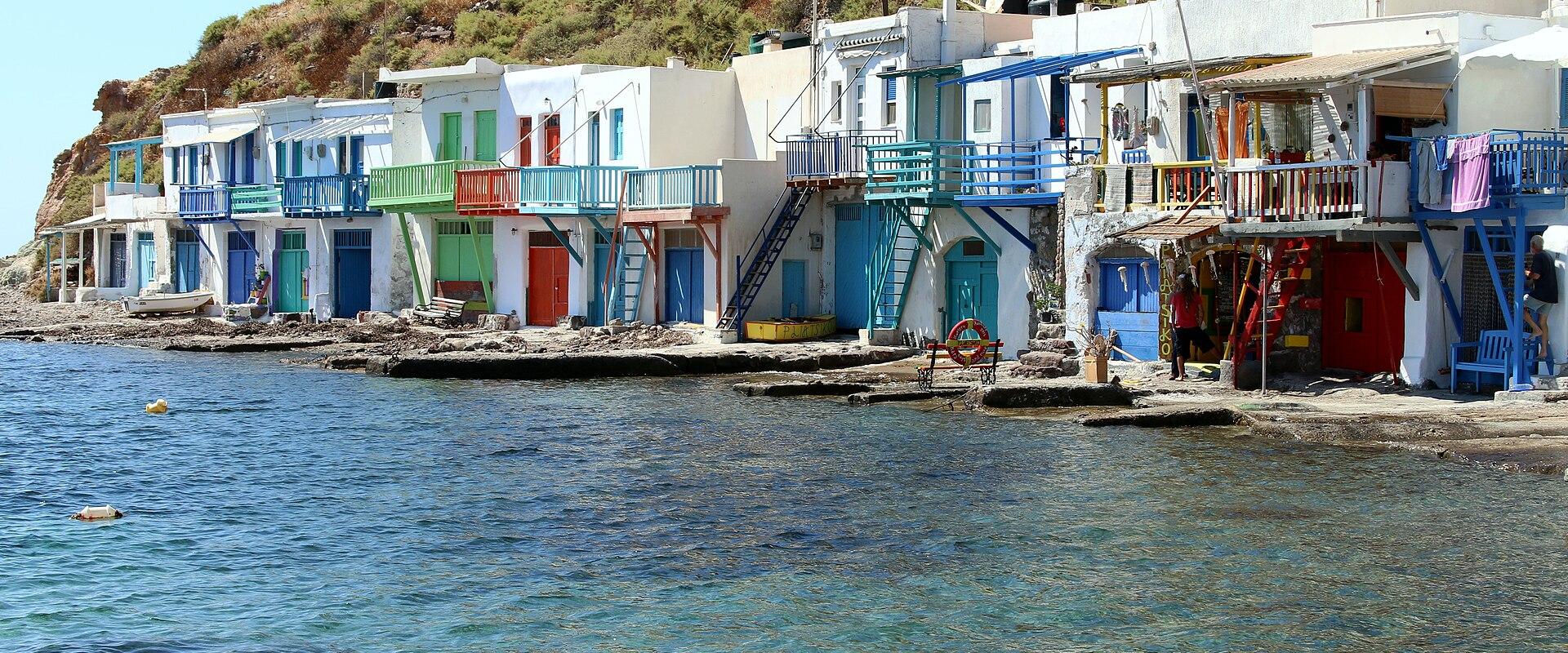
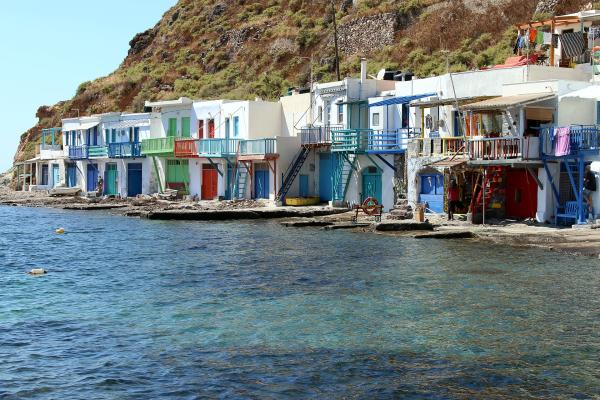
Below the hill village of Trypiti, on the shore of the Bay of Milos in the Aegean Sea, a row of brightly painted boathouses faces the sea, and the cluster is known as Klima. The boathouses are called syrmata, a Greek word associated with the act of dragging boats up a slipway, and they are one of the most distinctive pieces of vernacular architecture in the Cyclades. Each is two storeys high, with a wide wooden door at sea level, a small balcony or window above, and a painted frontage in blue, green, yellow, red or white, and the effect is among the most photographed in Greece, so that the line of houses looks like a row of colours along the water.
The design is entirely practical. The lower storey, partly cut into the soft volcanic rock, is a garage for the fishing boat and its gear, with a ramp that slopes into the water so that the boat can be pulled out in rough weather. The upper floor, reached by a staircase, was the fisherman's home. This way of life centred on the sea, with nets laid out on the rocks and boats hauled up on the ramps. Similar syrmata exist at other places on Milos, such as Mandrakia and Firopotamos, but Klima is the largest and best known.
Today, many of the syrmata have been restored and converted to holiday homes and guesthouses, and only a few are still used by fishermen. The change has brought comfort and income to the village, but the exteriors have been kept, and the colours are repainted regularly. In the evening, the doors glow in the low light and the water reflects their reds and blues, which is the moment photographers wait for. A few tavernas serve fish at tables overlooking the water.
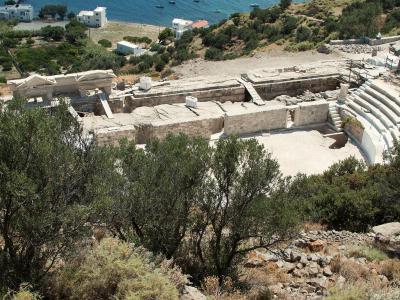
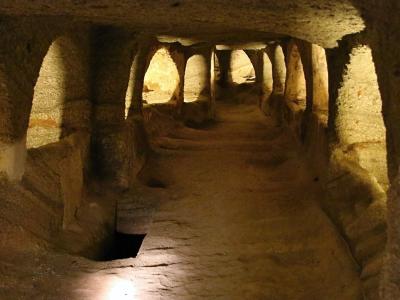
Klima has a deeper past too. The slope above the village was the site of the ancient city of Melos, which had a theatre, public buildings and cemeteries. The ancient theatre overlooks the bay and can be reached by a short climb, while the catacombs are close by, near Trypiti, and the famous statue of the Venus de Milo was found in this area in 1820. A walk from Klima up through the lanes to these sites combines architecture, archaeology and sea views.
While the village is small, and a visit usually takes an hour or two, with time for a swim at the pebble shore or a meal. It lies a short drive from Adamas and Plaka, with parking above the village, and the path down is steep in places. Late May and September are quiet, while summer evenings bring crowds. Visitors should respect the residents and holidaymakers who now live behind the painted doors.
Categories
More photos coming soon
Hours & Fees
- Open
- Open 24/7 (outdoor public area)
- Admission
- Free
Hours and prices change, especially out of season. Check with the venue before you go.
Questions people ask
Quick Facts
Best Time to Visit
May through September offers warm weather, with June and September providing the best balance of comfort and fewer crowds.