







Papafragas Beach
- Where
- Milos, Aegean
- Directions
- Directions
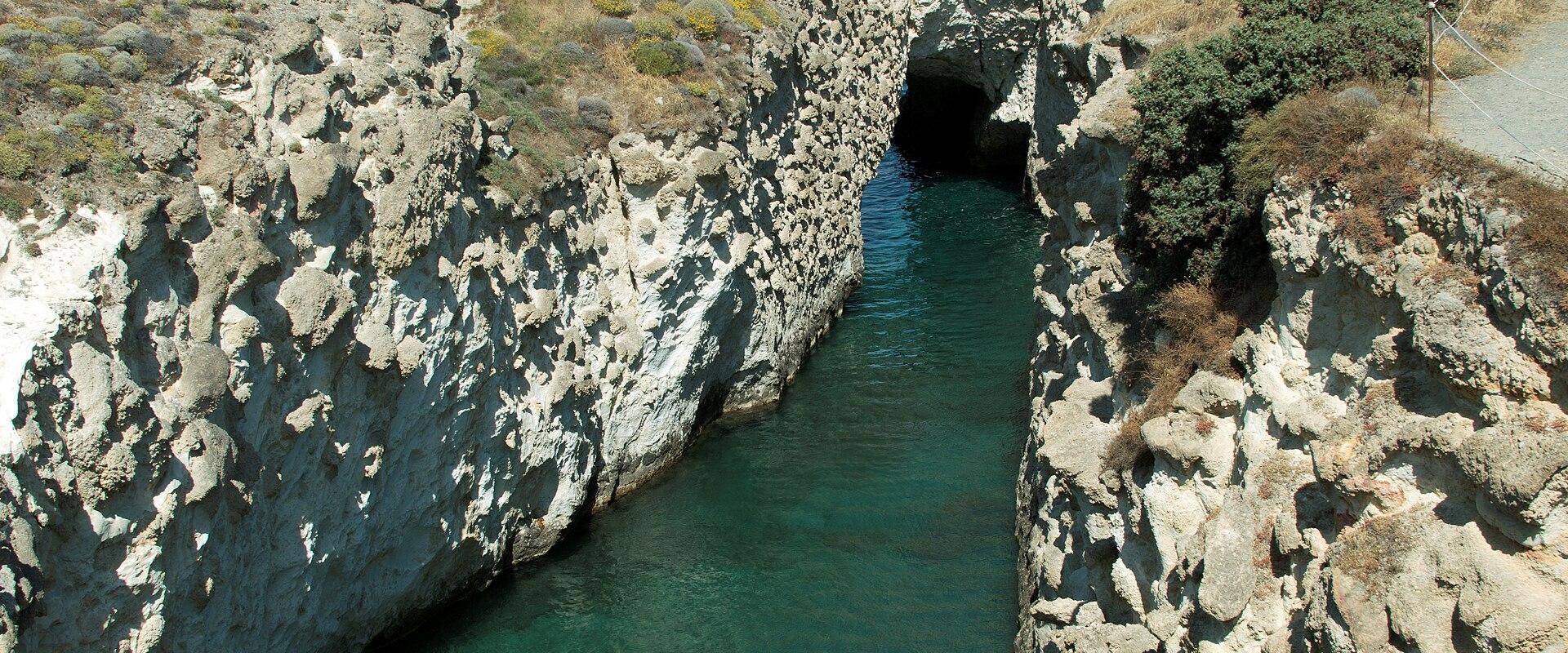
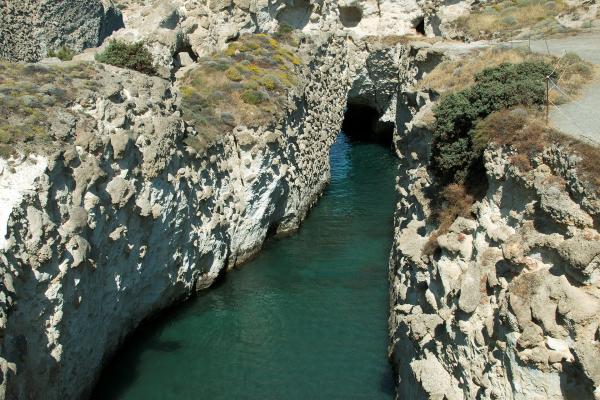
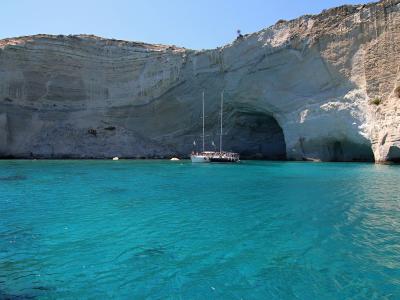
Papafragas Beach lies on the north coast of Milos, near the fishing village of Pollonia and not far from the Bronze Age settlement of Phylakopi, and it is one of the island's most dramatic spots. The beach is small, but the setting is unusual: the white volcanic rock of the cliffs has been cut by the sea into narrow channels and caves, so the sea enters through a series of long gullies that look almost like a fjord in miniature. The water that flows into these channels changes colour from bright turquoise to deep emerald depending on the depth and the light.
Milos is a volcanic island, and its rocks tell the story. The soft white tuff of Papafragas, formed from volcanic ash, is easy for waves and wind to carve, which is why the coast has so many arches, caves and sculpted surfaces. Sarakiniko, a few kilometres west, shares this lunar white rock, but Papafragas is more enclosed and sheltered. The island has long been known for its volcanic resources, such as obsidian, a glassy stone used for tools and traded across the Aegean thousands of years ago, which explains the importance of Phylakopi nearby.
Swimming in the channels is the main activity. The water is clear and deep, and the high walls provide shade in the morning and afternoon. Some visitors jump from the lower rocks into the deeper parts, and snorkelling is rewarding where the walls plunge into the sea. The beach itself is a small patch of pebbles and sand at the end of the inlet, and it fills up quickly because of its size.
Getting there takes care. A rough path leads from the road to the edge of the cliffs and then down over uneven rock, which can be slippery, and the final steps are steep. Boat trips around the island, which are common from Adamas and other ports, often stop in the inlet, offering a safer approach and a different view from the water. The sea can be rough on windy days, so check conditions before swimming.
There are no facilities, no shade except from the rock walls and no shops, so bring water, sun protection and shoes with grip. The area is best in the early morning or late afternoon, when the light is soft and visitors are fewer. A good plan is to combine a swim with a visit to Pollonia for lunch, and to continue to the Phylakopi site or to Sarakiniko later in the day.
Categories
More photos coming soon
Nearby Attractions
Other places to visit in Milos
Questions people ask
Quick Facts
Best Time to Visit
May through September offers warm weather, with June and September providing the best balance of comfort and fewer crowds.