



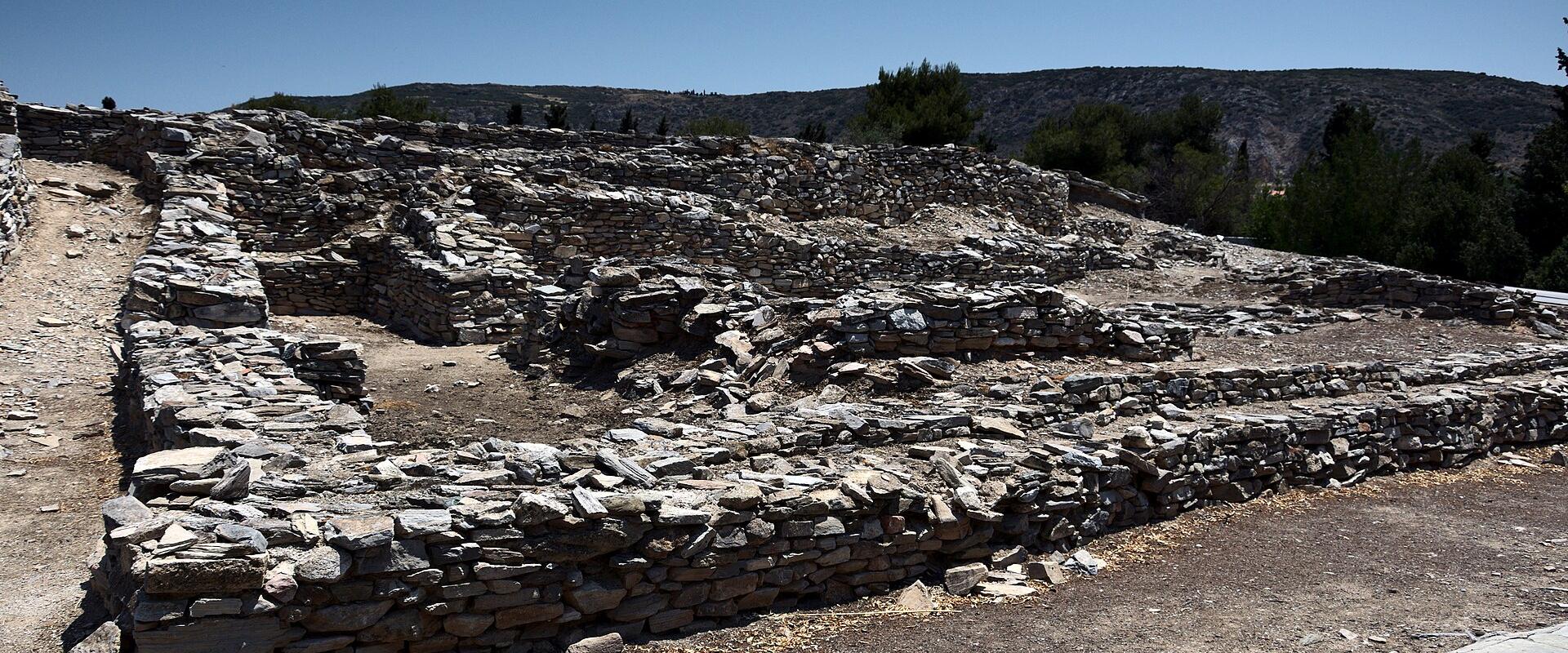
Dimini Archaeological Site
- Hours
- Daily except Mondays, 8:30 to 15:00 (summer and winter)
- Where
- Volos, Thessaly
- Directions
- Directions
The Dimini Archaeological Site is a prehistoric settlement, one of the most important Stone Age places in Europe, on a low hill just west of the modern village of Dimini, about five kilometres from Volos, in the plain between the city and the ancient Iolkos. It is best known for its Late Neolithic phase, around the middle of the fifth millennium BCE, when a community of farmers built a walled village here and gave its name to the Dimini culture, one of the best studied of Greek prehistory, and a landmark in the story of Europe’s early farmers. The site was explored in 1901-1903 by Christos Tsountas, the Greek archaeologist who helped to uncover early Aegean civilisation, and later excavations have refined the picture.
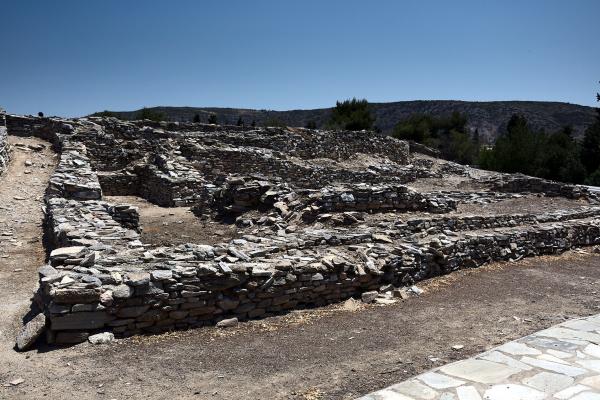
The design of the settlement is the main attraction. Several concentric walls, built of stone and rising in rings around the hilltop, enclosed a cluster of houses. In the centre stood a large building with a porch and a main hall, called a Megaron, which scholars connect with a leading household or a shared meeting place. Houses were of mud-brick on stone footings, built on both sides of narrow lanes. The walls show a mix of defensive purpose and social meaning, and they suggest a community that was organised enough to build together.
In later periods the hill kept its importance. Mycenaean builders cut large beehive-shaped tombs, known as tholos tombs, into the slope nearby, and the area is linked in tradition with Iolkos, the home of Jason and the starting point of the Argonauts. The Bronze Age palace of Iolkos is thought to lie under the modern Volos, a short distance away, and the finds from both places are displayed at the Archaeological Museum of Volos, in the city.
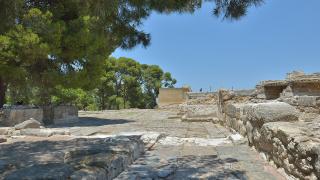
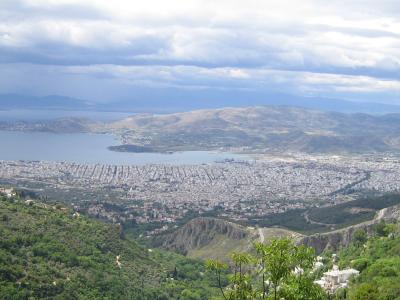
On site, paths run through the enclosure walls, with signs explaining the layout. The ruins are low and need some imagination: a stone foundation here, a doorway there, and the circle of the main wall. The view over the plain shows how close the sea once came, since the Pagasitikos Gulf has retreated over thousands of years. Guided information is offered in Greek and English, and a visit lasts roughly an hour.
Opening days and hours are set by the Ministry of Culture and can change, so check locally. The site has little shade, so a hat and water matter in summer, and late afternoon light is flattering for the walls. Pair the visit with the Archaeological Museum of Volos, which holds the best objects from Dimini and neighbouring Sesklo, and with a walk along the Volos waterfront.
Categories
More photos coming soon
Opening Hours
- Open
- Daily except Mondays, 8:30 to 15:00 (summer and winter)
Hours and prices change, especially out of season. Check with the venue before you go.
Questions people ask
Quick Facts
Best Time to Visit
May to October offers pleasant weather, with May and September ideal for fewer crowds.