







- Where
- Athens, Attica
- Directions
- Directions
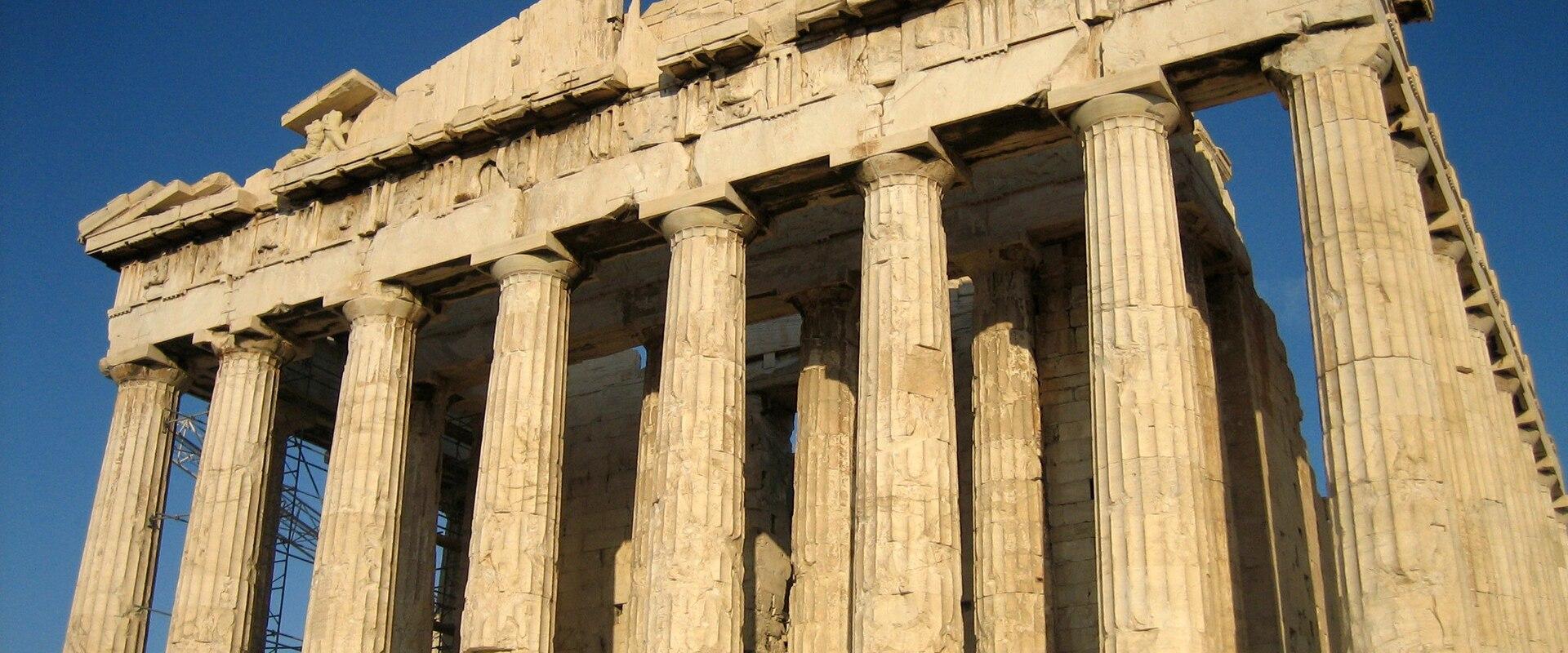
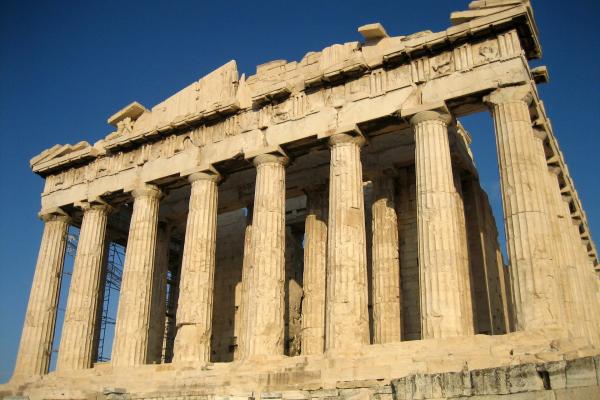
No other Greek building so completely sums up the ambitions of classical Athens. The Parthenon was raised between roughly 447 and 432 BC under the direction of Pericles, designed by the architects Ictinus and Callicrates, with Phidias in charge of the sculptural programme. It is a Doric temple of Pentelic marble, eight columns across the front and seventeen along the sides, built to house a colossal gold and ivory statue of Athena Parthenos, the maiden goddess for whom the city was named.
Subtlety is what makes the structure remarkable. Almost nothing in it is truly straight: the steps and the architrave bow gently upward, the columns lean slightly inward and swell towards the middle, and the corner columns are thicker than the rest. These refinements correct for optical illusions and give the temple a tension that flat geometry would not. Looking along the flank from a low angle, you can sense it.
The sculpture once covered the building. Ninety-two metopes ran around the outside, the pediments held large figures showing the birth of Athena and her contest with Poseidon, and a continuous frieze inside the colonnade is generally read as the Panathenaic procession. Much of it has been removed or damaged, and what remains is divided between Athens and museums abroad, chiefly the British Museum. The pieces held in Athens are best seen in the Acropolis Museum, where the gallery on the top floor follows the dimensions of the temple itself.
The building's later life shaped what stands today. It became a Byzantine church, then a mosque under Ottoman rule, and in 1687 a Venetian shell struck gunpowder stored inside, shattering the centre. Modern restoration, begun in the nineteenth century and continued in recent decades, has reassembled fallen drums and architraves, which explains the pale new marble visible among the old.
The temple is part of the UNESCO World Heritage listing of the Acropolis. Visitors cannot walk inside; you circle the temple from behind low barriers. The marble reads white at midday and warms to honey colour toward sunset, so a late visit rewards with better light and fewer people. Wear shoes with grip, since the rock path is steep and the stone smooth. For context, read the story of the Acropolis as a whole, from the Propylaia gateway to the Erechtheion, and then descend to the Acropolis Museum to see the surviving sculptures at eye level, which makes the scale of what once crowned the hill easier to grasp.
Categories
More photos coming soon
Nearby Attractions
Other places to visit in Athens
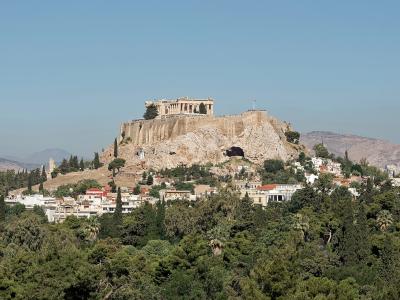
Acropolis
5th-century Greek acropolis on a limestone hill
Historic Sites & Ruins · Archaeological Sites
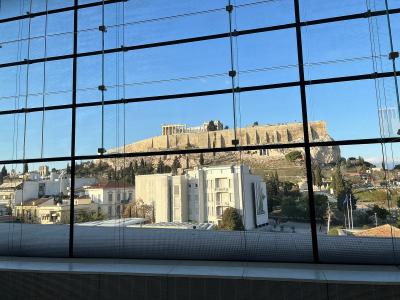
Acropolis Museum
Museum of ancient Greek art in Athens
From €10 Archaeological Museums · Museums
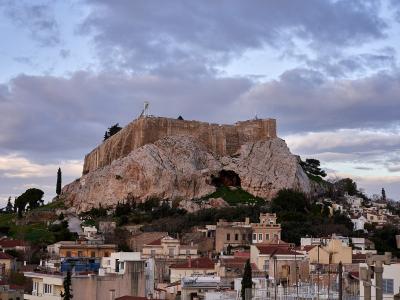
Plaka Neighborhood
Athens' oldest neighborhood beneath the Acropolis
Churches · Historic Districts
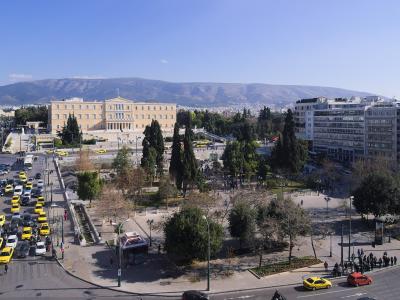
Syntagma Square
Athens' central square with the Hellenic Parliament
Free Historic Sites & Ruins · Urban & Local Life
Questions people ask
Quick Facts
Best Time to Visit
April to June and September to October offer mild weather and fewer crowds.