







- Admission
- Free
- Hours
- Open daily (natural landscape)
- Where
- Milos, Aegean
- Directions
- Directions
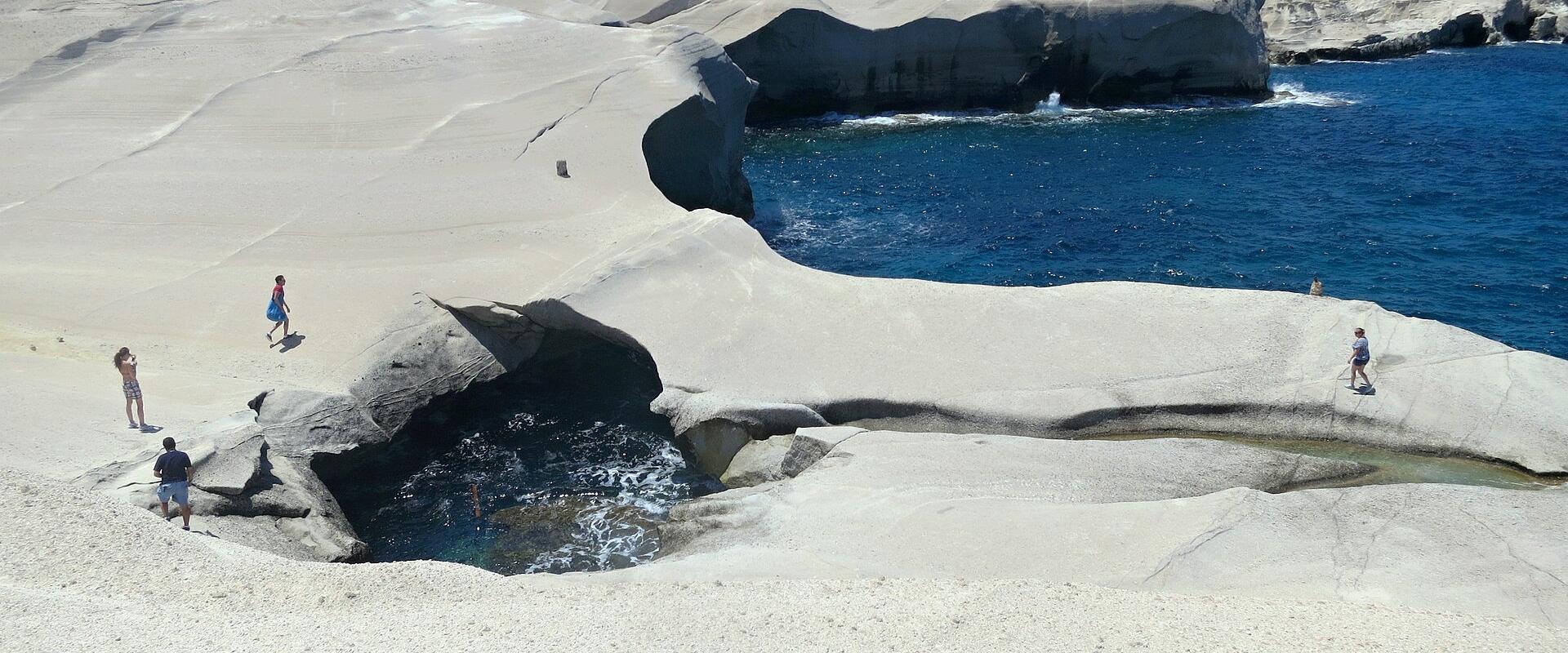
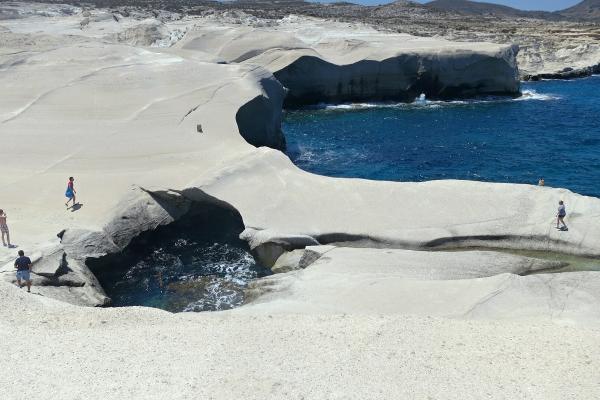
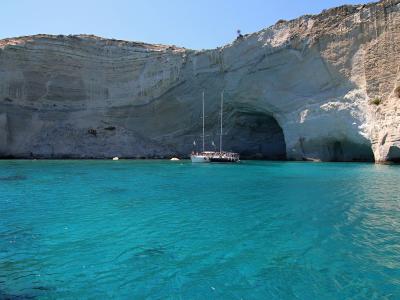
On the northern coast of Milos, in the Cyclades, close to the road between Adamas and the fishing village of Mandrakia, a stretch of shoreline looks like it belongs on another planet. Sarakiniko Beach is not a conventional beach at all but a landscape of smooth white rock that slopes down to the sea in pale waves, ramps and hollows, set off by the deep blue of the Aegean Sea. Visitors who arrive expecting a strip of sand are surprised by the sculpted cliffs, which have given the place its nickname of the lunar landscape.
The rock is volcanic. Milos is a volcanic island, and the white stone here is made of ash and pumice that settled in thick layers after eruptions long ago, hardening into a soft, pale tuff. Wind and waves have worked at it for millennia, carving shallow bowls, narrow channels, arches and caves, and polishing the surface to a texture that is smooth and chalky to the touch. Because there is almost no vegetation, the glare is strong, and the bright rock turns warm pink and gold at sunset. The best-known explanation of the name links it to the Saracen pirates who raided the Aegean in the Middle Ages, though like many place names it is hard to prove.
The activity here is simple. Visitors walk and scramble over the rocks, find a flat ledge for a towel and slip into the water from the edge, where the sea is deep, clear and turquoise right next to the stone. A small patch of sand at the inner end of the inlet offers an easier entry for those who prefer it, and a few people jump from the low cliffs into the deeper water, though this should only be done with care and knowledge of the depth. The cave openings at sea level are fun to explore by swimming or snorkelling on calm days, and the rocks make a dramatic backdrop for photographs.
The place has almost no facilities, no shade and no shelter, so visitors should bring water, a hat and sun protection, and wear shoes with good grip, because the surface can be rough. The wind that blows across the north coast can be strong, and the sea sometimes becomes rough, so conditions should be checked.
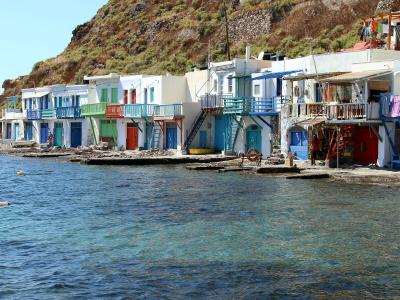
Accessing it is simple: it is one of the most photographed spots of any Greek island in the Mediterranean, about five kilometres from Adamas, and the road is easy to drive, though parking is limited and the site fills up in high season. The best times are early morning, when it is quiet, and sunset, when the colours change. It combines naturally with a visit to Mandrakia, the village of Plaka and the catacombs near Trypiti.
Categories
More photos coming soon
Hours & Fees
- Open
- Open daily (natural landscape)
- Admission
- Free
Hours and prices change, especially out of season. Check with the venue before you go.
Nearby Attractions
Other places to visit in Milos
Questions people ask
Quick Facts
Best Time to Visit
May through September offers warm weather, with June and September providing the best balance of comfort and fewer crowds.