







- Admission
- €4 for Koules Fortress
- €2 for children and sen
- Hours
- Koules Fortress: Wed-Mon 8:30am-8pm (summer); 8am-3:30/6pm (winter). Harbor: 24 hours.
- Where
- Heraklion, Crete
- Directions
- Directions
Heraklion’s old town is the walled core of the city, and its layout still follows the lines set by the Venetians, who ruled Crete from the thirteenth century until 1669 and called the city Candia. The fortifications they built in the sixteenth and early seventeenth centuries, with their massive bastions, enclose the area for nearly four kilometres. They were designed to withstand artillery, and they succeeded for decades: the Ottoman siege of Candia lasted twenty-one years, one of the longest in history. The walls remain largely intact, and a walk along parts of them gives a sense of their scale.
At the harbour, the Koules Fortress, also known as the Venetian Fortress or Rocca al Mare, guards the entrance to the old port from the end of a long mole. It dates from the sixteenth century and has a bold sea-facing shape, with the lion of St Mark carved above the entrance. Inside the walls, the Venetian Loggia, built in the early seventeenth century and restored after damage, houses the city hall, and its arcades and decorated facade are among the best examples of Italian Renaissance architecture in Crete.
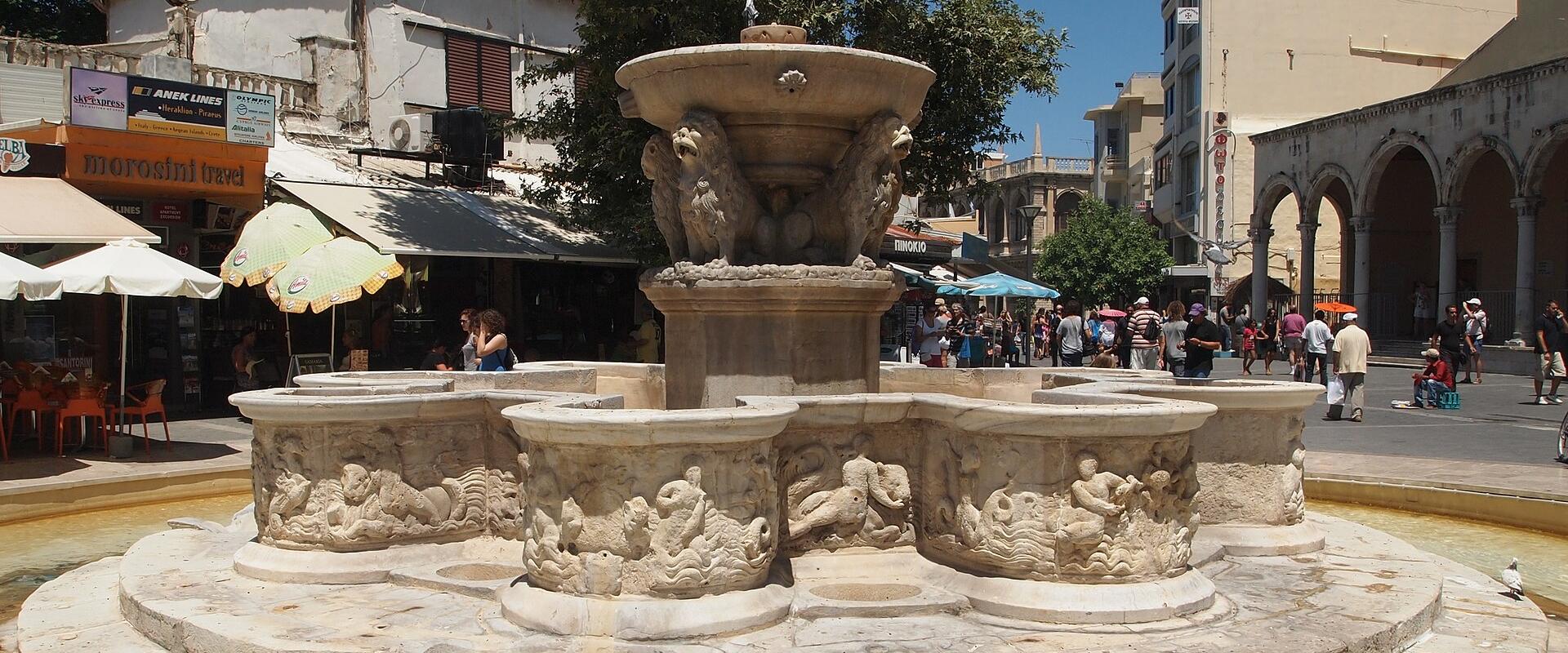
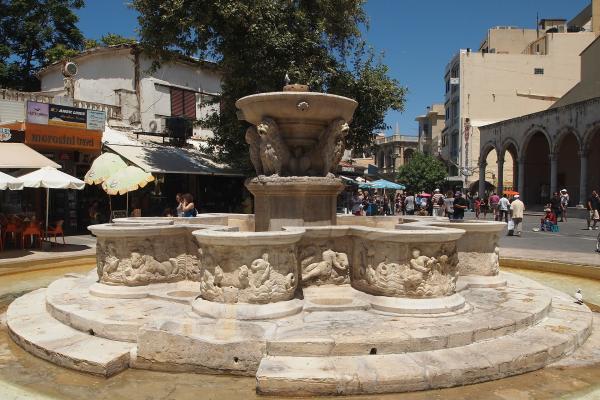
Many lanes and squares are laid out around these landmarks. The Morosini Fountain, with its four lions, stands in the main square, and the Cathedral of Agios Minas rises near the lanes behind it, while the older Church of Agios Titos nearby combines Venetian and Ottoman layers, including a former mosque conversion. Ottoman fountains and baths are scattered around the old town, a reminder that the Ottomans ruled for more than two centuries.
At the southern edge of the walls, the Martinengo Bastion is the best-known tower, because the writer Nikos Kazantzakis, author of Zorba the Greek, is buried there. His simple grave carries the inscription, I hope for nothing, I fear nothing, I am free. The view over the city from the grave is a quiet contrast to the lively streets inside.
The market street, 1866 Street, runs through the town and sells herbs, cheese, olives and souvenirs, and the area has many tavernas and cafes serving Cretan food. The pedestrianised lanes are busiest in the evening, when locals and visitors meet for dinner and a stroll. The old town is flat and easy to cover on foot, and a morning is enough for the main sights of Heraklion, though the Archaeological Museum nearby deserves a separate visit.
Categories
More photos coming soon
Hours & Fees
- Open
- Koules Fortress: Wed-Mon 8:30am-8pm (summer); 8am-3:30/6pm (winter). Harbor: 24 hours.
- Admission
- €4 for Koules Fortress; €2 for children and sen
Hours and prices change, especially out of season. Check with the venue before you go.
Nearby Attractions
Other places to visit in Heraklion
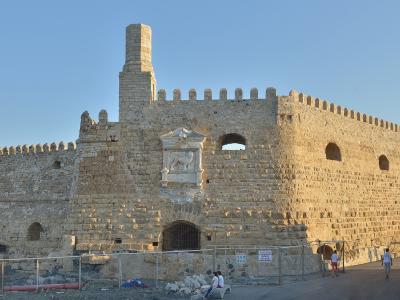
Koules Fortress
Venetian fortress guarding Heraklion's old port
From €5 Historic Sites & Ruins · Fortifications
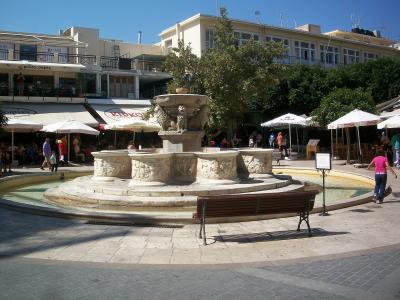
Venetian Lion's Fountain (Mor'shini Fountain)
1628 Venetian fountain with four lion spouts
Free Monuments · Town Centers
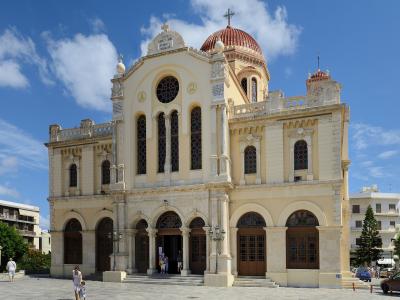
Agios Minas Cathedral
19th-century Greek Orthodox cathedral in Heraklion
Historic Sites & Ruins · Religious Heritage
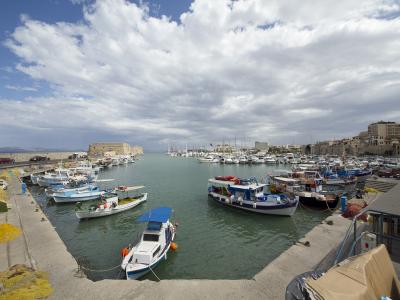
Old Harbour (Old Town)
Venetian harbor in central Heraklion
Historic Districts · Town Centers
Questions people ask
Quick Facts
Best Time to Visit
May to June and September to October offer warm, dry weather ideal for sightseeing and beach activities.