







- Admission
- €20 full, €10 reduced (site and Agora Museum in the Stoa of Attalos).
- Where
- Athens, Attica
- Directions
- Directions
Long before the Acropolis became a monument, in Athens the area below it was where Athenians lived their public lives. The Ancient Agora, northwest of the hill, was the marketplace, courthouse, council seat and meeting ground of the city. Here, from the late sixth century BC, citizens argued out the new system of government associated with Cleisthenes, and here the philosopher Socrates is said to have spent his days questioning passers-by.
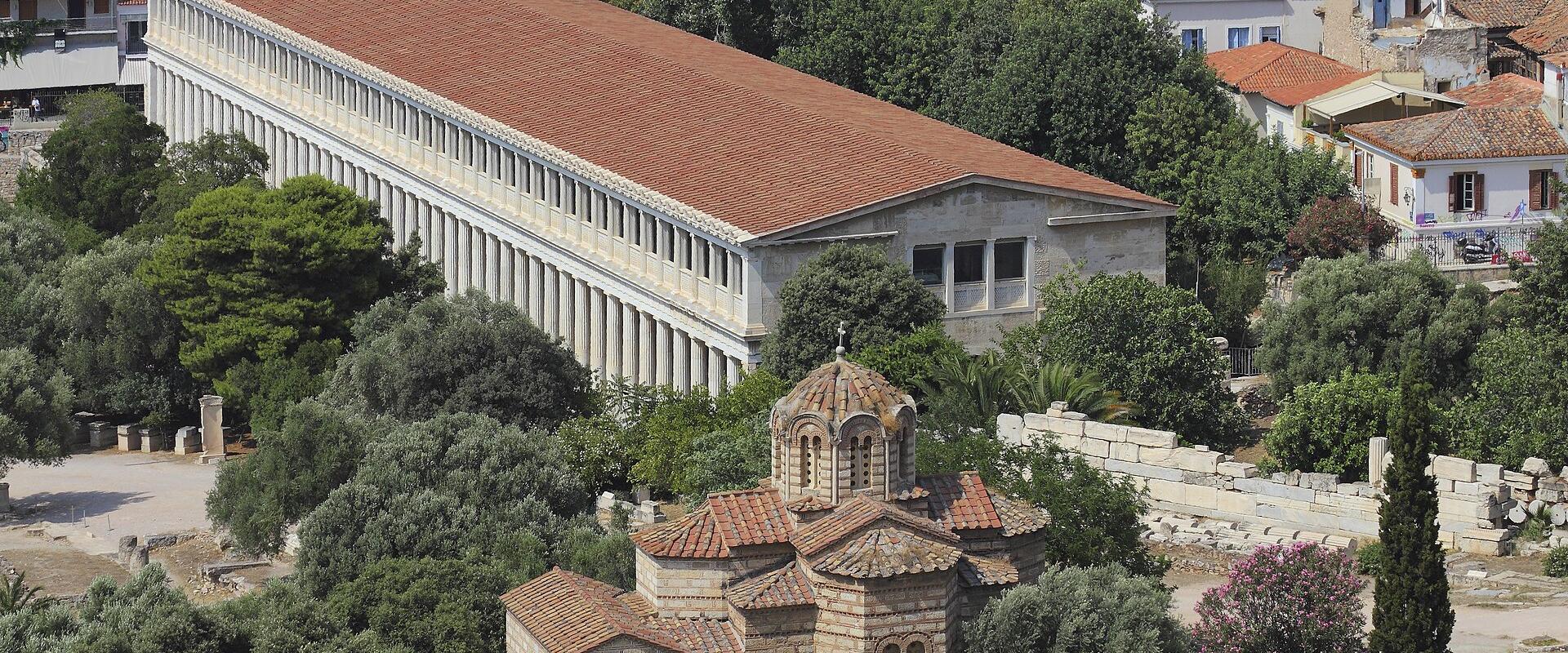
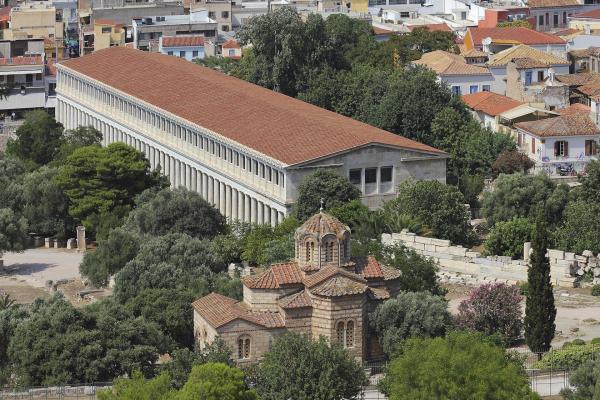
The archaeology is compact and visually rewarding. The Temple of Hephaestus, on a rise on the west side, is the highlight: a Doric temple of the fifth century BC, it is among the best-preserved temples of the ancient Greek world, partly because it later served as a Christian church. Close by, the little Byzantine Church of the Holy Apostles, with its dome and brickwork, adds another layer of the site's long history.
The low foundations in the open ground tell the story of civic life. The Bouleuterion was the meeting place of the council of five hundred, the Tholos was the round building where its rotating officials dined and slept, and marble boundary stones, water channels and the line of the Panathenaic Way, the great processional road, run through the middle. Archaeologists found small pottery shards here inscribed with names, used in the practice of ostracism, in which citizens voted to exile an unpopular figure.
One structure was rebuilt in full: the Stoa of Attalos, a long two-storey colonnaded hall first erected in the second century BC, was reconstructed in the 1950s by the American School of Classical Studies, which has excavated the Agora since 1931. It now houses the site museum, with finds that include voting devices, pottery and a water clock, and its shaded walkway is a pleasant place to pause.
Visitors will find the ground uneven with gravel paths and often open to the sun, so comfortable shoes and a hat are useful in summer. Most visitors spend between one and two hours. The site is quieter than the Acropolis and has trees, birdsong and shade, which gives a very different feel. It sits on the way between Monastiraki and the Thissio area, and works well combined with the Roman Agora, Kerameikos and the Acropolis.
Categories
More photos coming soon
Admission Fees
- Admission
- €20 full, €10 reduced (site and Agora Museum in the Stoa of Attalos).
Hours and prices change, especially out of season. Check with the venue before you go.
Nearby Attractions
Other places to visit in Athens
Acropolis
5th-century Greek acropolis on a limestone hill
Historic Sites & Ruins · Archaeological Sites
Parthenon
Ancient Greek temple atop the Acropolis
Ancient Ruins · Monuments
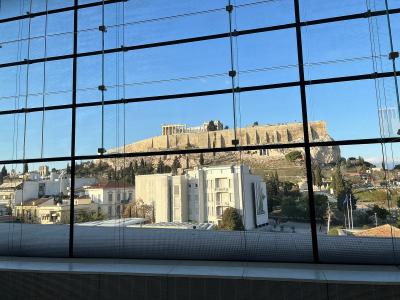
Acropolis Museum
Museum of ancient Greek art in Athens
From €10 Archaeological Museums · Museums
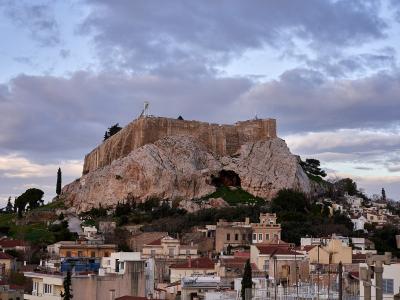
Plaka Neighborhood
Athens' oldest neighborhood beneath the Acropolis
Churches · Historic Districts
Questions people ask
Quick Facts
€20 full, €10 reduced (site and Agora Museum in the Stoa of Attalos).
Best Time to Visit
April to June and September to October offer mild weather and fewer crowds.