

Ancient Stadium
- Where
- Olympia, Peloponnese
- Directions
- Directions
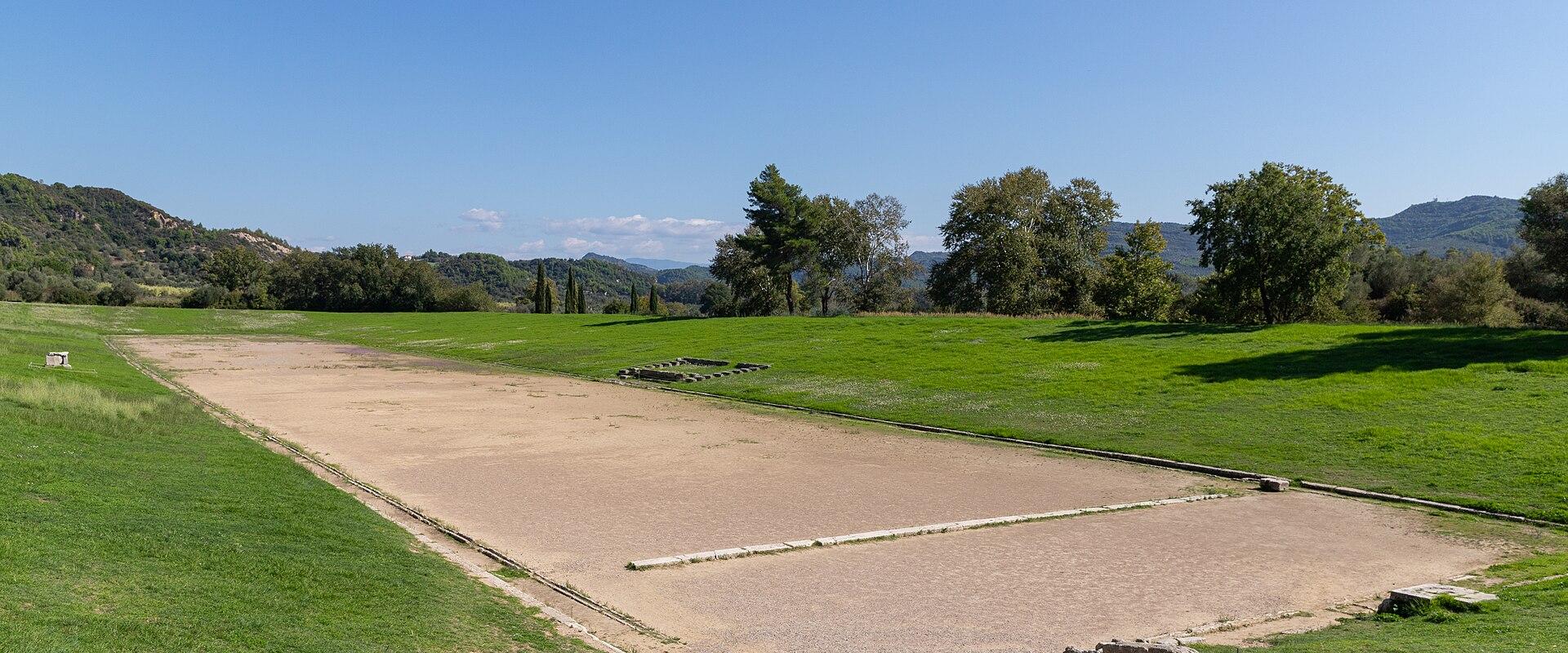
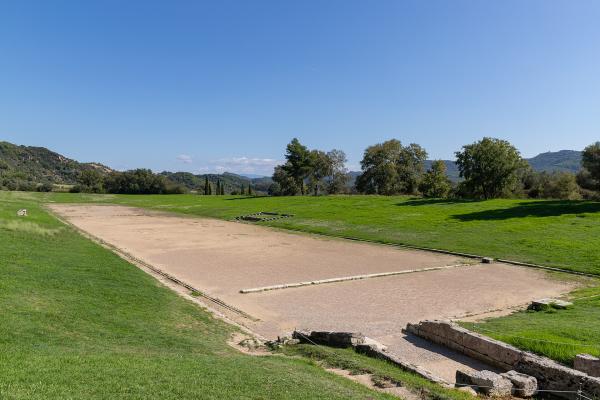
Walking through a short vaulted tunnel from the sanctuary of Olympia, visitors emerge onto the very track on which the ancient Olympic Games reached their climax. The Ancient Stadium lies at the eastern edge of the Altis, in a long hollow between grassy embankments, and it is one of the best-loved places in Greece for its simplicity: a flat strip of earth, stone starting lines and slopes where thousands once sat. The first recorded games in 776 BC consisted of a single footrace here, and over the following centuries the programme grew to include other races, wrestling, boxing and the pentathlon. The festival continued every four years until the late fourth century AD.
The track measures about 192 metres, which was the length of one stadion, the ancient Greek unit from which the English word stadium comes, equal to 600 feet of Olympia. At each end, a row of limestone slabs marks the start and finish lines, with grooves cut into the stone where runners placed their toes, and posts once divided the lanes. The stands are simple earth banks, without seats, and could hold tens of thousands of spectators, who watched in the sun with only what they could carry. On the south side, a stone seat marked the place of the judges, and nearby an altar belonged to Demeter, whose priestess was the only woman allowed to watch the games as a spectator.
The entrance was a vaulted passage, called the krypte, through which the athletes and officials walked from the sanctuary into the stadium. As the competitors emerged from the dark tunnel into the light and the roar of the crowd, the moment must have been dramatic. Visitors today follow the same route, and the arch, a Hellenistic construction, still stands.
The stadium has remained part of the Olympic story. In 2004 the shot put events of the Athens Olympic Games were held here, in the ancient setting, and many visitors, from children to veterans, take off their shoes and run the length of the track, a ritual that fits the place. The surrounding trees give shade and a calm atmosphere, in contrast to the hot, stony ground.
The stadium forms part of the main archaeological site at Olympia, with a single ticket covering it and the other ruins, so it is easily combined with the Temple of Zeus, the Temple of Hera and the museum, and it ranks among the best-known sites of the Peloponnese. Opening hours (April to October are the longer ones) depend on the season, and early morning is the best time, when the light is soft and few people are around.
Categories
More photos coming soon
Questions people ask
Quick Facts
Best Time to Visit
May through October offers warm, dry weather ideal for exploring the archaeological site.