


Pelopion
- Where
- Olympia, Peloponnese
- Directions
- Directions
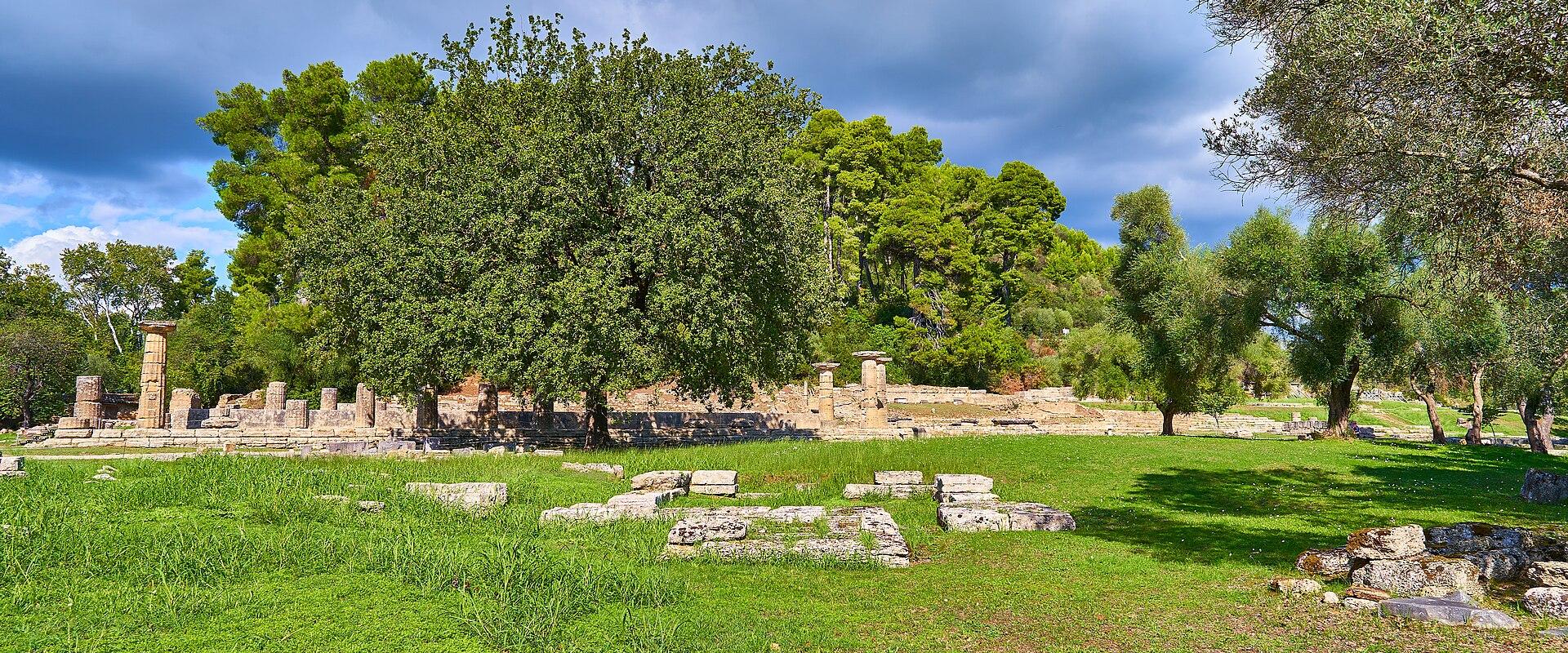
The Pelopion is the sacred enclosure of Pelops in the sanctuary of Olympia, in the western Peloponnese of Greece, and it is among the oldest cult places in the Altis, the sanctuary's holy precinct. In myth Pelops was the king of Elis and the founder of the family of Atreus, and the Greeks believed that the whole southern half of mainland Greece, the Peloponnese, took its name from him: Peloponnesos meant the island of Pelops, and its people were the Peloponnesians. The enclosure held what ancient writers described as his tomb and shrine, a place of hero worship that predates the great temples around it.
The most familiar story about Pelops is the chariot race. To win the hand of Hippodameia, daughter of King Oenomaus of Pisa, he had to defeat the king in a race, and with some help he won, but the myth has several dark sides. According to a gruesome tale, his father Tantalus had served him up to the gods as a meal, and when the gods restored him, a shoulder carved of ivory replaced the one that had been eaten. These stories explain why the games at Olympia, founded in his honour in some accounts, were linked with chariot racing, and why athletes and visitors honoured him before sacrificing to Zeus.
Pausanias, the Greek traveller who described Olympia in the second century AD, tells us that the Pelopion was an irregular enclosure with a stone wall, planted with trees and decorated with statues, with an entrance on the side facing the Temple of Zeus. Sacrifices were made to Pelops at a pit, and the offering was a black ram, the victim given to the dead. Pausanias also says that the sacrifice came before that to Zeus, which gives the hero a place of honour. Archaeologists have found that the site was in use from the Bronze Age, beneath a low burial mound that may have given rise to the cult.
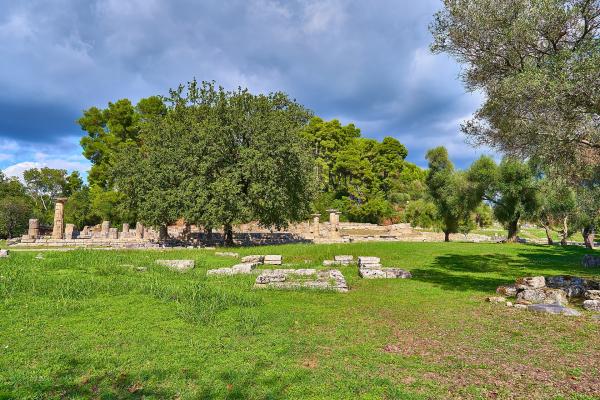
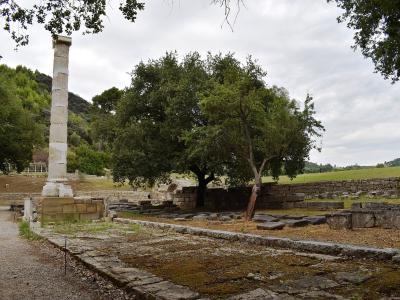
Today the visible remains are modest. A low retaining wall in the shape of an irregular pentagon encloses a small mound, close to the Temple of Zeus and the Heraion. It is easy to walk past, but a closer look explains the layered history of Olympia, where heroic cult, divine worship and athletic competition came together. The enclosure lies within the main archaeological area and is part of the ticket for the site.
Spend a little time here on a visit to the sanctuary, ideally in the early morning or late afternoon, when the light is soft and the groups have thinned out. The ground is uneven and there is little shade, so bring water and a hat. A guidebook or the museum nearby helps explain the myth behind the stones.
Categories
More photos coming soon
Nearby Attractions
Other places to visit in Olympia
Questions people ask
Quick Facts
Best Time to Visit
May through October offers warm, dry weather ideal for exploring the archaeological site.