Archaeological Museum of Olympia
- Where
- Olympia, Peloponnese
- Directions
- Directions
The Archaeological Museum of Olympia stands near the entrance to the ancient site, in the western Peloponnese, and it houses the finest objects found in the sanctuary of Zeus. It was built in the 1970s and arranged in a modern, spacious style with natural light, in a way that lets the large sculptures be seen at a human scale, and it replaced an earlier museum built after the first excavations. A visit works best before or after a walk through the ruins, since the museum fills in what the empty stones cannot show.
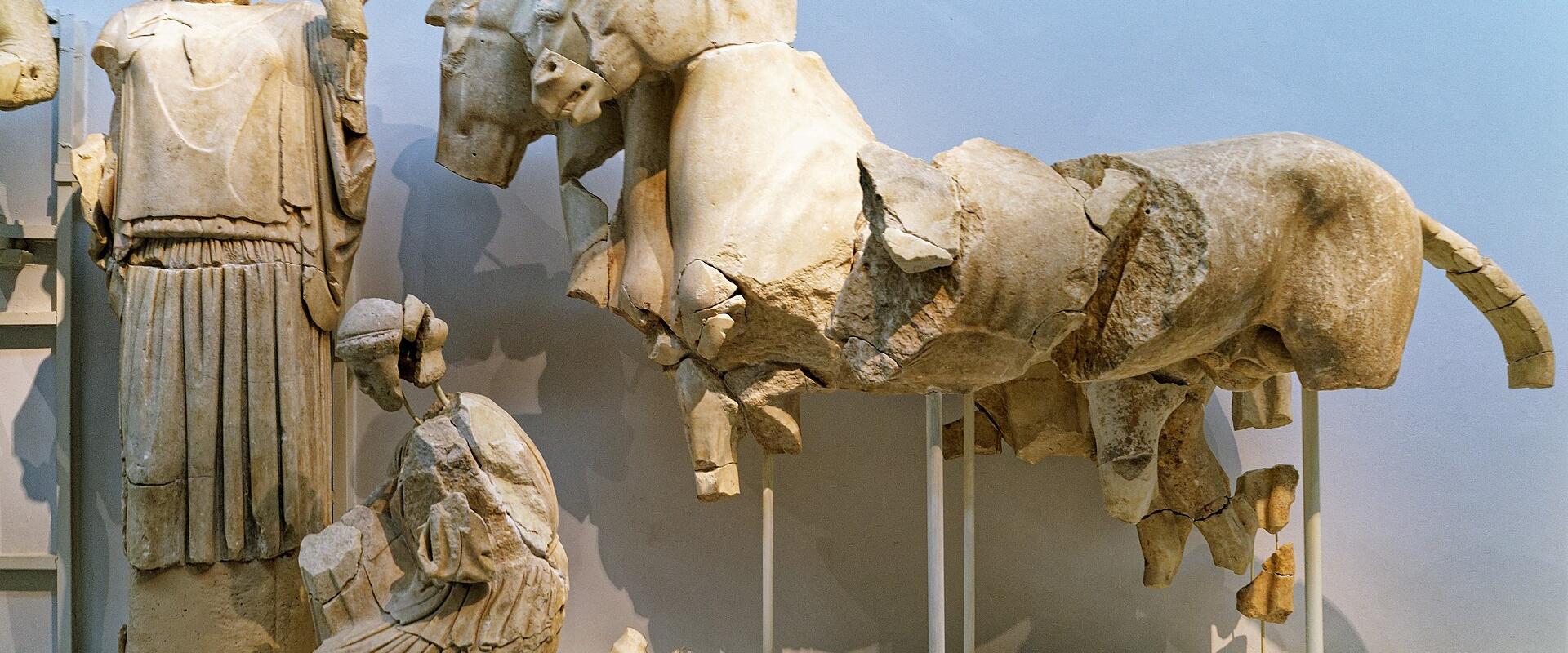
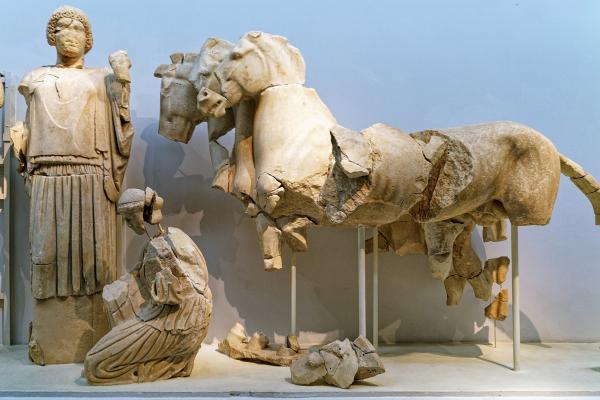
The highlight is the sculpture from the Temple of Zeus. The two pediments, the triangular gables at either end, occupy a hall of their own. The east pediment shows the moment before the chariot race between Pelops and Oenomaus, with figures standing in calm tension, and the west pediment shows the wild battle of the Lapiths and Centaurs at a wedding feast, with Apollo standing serenely at the centre, one arm outstretched to command order. They are masterpieces of the severe style of the fifth century BC. The metopes, panels showing the twelve labours of Heracles, are displayed in the same hall.
The museum's best-known statue is the Hermes of Praxiteles, a marble figure of the god holding the infant Dionysus, with the grace of a smooth, relaxed pose and the soft finish typical of the fourth century BC sculptor. Nearby stands the Nike of Paionios, a marble figure of Victory descending through the air with her drapery blown against her body, which was set on a tall pillar in the sanctuary around 420 BC. Other halls display terracotta figures, such as the group of Zeus and Ganymede, bronze helmets, shields and armour offered by cities after battles, and tools of athletes, giving a good picture of what the ancient Greeks offered to their gods. One helmet carries an inscription naming Miltiades, the victor of Marathon.
A small cup inscribed with the words I belong to Pheidias was found in the workshop where the sculptor made the great statue of Zeus, and it is among the most moving small objects in the collection. Together with the bronze offerings and weights used by athletes, it brings the human side of the sanctuary into view.
The museum has about a dozen galleries, and a visit takes between one and two hours. Labels are in Greek and English, and the building is well air-conditioned, a relief on a hot day. Opening times and ticket details follow the national schedule and vary by season, so check ahead. The site and museum are a few minutes' walk apart.
Categories
More photos coming soon
Nearby Attractions
Other places to visit in Olympia
Questions people ask
Quick Facts
Best Time to Visit
May through October offers warm, dry weather ideal for exploring the archaeological site.