







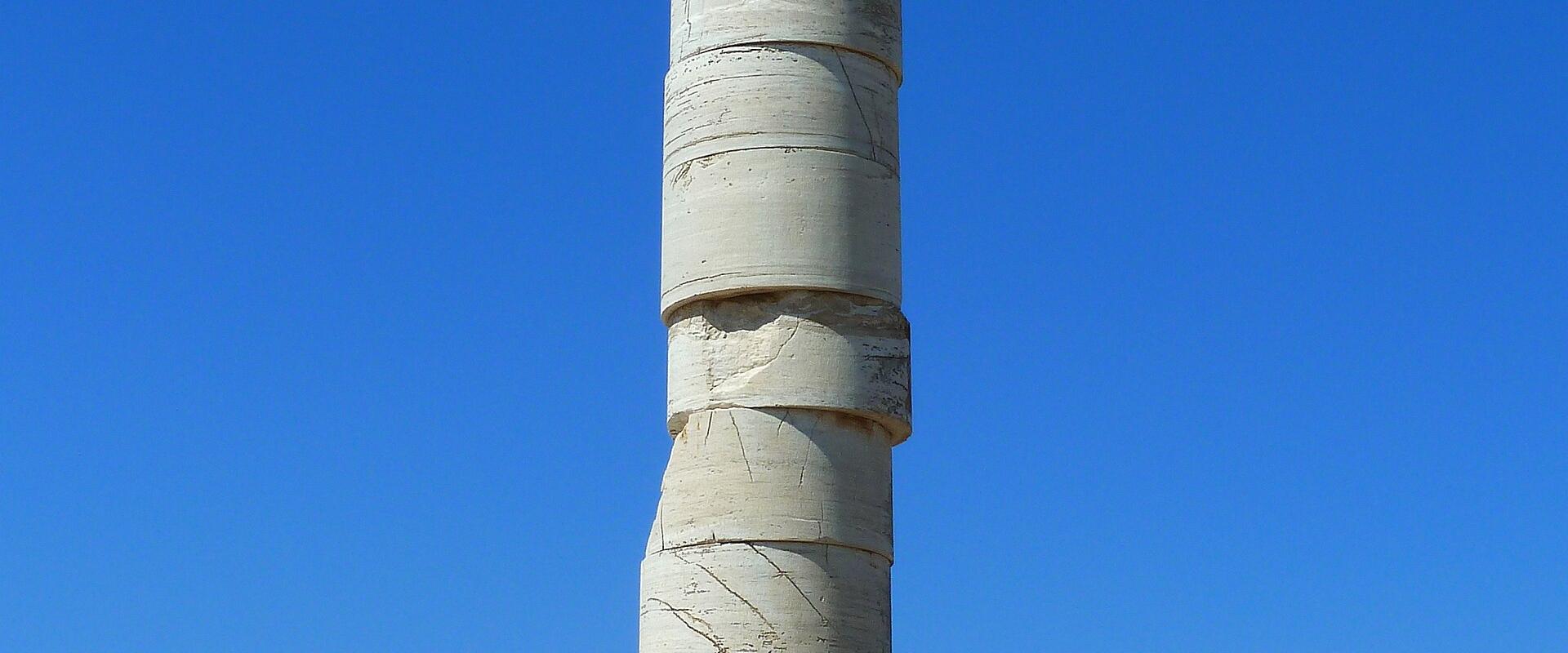
- Where
- Samos, Aegean
- Directions
- Directions
On a low coastal plain on the south of Samos, close to the sea and the mouth of the Imbrasos river, the Heraion was one of the great sanctuaries of the ancient Greek world, a major religious site of the Aegean. Together with the nearby town of Pythagoreio, it was inscribed by UNESCO as a World Heritage Site in 1992. The place is tied to the goddess Hera, who according to local tradition was born on the island, under a willow-like lygos tree beside the river, and worshipped here from the Bronze Age onward.
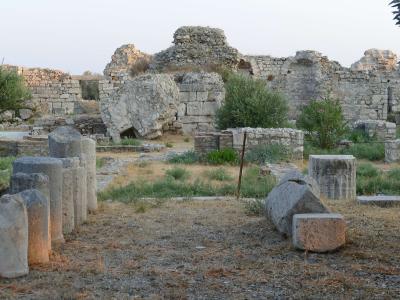
The setting is unlike many sites in Greece. The ground is flat and green, partly marshy and shaded by reeds and trees, and the ruins lie scattered in the grass rather than on a rocky hilltop. The sanctuary's history is long: an early altar and a long hall-like temple of the eighth century BC were succeeded in the sixth century BC by a huge Ionic Temple of Hera designed by the architects Rhoikos and Theodoros, whose scale made it among the largest in the Greek world. That building was damaged and replaced with an even more ambitious temple under the tyrant Polykrates, which was never completely finished.
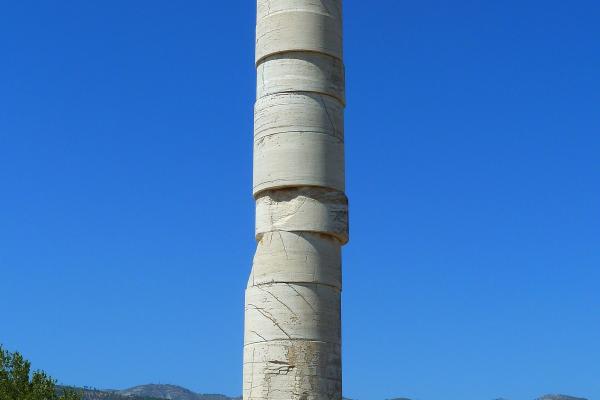
Today a single reconstructed column, rebuilt from drums, rises about ten metres from the foundations and marks the line of the great temple, serving as a quiet reminder of what stood here. Around it, visitors can find the base of the large altar, the foundations of earlier temples, remains of stoas and treasuries, and a Christian basilica from late antiquity, which shows that the site continued to draw people long after the cult ended. A paved Sacred Way once linked the sanctuary to the city, about six kilometres to the east, lined with statues and tombs.
The finds from the sanctuary, including large marble statues known as the Geneleos group and bronze and ivory votive offerings brought from as far as Egypt and the Near East, are displayed in the Archaeological Museum of Samos in Vathy, and the museum is the natural complement to the site.
Visitors will find the Heraion about six kilometres from Pythagoreio and is easiest to reach by car or taxi. A visit takes an hour or less, and the place is usually calm. Shade is limited, so water and a hat help, and mosquitoes can appear near the marshy ground in the evening. The Tunnel of Eupalinos, a remarkable ancient engineering work, lies in the same area and makes a natural second stop.
Categories
More photos coming soon
Nearby Attractions
Other places to visit in Samos
Questions people ask
Quick Facts
Best Time to Visit
May to October offers warm, dry weather and clear skies, ideal for exploring.