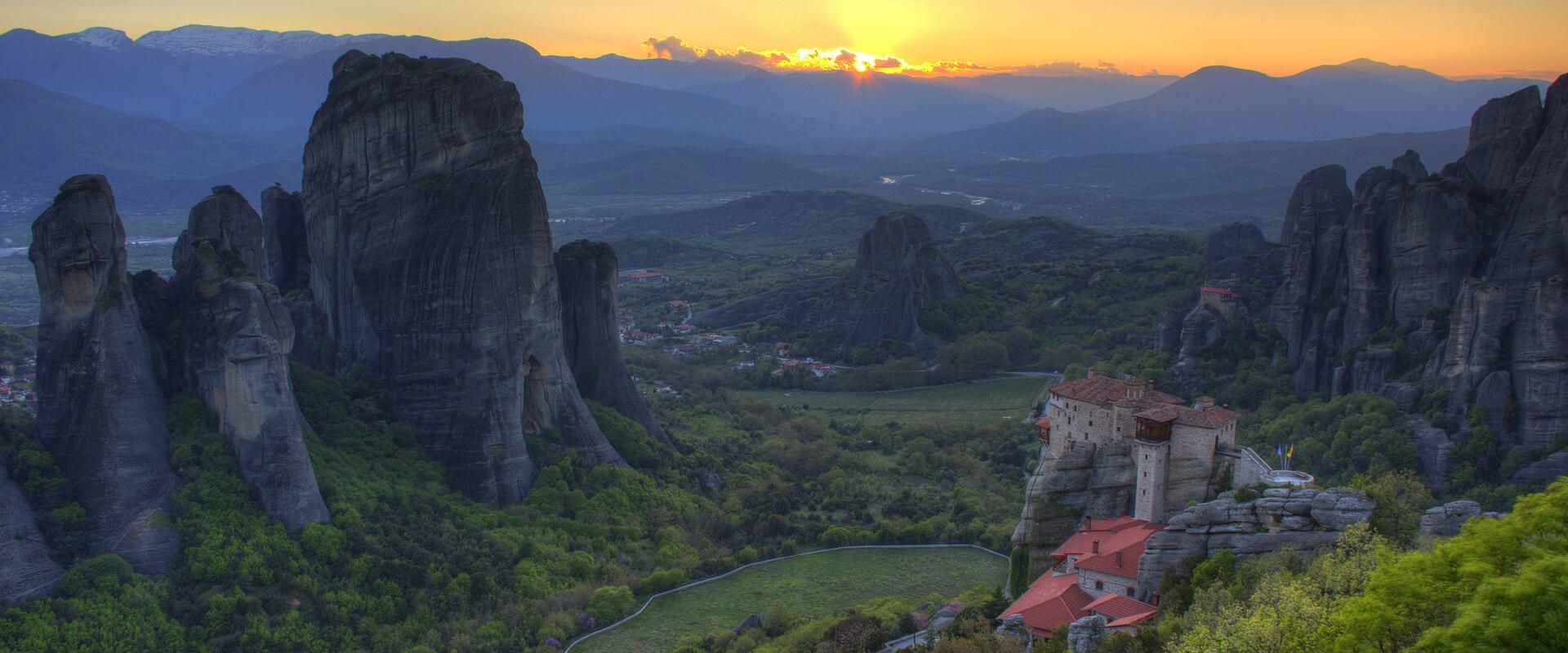
Meteora Rock Formations (Sandstone Pillars)
UNESCO site with monasteries on sandstone pillars
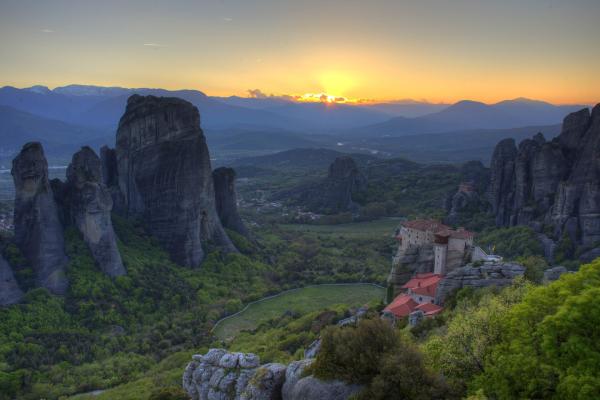
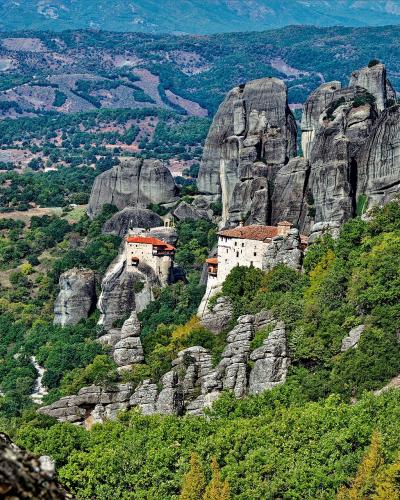
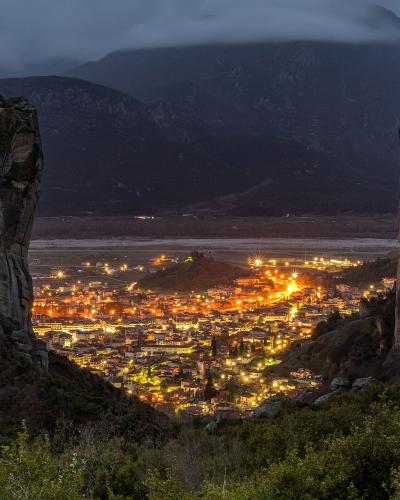
The rock formations of Meteora, located in the Trikala regional unit of Thessaly, Greece, present a striking geological landscape. These towering sandstone pillars, which rise more than 20 meters from the ground, create a dramatic natural backdrop that has long inspired spiritual devotion. The area is recognized as a UNESCO World Heritage Site, a status granted in 1988 due to the unique combination of its geological features and the cultural heritage of the monastic communities established within it.
Visitors often explore these formations by viewing the monasteries that perch atop the pillars. While there were historically 24 monasteries in the region, only a few remain active today, including the Great Monastery, which was established in 1356. The landscape offers panoramic views that highlight the stark contrast between the rugged stone and the sky. For travelers, the experience is defined by the visual impact of these natural structures and the historical significance of the human settlements built within them. The site serves as a significant cultural landmark, reflecting the historical interplay between the natural environment and religious life in Greece. Visitors can appreciate the scale of the geology and the historical context of the monastic tradition that has thrived in this unique environment for centuries.
Categories
More photos coming soon
Admission Fees
Admission
€5 per monastery
Nearby Attractions
Other places to visit in Meteora
Frequently Asked Questions
Quick Facts
Best Time to Visit
April to June and September to October offer mild weather ideal for hiking and exploring.