







Monastery of Roussanou
- Admission
- €5 per person
- Hours
- Summer: 09:00–16:30 (closed Sundays at 16:00); Winter: 09:30–14:00; Closed on Wednesdays y...
- Where
- Meteora, Thessaly
- Directions
- Directions
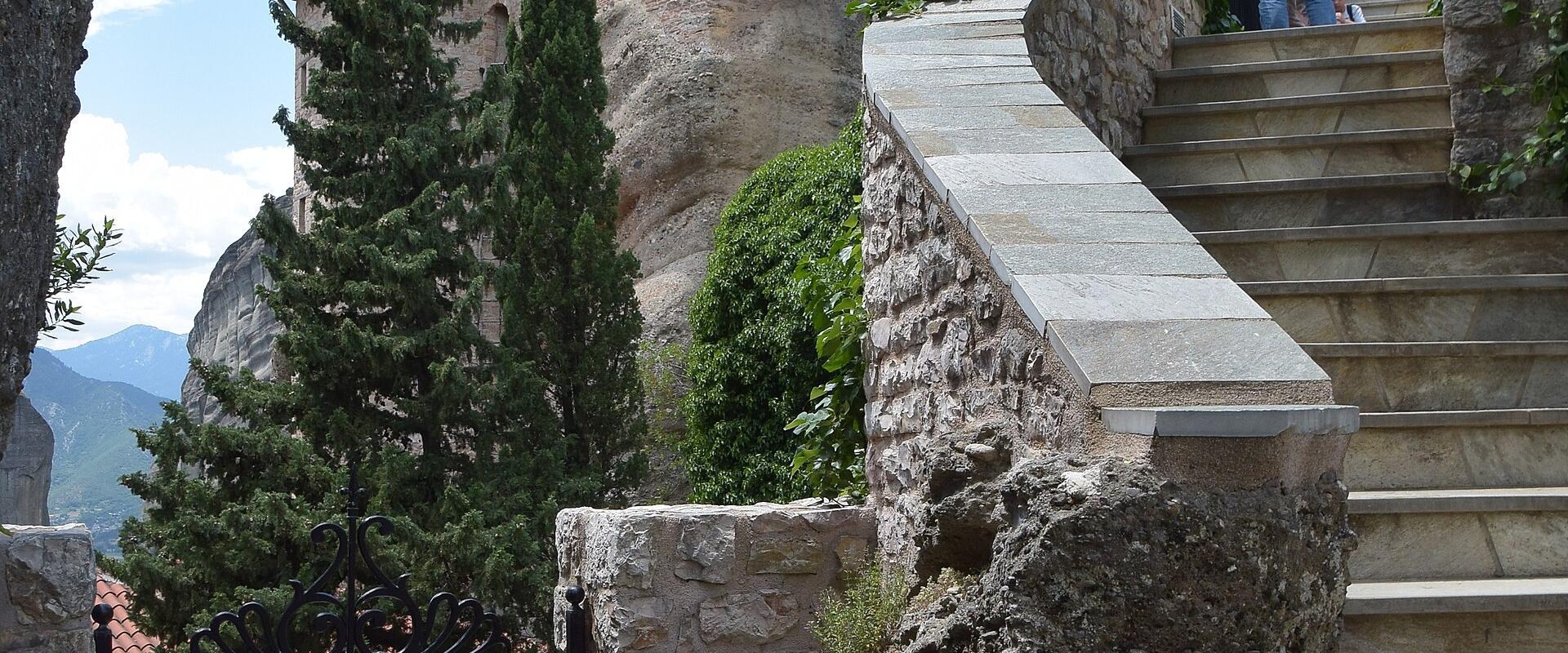
The Monastery of Roussanou, also known as Agia Varvara or Saint Barbara, is one of the most photographed buildings of Meteora, because it seems to grow out of the rock. It stands on a narrow, slender pillar of sandstone near the village of Kastraki, close to Kalambaka, and its walls follow the edge of the pillar so closely that the building and the stone look like a single form, a perfect example of Byzantine monastic architecture adapted to a cliff. From the road below, it appears to rise straight out of the cliff, with only a small bridge connecting it to the path.
The monastery was founded in the sixteenth century, around the middle of the 1500s, by monks from Ioannina, and it flourished for a time before declining in later centuries. It is one of the six monasteries of Meteora that remain active, and since the twentieth century it has been home to a community of nuns, who maintain the buildings, tend small gardens and welcome visitors. Together with the other monasteries and the rock formations around them, it forms part of the UNESCO World Heritage Site that was inscribed in 1988.
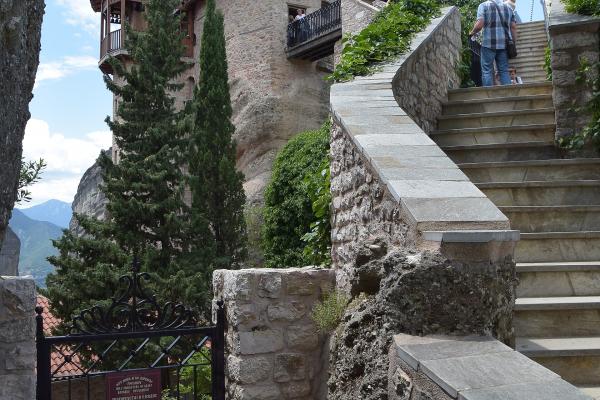
The approach is part of the experience. From the road, a path and a series of stone steps lead up to the entrance, which is reached by a bridge over the gap between the pillar and the neighbouring rock. The steps are uneven and steep, so sturdy shoes are advisable. Inside, the buildings are arranged on several levels around small courtyards, with narrow passages, wooden balconies and low doorways, and the sense of space is intimate because the platform is so small.
The katholikon, the main church, is decorated with wall paintings of the sixteenth century in the manner of the Cretan school, and the scenes of the Last Judgement and of martyrdom, painted with an energetic, dramatic style, are among the best known. The church also contains a carved wooden iconostasis. Because the monastery is smaller than the Great Meteoron or Varlaam, the visit is shorter, and many people find it more atmospheric and less crowded. From the terraces, the views of the valley, the rocks and the plain below are spectacular.
As at all Meteora monasteries, a dress code is applied, with covered shoulders and knees for women and long trousers for men, and wraps are often available at the entrance. Photography inside the church is not allowed. Opening days and hours vary by season, and the monastery has a weekly closing day, so check in advance. Allow about forty-five minutes. Late afternoon is lovely, and the monastery sits between the Great Meteoron and the Monastery of St. Stephen on the road, so a day can include several.
Categories
More photos coming soon
Hours & Fees
- Open
- Summer: 09:00–16:30 (closed Sundays at 16:00); Winter: 09:30–14:00; Closed on Wednesdays year-round.
- Admission
- €5 per person
Hours and prices change, especially out of season. Check with the venue before you go.
Nearby Attractions
Other places to visit in Meteora
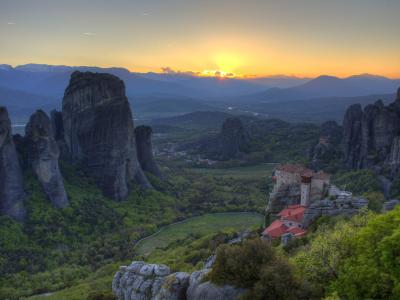
Meteora Rock Formations (Sandstone Pillars)
UNESCO site with monasteries on sandstone pillars
From €5 Natural Landscapes · Religious Heritage
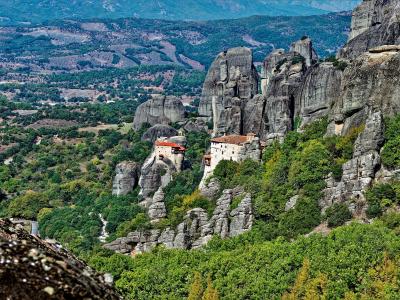
Great Monastery (Great Meteoron)
Oldest and largest monastery in Meteora, Greece
Historic Sites & Ruins
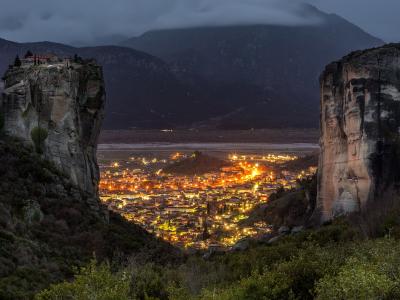
Meteora Monasteries (Six Medieval Monasteries)
Six medieval monasteries on sandstone pillars
Historic Sites & Ruins · Religious Heritage
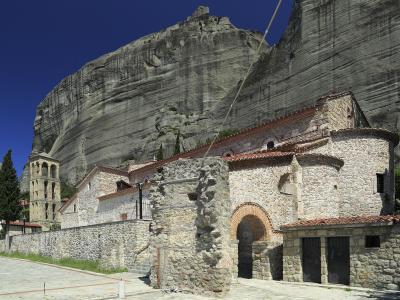
Byzantine Church Of The Assumption
11th-century Byzantine church in Kalambaka
From €2 Historic Sites & Ruins · Churches
Questions people ask
Quick Facts
Best Time to Visit
April to June and September to October offer mild weather ideal for hiking and exploring.