







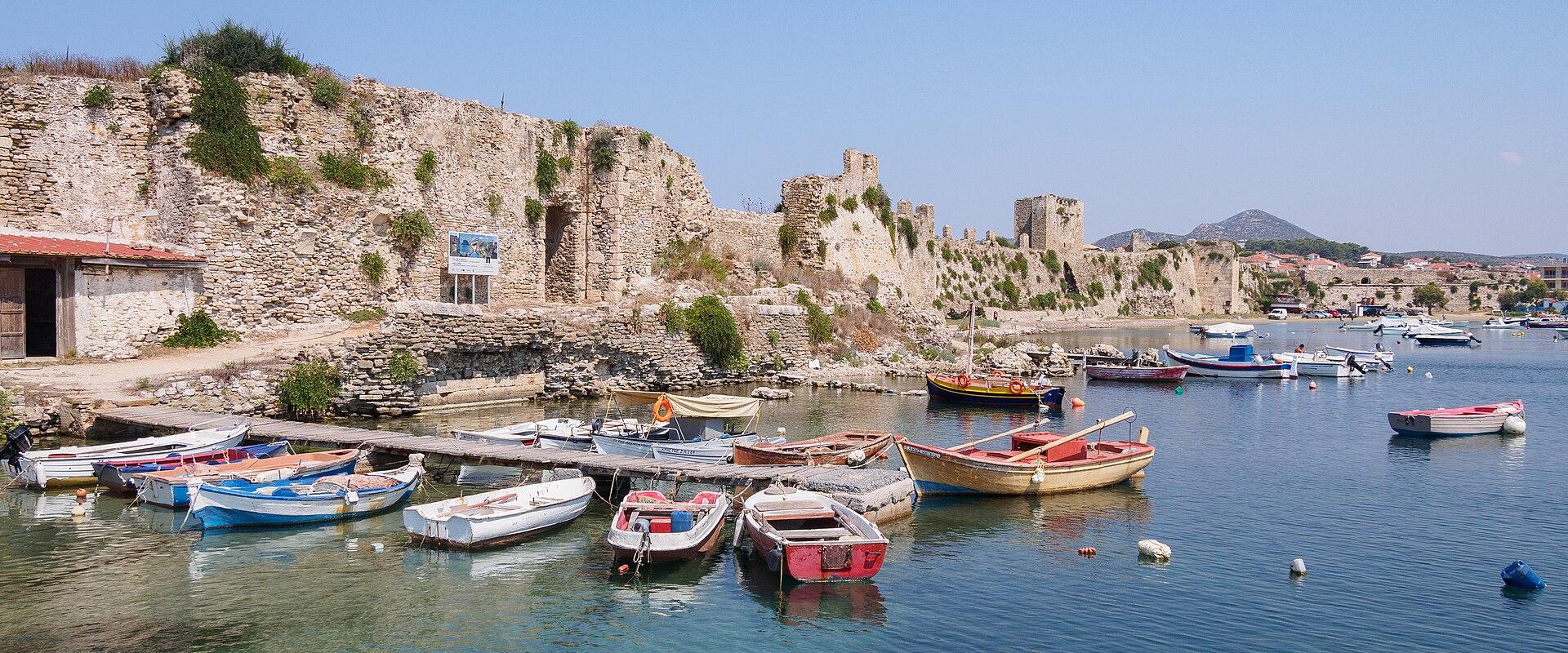
Methoni Castle
- Admission
- €4 (€2 reduced)
- Where
- Kalamata, Peloponnese
- Directions
- Directions
Methoni Castle is the largest fortress in Messinia, facing the Ionian Sea, standing on a rocky promontory at the south-western tip of the Peloponnese, about sixty kilometres from Kalamata, and it is one of the most impressive Venetian fortifications in the Mediterranean. Together with Koroni on the opposite coast, it was called one of the two eyes of the Venetian Republic, because from here Venice watched the sea lanes between Italy and the Levant, and the port at Methoni was a halfway station for pilgrims travelling to the Holy Land, for merchants and for warships.
Venice took Methoni around 1209, in the aftermath of the Fourth Crusade, and held it until 1500, when the Ottoman fleet captured it and massacred many of its inhabitants. The Venetians returned briefly in 1686 and lost the fortress again in 1715, and the Ottomans held it until 1828, when French troops under General Maison, sent to support the Greek struggle for independence, forced its surrender. The history of the place therefore includes Venetian, Ottoman and French periods, and each has left something in the stone.
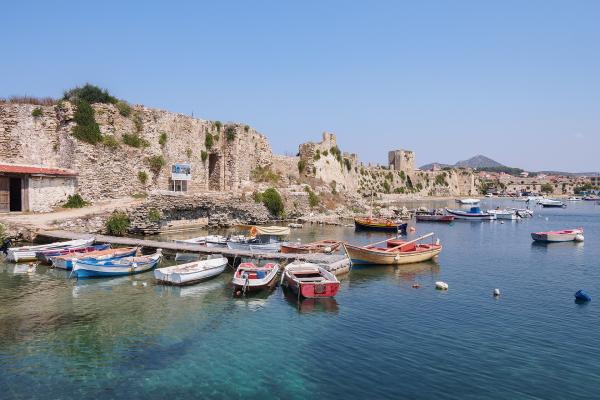
The fortress covers the whole headland and is protected on the landward side by a massive wall and a wide, dry moat cut into the rock, which is crossed by a long stone bridge with many arches. A fine gateway, with a carved lion of Saint Mark above it, leads into the interior, and inside is a large open space with the ruins of houses, a Venetian cathedral, cisterns, a Turkish bath and the remains of a gunpowder store. A granite column and base stand near the sea, a monument to a Venetian leader, and the high walls on the seaward side give good views over the sea.
The outstanding feature is the Bourtzi, a small octagonal fortress on a rocky islet at the tip, connected to the main castle by a stone causeway. It was built by the Ottomans in the sixteenth century and used as a lighthouse and, at times, as a prison. Walking out to it along the causeway, with the sea on either side, is one of the best parts of the visit.
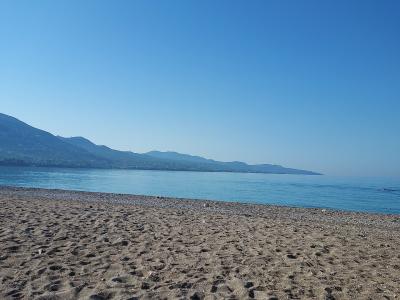
The site is large and has little shade, so go early or in late afternoon, bring water and wear a hat. The paths are uneven, and some sections have no railings. It is much quieter than the more famous monuments in Greece, which adds to the pleasure. May, June and October are pleasant months. A good plan is to combine a visit with a swim at the beaches near the village and a seafood lunch.
Categories
More photos coming soon
Admission Fees
- Admission
- €4 (€2 reduced)
Hours and prices change, especially out of season. Check with the venue before you go.
Nearby Attractions
Other places to visit in Kalamata
Questions people ask
Quick Facts
Best Time to Visit
Greece enjoys a Mediterranean climate with warm summers and mild winters, making it ideal for visiting year-round.