







Platanus of Olympia
- Admission
- €20 (Full), €10 (Reduced)
- Where
- Olympia, Peloponnese
- Directions
- Directions
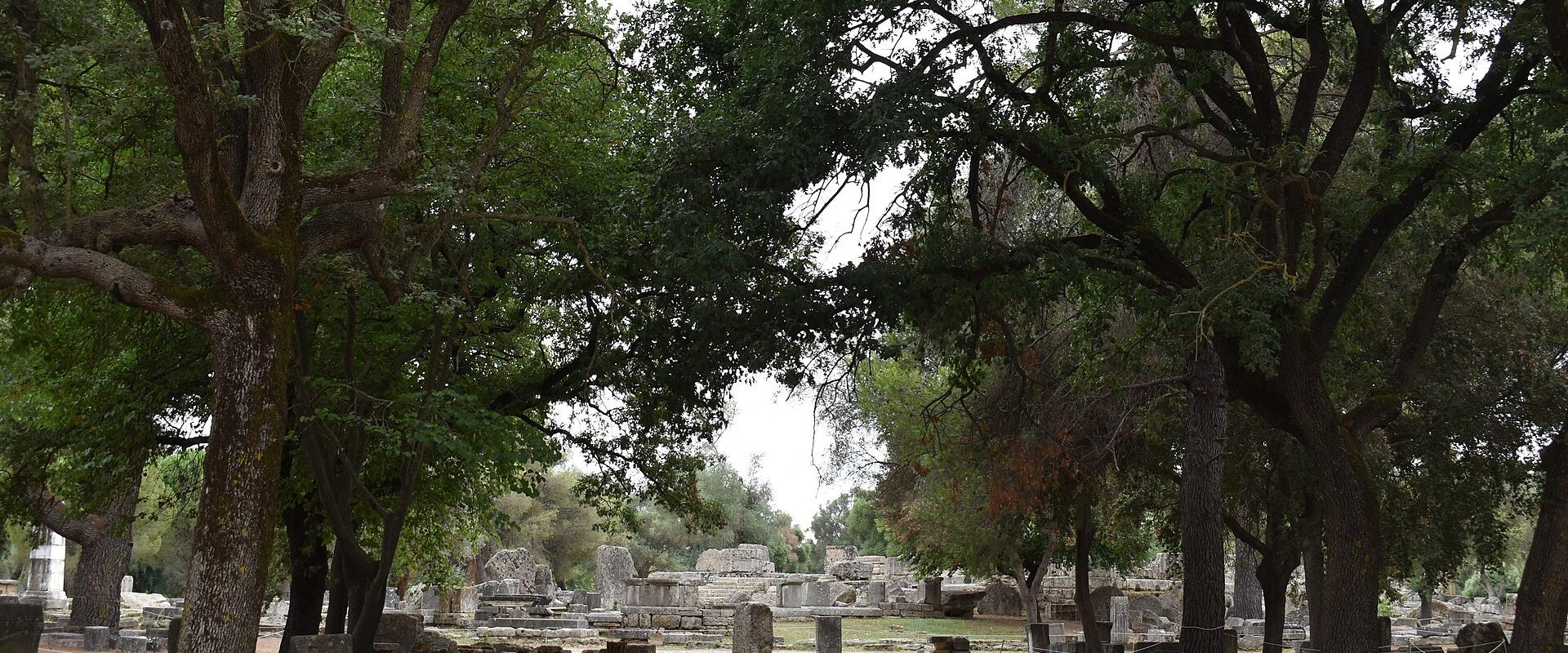
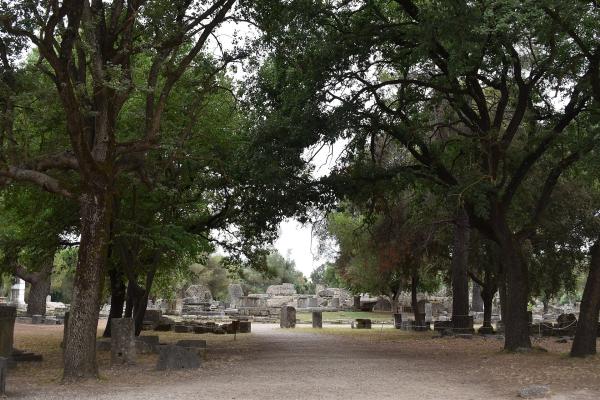
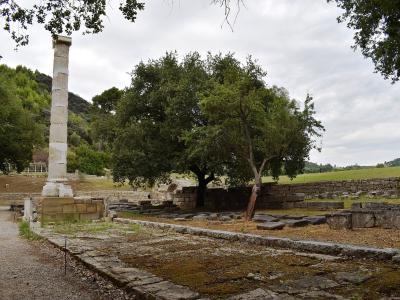
Olympia is remembered for its temples and its stadium, but the sanctuary was also a grove, and trees were part of its identity from the start. The sacred precinct at the centre of the site was called the Altis, an old word for grove, and ancient writers describe it as planted with olives, planes and other trees that gave shade to crowds who came for the games. Today, visitors who walk through the site pass under pines, olives and plane trees, among them the oriental plane, Platanus orientalis, a species long associated with Greek squares, springs and sanctuaries.
The tree itself needs to be described with care. There are plane trees in the grounds near the Temple of Zeus and along the paths, and visitors enjoy the shade they provide in the heat of summer. It is natural to imagine them as living links to antiquity, but no tree on the site can be shown to date from the ancient world, and the old name Platanus of Erymanthos is better treated as local lore than documented history. What can be said is that the planting of shade trees follows a very old tradition, and that the grove setting gives Olympia its calm, rural atmosphere.
The most famous tree of Olympia was not a plane but a wild olive, the kallistephanos, or tree of beautiful crowns. According to tradition, the winners of the ancient games were crowned with a wreath of wild olive cut from a sacred tree near the Temple of Zeus, using a golden knife. A wild olive near the Temple of Zeus is kept as a symbol of that custom.
The Kladeos river and the hills of Kronos, covered in pines, form the backdrop of the sanctuary, and the plane trees near the river add to the green setting. The ruins, the stadium, the Heraion and the museum lie within a short walk of one another, and the shade trees make the site pleasant to explore at midday.
Visitors will find the grounds open during the opening hours of the archaeological site, and a single ticket covers the ruins, which are some distance from the museum. The best times for a quiet walk are early morning and late afternoon. A hat and water remain essential in summer, since the stony ground reflects the heat, and the shade is a welcome relief. The Archaeological Museum of Olympia and the Temple of Hera are natural companions to a stroll under the trees.
Categories
More photos coming soon
Admission Fees
- Admission
- €20 (Full), €10 (Reduced)
Hours and prices change, especially out of season. Check with the venue before you go.
Nearby Attractions
Other places to visit in Olympia
Questions people ask
Quick Facts
Best Time to Visit
May through October offers warm, dry weather ideal for exploring the archaeological site.