







Temple of Hera (Heraion)
- Where
- Olympia, Peloponnese
- Directions
- Directions
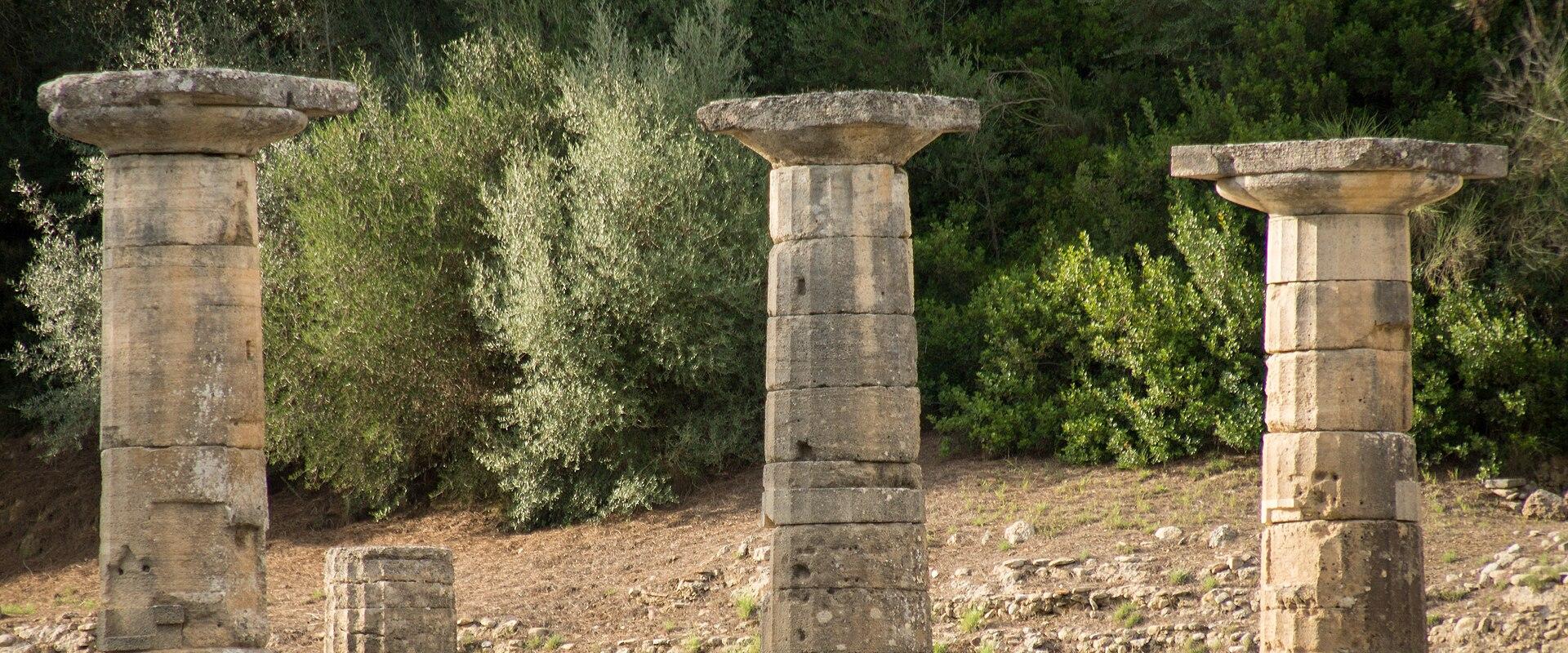
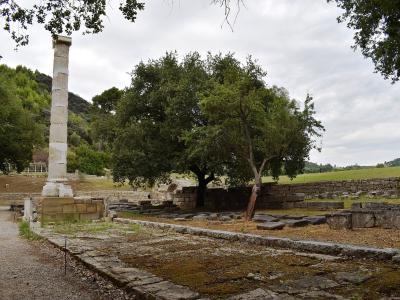
Among the ruins of the sanctuary at Olympia, the Temple of Hera, or Heraion, is the oldest major building, and the one that tells most about the early days of Greek architecture. It was built around 600 BC, well before the Temple of Zeus, and it is counted among the earliest monumental Doric temples in Greece. It stands in the northern part of the sanctuary, near the foot of the hill of Kronos, and its low stone foundations and a handful of standing columns can be seen as you walk toward the main temple.
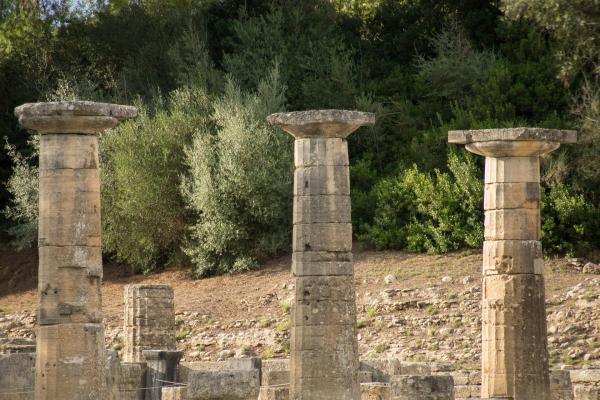
The temple was dedicated to Hera, the wife of Zeus, and was probably built first in mud-brick and wood, with the stone parts added later. The walls rested on a limestone base, and the columns were originally of wood, replaced one by one with stone as they decayed, so that the surviving ones differ in shape and proportions. The Greek writer Pausanias, who visited in the second century AD, noted that one column was still made of oak, a vivid picture of the building's long history. The roof was covered in terracotta tiles, and some of the architectural parts were plastered and painted, giving an idea of the colours of an Archaic temple.
Inside the temple stood the statues of the goddess and her husband, and in later centuries it also held a collection of offerings, among them famous works of art. The statue known as the Hermes of Praxiteles was found within the ruins of the temple in the nineteenth century, and is now displayed in the Archaeological Museum of Olympia. The site was also linked to the Heraean Games, a footrace for young women held every four years in honour of the goddess, which took place in the stadium and had winners who received olive wreaths.
The temple remains a living part of the Olympic tradition. In front of its ruins, a ceremony takes place before every modern Olympic Games, in which an actress dressed as a priestess uses a curved mirror to focus the rays of the sun and light the torch, creating the flame that is carried to the host city. The tradition dates from 1936, and the setting gives it a link to the ancient sanctuary.
A visit is usually a short stop on the route through the site, and it works best in the early morning or late afternoon, when the light is softer and the crowds thinner. Visitors who take the time to look closely at the surviving columns will see the variety that makes the Heraion so interesting.
More photos coming soon
Nearby Attractions
Other places to visit in Olympia
Questions people ask
Quick Facts
Best Time to Visit
May through October offers warm, dry weather ideal for exploring the archaeological site.