







- Where
- Athens, Attica
- Directions
- Directions
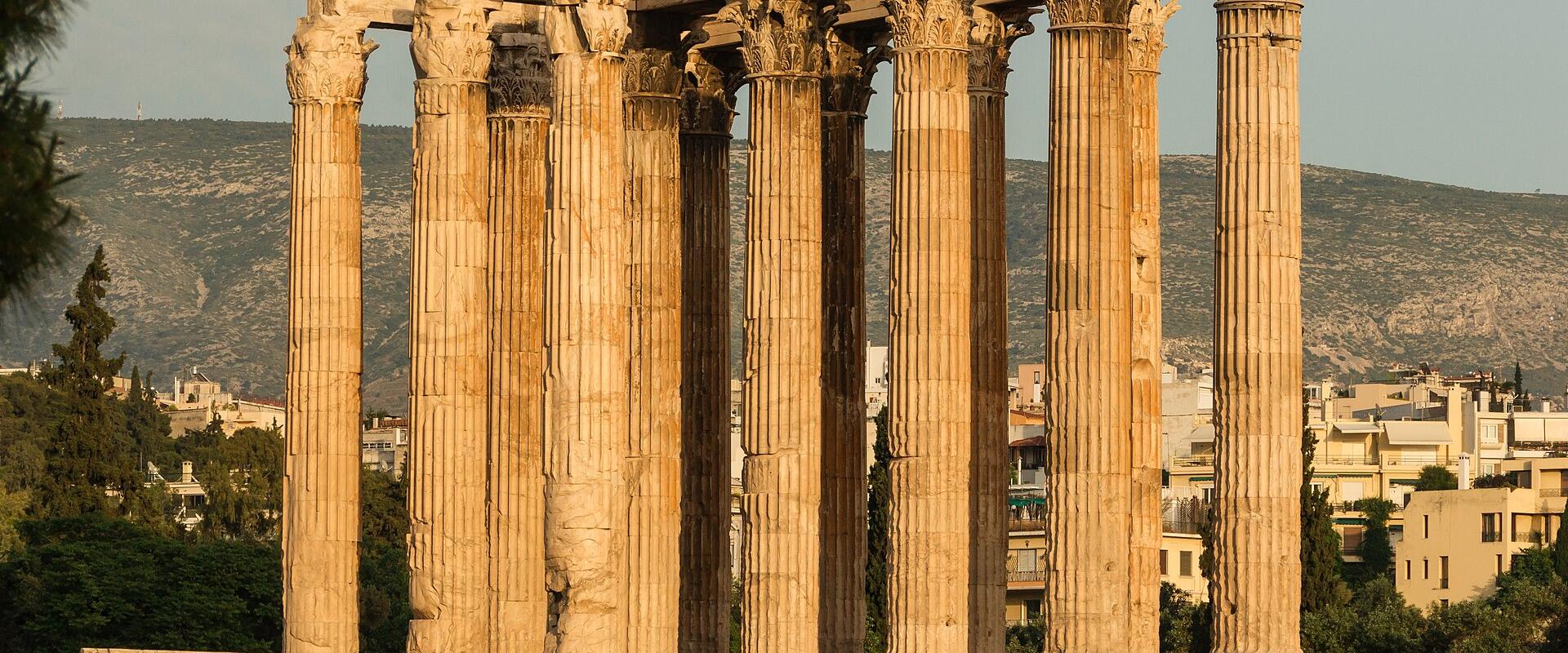
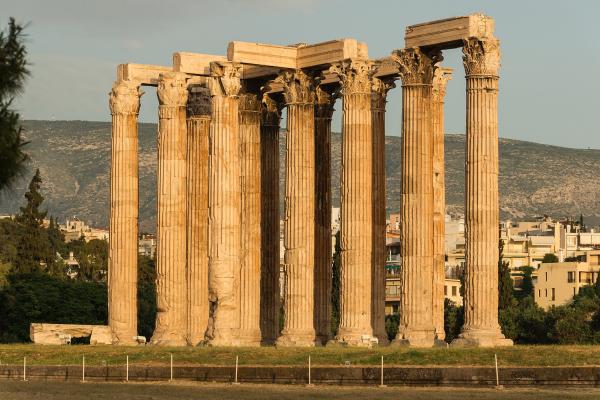
Standing alone on open ground in Athens, southeast of the Acropolis, the remaining columns of the Temple of Olympian Zeus, also called the Olympieion, give a quick sense of just how ambitious the original was. It was planned as one of the largest temples of the ancient Greek world, a landmark in Greece, with a triple row of columns across the front and a double row along the sides, a total of around a hundred and four Corinthian columns, each about seventeen metres high. Today fifteen still stand, and a sixteenth lies on the ground where it fell in a storm in 1852; its drums have remained as a segmented pile.
The building took far longer than anyone planned. The tyrant Peisistratos and his family began work in the sixth century BCE, but the project was abandoned when the tyranny fell. Centuries later the Seleucid king Antiochus IV Epiphanes revived it, employing the Roman architect Cossutius and changing the design to the Corinthian order. Work lapsed again, and the temple was not finished until the Roman Emperor Hadrian completed it around 131 to 132 CE, with a great statue of Zeus inside and one of Hadrian himself. That gap of roughly six hundred years is part of why the site feels so layered.
The setting adds to the effect. The temple platform lies near the old course of the Ilissos river and is aligned with Hadrian's Arch, a gateway on the road that once marked the boundary between the old city of Theseus and the new Roman quarter of Hadrian. The arch stands a few minutes' walk to the northwest, beside a busy avenue, and a short stroll beyond the temple leads to the Zappeion gardens and the Panathenaic Stadium.
Visitors can walk the ancient ground: from within the fenced enclosure you can walk among the foundations and the columns, looking up at the carved capitals with their acanthus leaves. The scale feels most impressive at close range, where the height of each shaft and the weight of the drums become clear. Information boards trace the history and show reconstructions of the original building.
A visit generally takes 30 to 45 minutes, and the site is largely open to the sun. The temple is best photographed in the late afternoon, when the marble turns golden against the sky, and the view of the Acropolis behind it is among the best in Athens’ skyline.
Categories
More photos coming soon
Nearby Attractions
Other places to visit in Athens
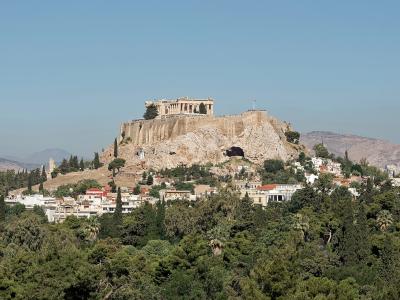
Acropolis
5th-century Greek acropolis on a limestone hill
Historic Sites & Ruins · Archaeological Sites
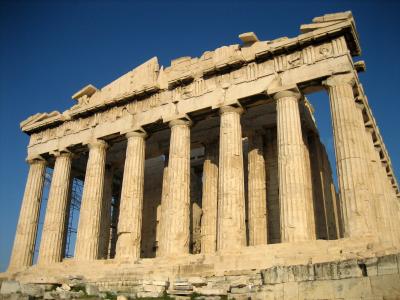
Parthenon
Ancient Greek temple atop the Acropolis
Ancient Ruins · Monuments
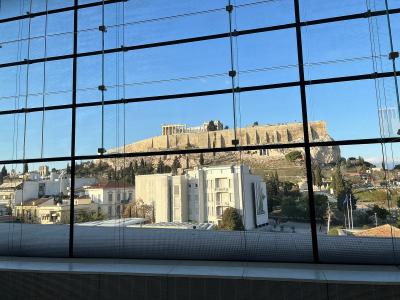
Acropolis Museum
Museum of ancient Greek art in Athens
From €10 Archaeological Museums · Museums
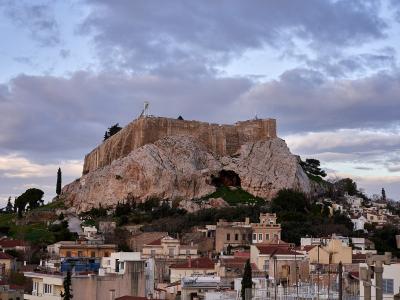
Plaka Neighborhood
Athens' oldest neighborhood beneath the Acropolis
Churches · Historic Districts
Questions people ask
Quick Facts
Best Time to Visit
April to June and September to October offer mild weather and fewer crowds.