







Temple of Zeus
- Where
- Olympia, Peloponnese
- Directions
- Directions
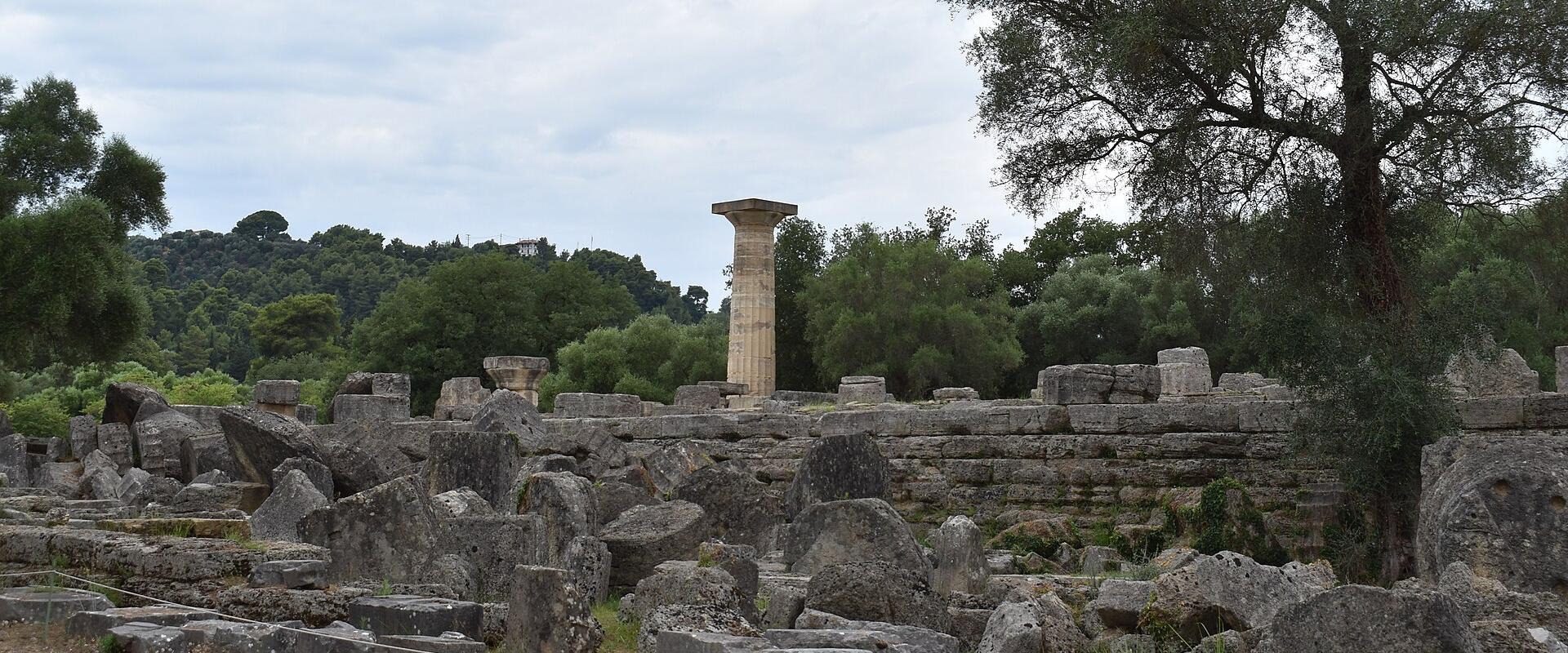
The Temple of Zeus stood at the centre of the Altis, the sacred precinct of Olympia, in the region of Elis in the western Peloponnese, and in its day it was the most important building in the sanctuary, the centre of worship for ancient Greece. It was built between about 470 and 457 BC, after the Greek victories over the Persians, and the architect was Libon of Elis. It was the largest temple in the Olympic Games sanctuary, and the games took their name from the place. The temple was a Doric structure of local limestone covered in white stucco, with six columns across the front and thirteen along the sides, so a total of thirty-four columns surrounded the inner hall. It was about sixty-four metres long and twenty-seven metres wide.
Inside stood the statue that made the temple famous: a seated figure of Zeus, around twelve metres tall, made by the sculptor Phidias around 435 BC. The god's body was of ivory and his robe and throne were gold, set with ebony and precious stones, and he held a figure of Victory in one hand and a sceptre topped with an eagle in the other. Ancient Greeks and later Romans declared that anyone who had not seen it had missed one of life's great experiences, and it was counted among the Seven Wonders of the Ancient World. The statue was later carried off to Constantinople and, according to tradition, destroyed in a fire in the fifth century AD.
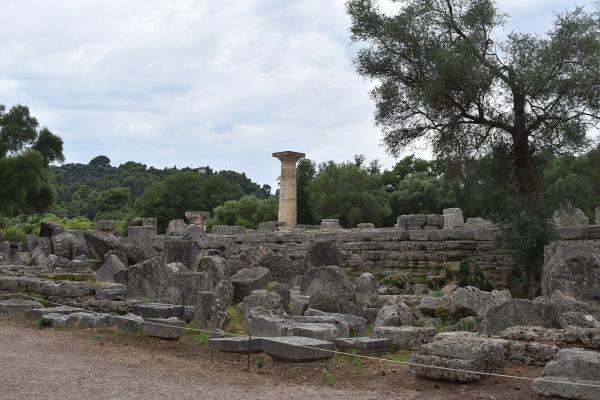
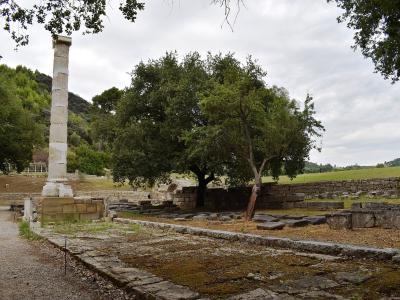
The temple itself was damaged by earthquakes in the sixth century AD and fell into ruin, and the site was buried by river floods and silt. What survives today is the large platform and the lower sections of the walls, with the huge drums of the columns lying in a line across the ground, just as they fell. One column has been re-erected, and its drums and capital give a good idea of the scale. The ruin is one of the great sights of Olympia, even in this reduced state.
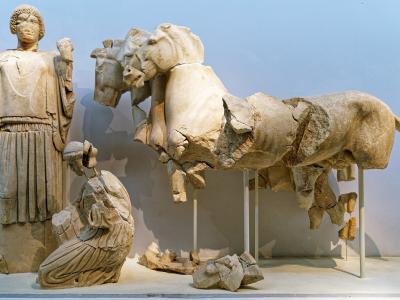
The sculptures that decorated the temple are shown in the Archaeological Museum of Olympia, and they are among the finest of the severe classical style. The east pediment shows the preparation for the chariot race between Pelops and Oenomaus, and the west pediment shows the battle of the Lapiths and the Centaurs, with the figure of Apollo standing calmly at the centre. The metopes above the doors show the labours of Heracles.
The temple is the main focus of any visit to the site, and the nearby Temple of Hera, the Philippeion and the Pelopion add context. The ruins are accessible with the same ticket as the rest of the site, and opening hours change by season. A visit to the temple takes about twenty minutes, but it is best seen early, before groups arrive. Bring a hat and water, since there is no shade.
Categories
More photos coming soon
Nearby Attractions
Other places to visit in Olympia
Questions people ask
Quick Facts
Best Time to Visit
May through October offers warm, dry weather ideal for exploring the archaeological site.