







The Causeway
- Admission
- Free
- Hours
- Open 24 hours
- Where
- Monemvasia, Peloponnese
- Directions
- Directions
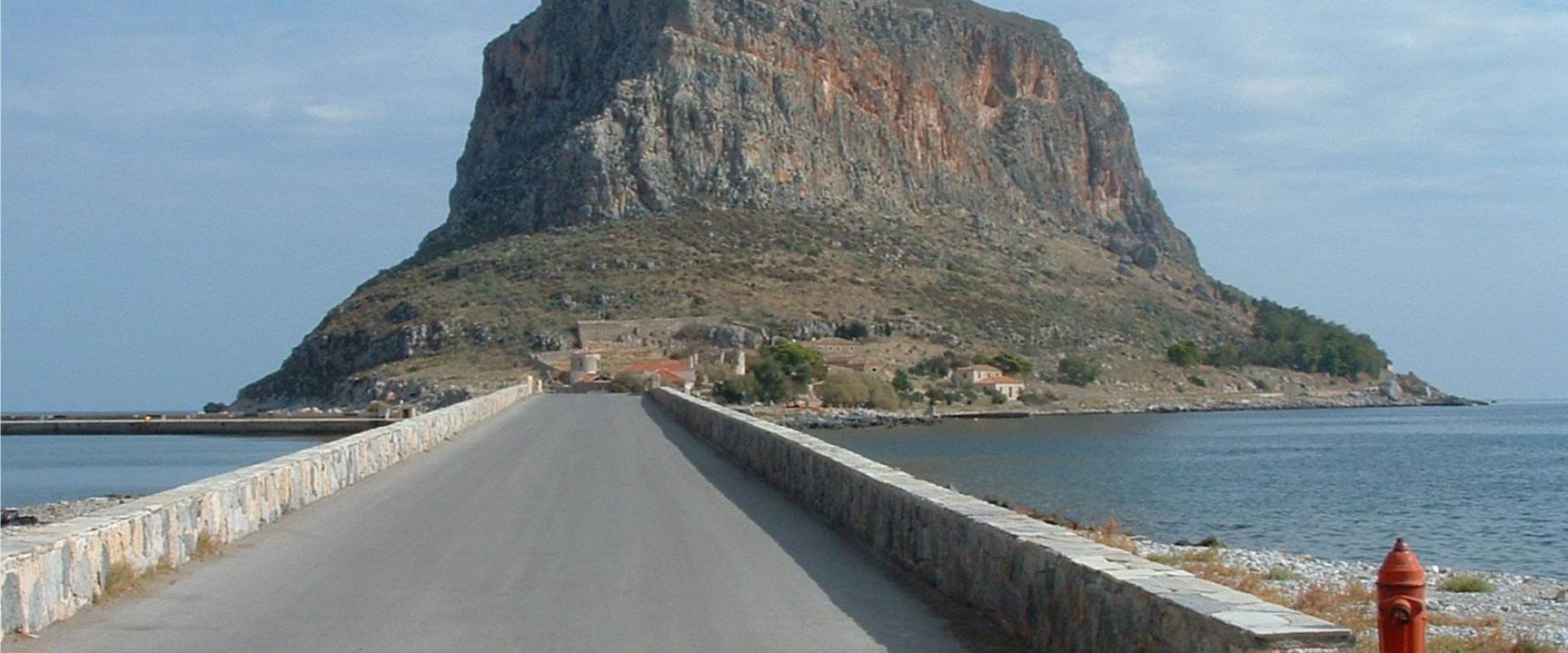
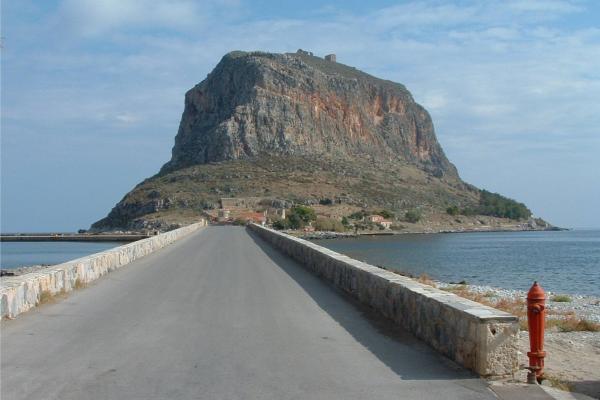
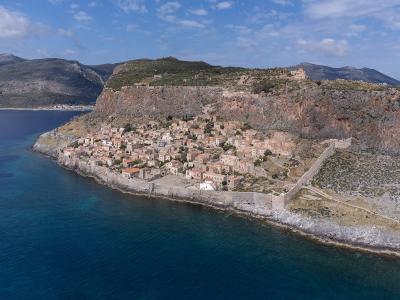
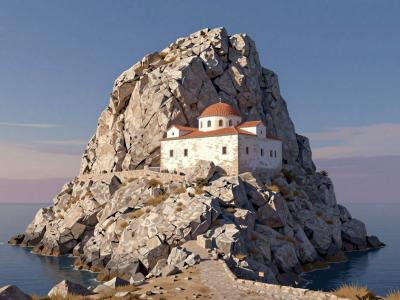
The Causeway is the narrow road that links Monemvasia to the mainland on the east coast of the Peloponnese, running for about two hundred metres across a strip of shallow water to the foot of an enormous rock. For centuries it has defined the town, because the name Monemvasia comes from the Greek words for single entrance, referring to the only way in. The causeway was the town's lifeline for trade and the only way in for its defenders, and it is still the way every visitor arrives. Seen from the mainland, the rock rises sheer from the sea, with the walls of the lower town hugging its base and the ruins of the upper town on the plateau, and the sight has earned it comparison with Gibraltar, as the Gibraltar of the East, and it is one of Greece’s most photographed approaches.
The rock was once a headland that an earthquake in the fourth century AD cut off from the mainland, and later generations strengthened the isolation, making the place a refuge. People settled on it in the sixth century, when Slavic invasions drove them from the mainland, and for centuries it was one of the strongest fortresses of the Byzantine world. The causeway therefore tells a story of a place that chose to defend itself by cutting off access, and the walls and gate at the end are still the entrance to the medieval town.
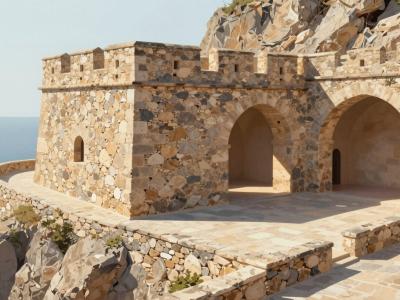
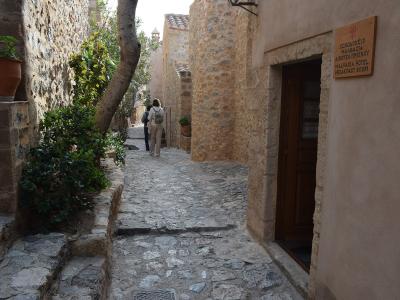
Cars cannot go beyond the gate, so visitors park on the causeway or near its start and walk the last stretch through a stone archway into the Lower Town. Inside is a labyrinth of cobbled lanes lined with stone houses, many converted into small hotels, restaurants and shops, and a small square with the Church of Christ Elkomenos, Christ in Chains, a Byzantine church of the thirteenth century that dominates the centre. From here, a zigzag path climbs steeply to the Upper Town, the Kastro, where the ruins of the Venetian and Byzantine town and the Church of Agia Sophia sit on the cliff.
The views are fine in every direction. From the causeway, you look across the Laconian Gulf, a calm, open sea, with fishing boats and the long coastline running to the south. The best time to arrive is in the early morning or evening, when the light is gentle and the day-trippers have gone, and sunrise over the water behind the rock is particularly lovely.
The causeway is open at all times and free, and parking is available on the mainland side. April to October brings the best weather, though winter has its own quiet charm. Wear comfortable shoes for the cobbles, and allow a full day if you plan to walk the Upper Town as well as the lanes below.
Categories
More photos coming soon
Hours & Fees
- Open
- Open 24 hours
- Admission
- Free
Hours and prices change, especially out of season. Check with the venue before you go.
Questions people ask
Quick Facts
Best Time to Visit
May to October offers warm, dry weather ideal for exploring the historic site.