







Upper Town (Kastro)
- Hours
- 9:00 AM – 5:00 PM
- Where
- Monemvasia, Peloponnese
- Directions
- Directions
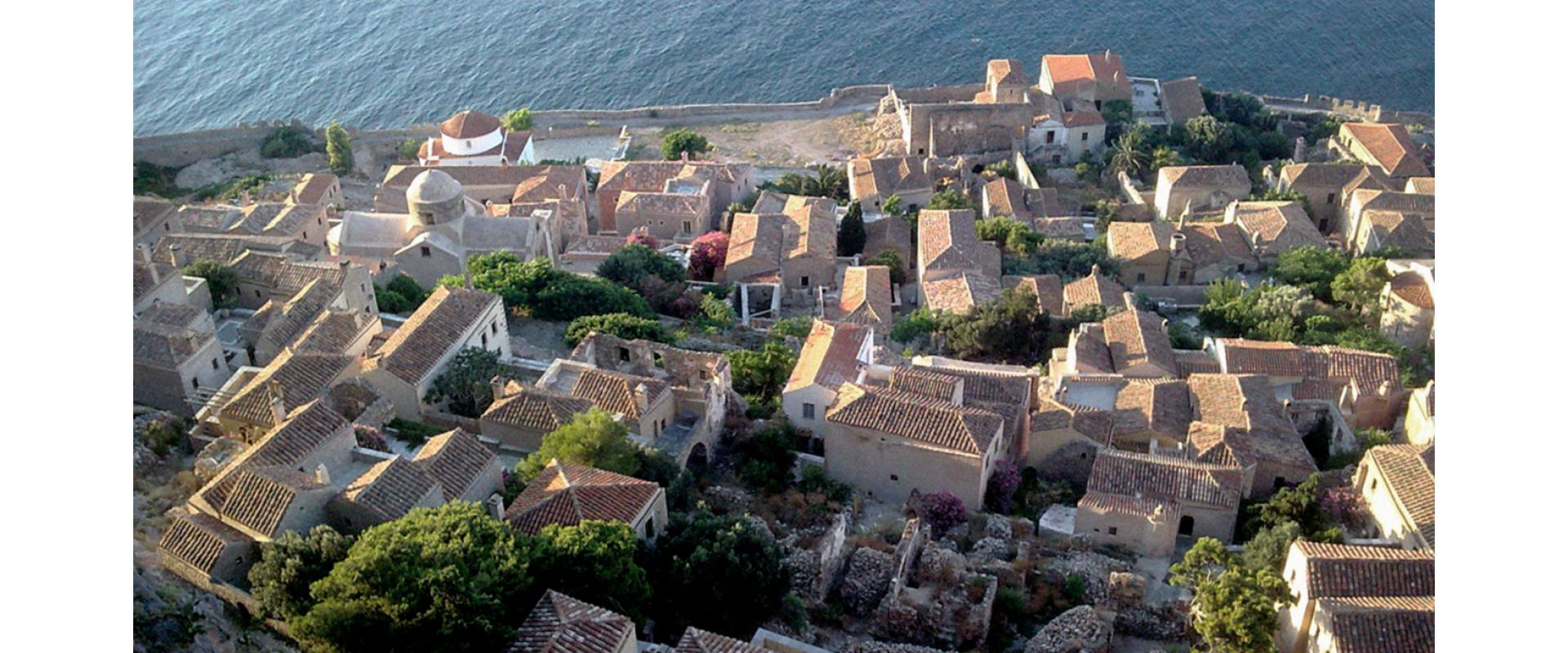
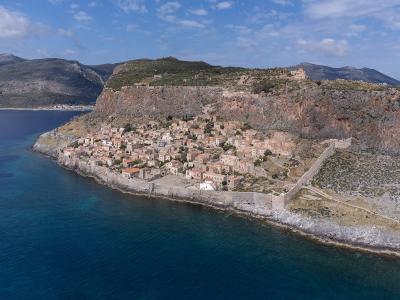
Above the red roofs of the Lower Town, a steep stone path climbs the rock of Monemvasia to the Upper Town, or Kastro, the old citadel that is now a field of ruins, one of Greece’s most atmospheric medieval ruins. Historically, it looked out over the Aegean Sea. The route, known simply as the Walk, is a paved zigzag between walls, beginning at the lower town and passing through an arched gate before reaching the plateau at the top. The climb takes about twenty minutes at an easy pace, rising through rock and scrub, with the sea spread out below, and it is the main reason the Upper Town feels so remote.
The plateau was once the administrative and military centre of Monemvasia. During the Byzantine period it housed the governor, the nobles and the officials, and it was a base for the powerful families who controlled trade in the surrounding sea. The town gained fame for Malvasia wine, shipped from here across the Mediterranean, and the fortress was a key possession in the struggles between the Byzantines, Franks, Venetians and Ottomans. Venice held it for periods, as did the Ottomans, and the walls, towers and cisterns reflect each phase.
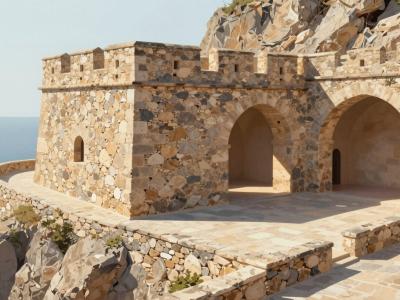
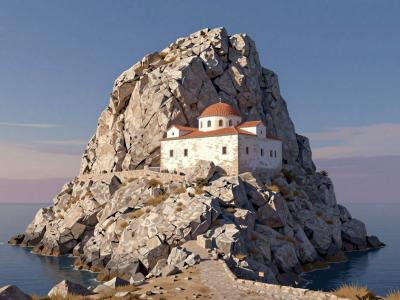
Today only a handful of people live in the Upper Town, and much of the plateau is open ground scattered with roofless houses, vaulted cisterns, fragments of walls and the remains of churches. Agia Sophia, built in the twelfth century and perched at the very edge of the cliff, is the best-preserved building, a Byzantine church with a dome and a fine view. The highest point of the rock carries the remains of the upper fortifications, sometimes labelled the acropolis on maps. The place has a wild, quiet atmosphere, with wildflowers in spring and the sound of wind and gulls.
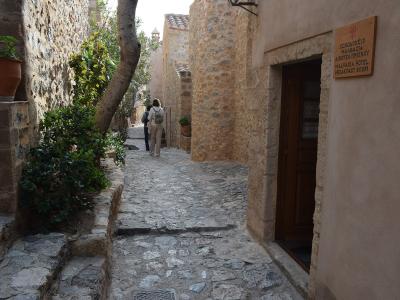
The contrast with the lower town is strong. Below, the lanes are lined with restored houses, hotels and tavernas, and in summer they fill with visitors. Up here, the ground is bare and the sense of abandonment is complete. The views stretch over the sea to the horizon, over the lower town to the mainland and along the coast, and it is easy to see why the rock was chosen as a refuge and a fortress.
A visit requires proper preparation. Wear sturdy, non-slip shoes, because the stones are worn smooth and slippery, and bring plenty of water and a hat, as there is no shade on the plateau. Early morning or late afternoon is best for avoiding the heat, and the site has opening hours that vary, so check locally. Allow one to two hours for the climb and exploration.
Categories
More photos coming soon
Opening Hours
- Open
- 9:00 AM – 5:00 PM
Hours and prices change, especially out of season. Check with the venue before you go.
Questions people ask
Quick Facts
Best Time to Visit
May to October offers warm, dry weather ideal for exploring the historic site.