Timing Is the Biggest Saving
The single most effective way to spend less in Greece is to avoid July and August. Room rates on popular islands rise sharply in peak season, ferries fill up, and the cheapest options sell out first. May, June, September and early October still have warm weather and a warm sea in the south, but noticeably lower prices and more choice.
Choice of destination matters almost as much. Santorini and Mykonos are among the most expensive places in the country. Islands such as Naxos, Andros, Tinos, Ikaria, Lesbos and Chios, or mainland regions such as the Peloponnese, Pelion and Epirus, cost less for rooms and meals and are less dependent on international tourism.
Getting Around Athens Cheaply
Athens public transport is inexpensive. According to the transport authority OASA, a standard 90-minute ticket costs 1.20 euros and covers metro, tram, buses and trolleys within that time. A 24-hour ticket is 4.10 euros and a 5-day ticket 8.20 euros, neither valid for the airport.
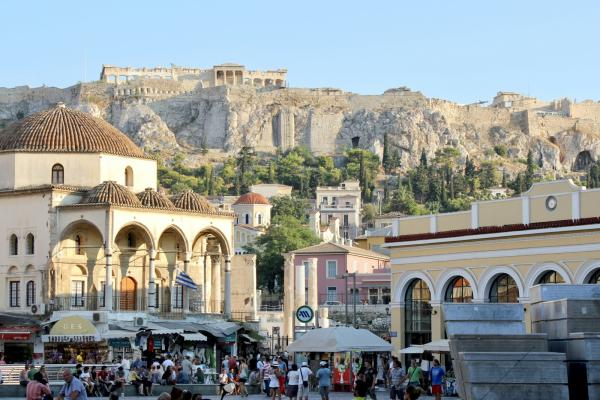
The airport is where costs rise. A single metro ticket to or from the airport is 9 euros, while the express airport buses, such as the X95 to Syntagma, cost 5.50 euros. If you are staying a few days, the 3-day tourist ticket at 20 euros includes one return airport trip by metro or express bus plus unlimited city travel, which beats buying separately. Central Athens is also compact enough to walk between most sights.
Ferries, Buses and Flights
Domestic ferries are priced by class. Deck class is the cheapest ticket and gives you access to the lounges and outside decks; cabins and airline-style seats cost more. Conventional ferries are slower but cheaper than high-speed catamarans on the same route. Overnight ferries to Crete or the eastern Aegean save a night's accommodation if you are willing to sleep in a seat or book a shared cabin.
On the mainland, the regional KTEL bus network connects most towns and is the cheapest way to reach places like Nafplio, Delphi or Meteora without a car. Domestic flights can sometimes undercut long ferry trips when booked early, but add the cost of getting to and from airports before deciding. Car hire is cheaper outside summer and on the mainland than on small islands.
Sleeping for Less
Family-run rooms to let, often signed "domatia", are the traditional budget option on the islands and are still common outside the resort hotspots. They usually offer a simple room with a kitchenette, which also cuts food costs. Campsites exist on many islands and along the mainland coast, and Athens and a few large islands have hostels. Wild camping is officially prohibited.
Staying in the main village or port rather than on a beachfront usually lowers the nightly rate and puts you near buses and cheaper places to eat. Greece also charges a per-night accommodation tax that varies by type of lodging and season; it is paid on top of the room rate, so check whether a quoted price includes it.
Eating Well on a Budget
Greek street food is cheap and filling. Souvlaki and gyros wrapped in pita, spanakopita and tiropita from bakeries, and koulouri bread rings from street stalls are everyday food, not tourist fare. Bakeries also sell inexpensive savoury pies that make a good lunch on a ferry or a hike.
In tavernas, ordering several shared plates, such as horiatiki salad, fava, beans, grilled vegetables and house wine sold by weight, is often cheaper than individual main courses. Tap water is safe in most of mainland Greece, but on many islands it comes from desalination and locals drink bottled water; ask at your accommodation. Supermarkets and weekly street markets (laiki) are useful for self-catering.
Free and Cheap Sights
EU citizens under 25 are admitted free to state-run archaeological sites and museums with ID, which is a significant saving given that major site tickets are not cheap. The Ministry of Culture also designates a few free-admission days each year for everyone.
Much of what is best about Greece costs nothing: walking the old towns of Nafplio, Rhodes or Chania, hiking marked trails on islands such as Naxos, Andros and Sifnos, swimming at public beaches, and watching sunsets from hilltop chapels. Choose two or three paid sites that matter most to you rather than paying for every ruin on the route, and combine them with free days walking and swimming.