How Greeks Eat
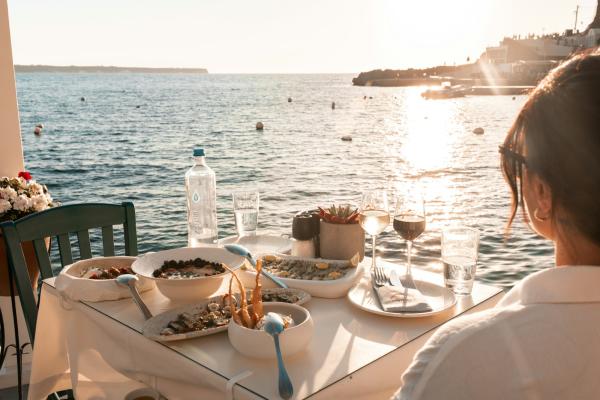
Greek meals are built for sharing. A group orders several dishes for the middle of the table, adds a salad, bread and something to drink, and keeps ordering as the evening goes on. Portions of mains are generous, so ordering one starter and one main per person usually means too much food.
Meal times run later than in northern Europe. Lunch is typically between about 1 and 3 pm, and Greeks often sit down to dinner at 9 pm or later, especially in summer. Tavernas in tourist areas open earlier, but if you want to eat with locals, go late.
Where to Eat: Types of Restaurant
- Taverna: The all-purpose family restaurant, serving salads, mezedes, grilled meat, oven-baked dishes and often fish.
- Psarotaverna: A fish taverna. Whole fish is usually priced by the kilo; ask to see the fish and have it weighed before it is cooked so the price is clear.
- Psistaria: A grill house specialising in meat: chops, sausages, kontosouvli (spit-roasted pork) and kokoretsi.
- Ouzeri, tsipouradiko or rakadiko: Places for drinking ouzo, tsipouro or raki with small plates. In some, particularly in Volos and parts of northern Greece, a plate of meze arrives with each round of drinks.
- Mageirio: A cook-shop serving ready-made home-style dishes from trays at lunchtime, usually good value.
- Souvlatzidiko: The souvlaki and gyros shop, for fast, cheap food.
Dishes to Order
Mezedes (small plates): tzatziki (yoghurt, cucumber and garlic), melitzanosalata (smoky aubergine dip), taramosalata (fish roe dip), fava (yellow split pea purée, especially from Santorini), saganaki (fried cheese), keftedes (meatballs), dolmades (stuffed vine leaves), grilled octopus, and horta (boiled wild or cultivated greens with olive oil and lemon).
Salads: horiatiki, the "village salad" of tomato, cucumber, onion, olives and a slab of feta, has no lettuce. Cretan dakos is barley rusk topped with grated tomato, cheese and olive oil.
Oven dishes (ladera and tapsi): moussaka (aubergine, minced meat and béchamel), pastitsio (baked pasta with meat and béchamel), gemista (tomatoes and peppers stuffed with rice and herbs), briam (oven-roasted vegetables), and fasolakia (green beans cooked in tomato and oil). Ladera, the oil-based vegetable dishes, are a large part of everyday Greek cooking.
Meat and fish: souvlaki (skewers), paidakia (lamb chops), stifado (beef or rabbit stew with small onions), kleftiko (slow-cooked lamb), and simple grilled fish such as sea bream, red mullet or sardines.
Street Food and Breakfast
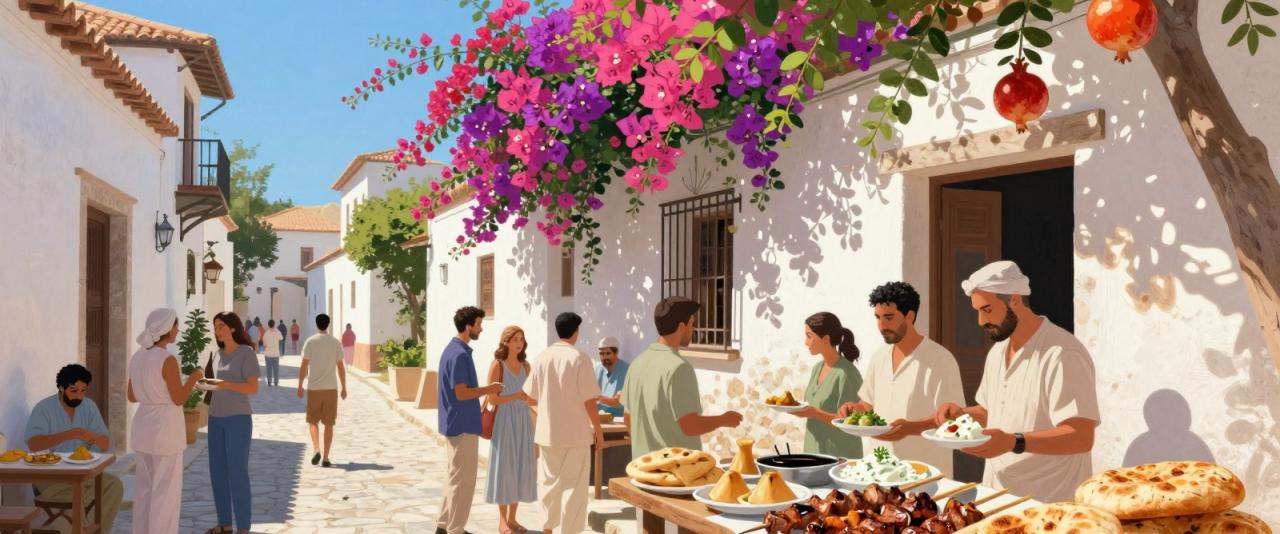
Gyros or souvlaki wrapped in pita with tomato, onion, tzatziki and chips is the standard quick meal across the country. For breakfast and snacks, look for koulouri (sesame bread rings sold from street carts), bougatsa (filo pastry filled with custard or cheese, a speciality of Thessaloniki), and pites, pies such as spanakopita (spinach and feta) and tyropita (cheese) sold at bakeries.
Regional Specialities
Greek food varies by region, and ordering the local dish is the easiest way to eat well:
- Crete: dakos, kalitsounia (small cheese pies), gamopilafo (rich wedding pilaf), snails (chochlioi), and dishes using wild greens.
- Cyclades: Santorini fava, tomatokeftedes (tomato fritters) and local cheeses on many islands.
- Ionian: on Corfu, sofrito (veal in garlic and wine sauce) and pastitsada (spiced meat with pasta), reflecting Venetian influence.
- Northern Greece: Thessaloniki's bougatsa and a cuisine shaped by Asia Minor and Balkan influences, with more spices and peppers.
What to Drink
Ouzo, the aniseed spirit, is diluted with water or ice and turns cloudy; it is meant to be sipped with food. Tsipouro, a grape spirit, is the northern and central Greek equivalent, and in Crete the same type of drink is called raki or tsikoudia, often offered free at the end of a meal. Retsina, white wine flavoured with pine resin, is the traditional taverna wine. Greek wine has improved enormously; look for Assyrtiko from Santorini, Xinomavro from Naoussa and Agiorgitiko from Nemea.
Coffee culture is serious. Greek coffee is boiled in a small pot and served with the grounds; the cold freddo espresso and freddo cappuccino are what most Greeks drink in summer.
Etiquette, Bread and Tipping
Bread is usually brought to the table and charged as a small cover per person; you can decline it if you do not want it. Tap water is safe in most places, though on some islands locals drink bottled water.
Tipping is appreciated but not obligatory. Rounding up the bill or leaving about 5 to 10 percent for good service is common, ideally in cash for the staff. Restaurants are required to give you a receipt.
During Orthodox fasting periods, especially Lent before Easter, many tavernas offer nistisima: dishes without meat or dairy. They are a good option for vegetarian and vegan travellers throughout the year.