How to Choose an Area
Central Athens is compact. The Acropolis, the Ancient Agora, the Acropolis Museum, Syntagma Square and the main shopping streets are all within walking distance of each other, and most first-time visitors spend their days in this small area. The best base for a short stay is therefore somewhere within a 15-minute walk of the Acropolis, or right next to a metro station on lines 2 or 3.
Line 3 (blue) runs from the airport to Syntagma and Monastiraki and on to Piraeus port, and line 2 (red) passes through Syntagma, Akropoli and Syngrou-Fix. If you are staying near either, getting around is easy. Express bus X95 also runs from the airport to Syntagma.
Around the Acropolis
Plaka and Anafiotika
Plaka is the old neighbourhood on the northern and eastern slopes below the Acropolis, with neoclassical houses, small churches and car-free lanes. Anafiotika, a tiny cluster of whitewashed houses built by workers from the island of Anafi in the 19th century, sits at the top of Plaka, right under the Acropolis rock.
Best for: First-time visitors who want to walk everywhere. Downsides: The main streets are lined with souvenir shops and tourist restaurants, and hotels here tend to be expensive for what you get.
Koukaki and Makrygianni
South of the Acropolis, Makrygianni is home to the Acropolis Museum, and Koukaki stretches west from it towards Filopappou Hill. Koukaki is mainly residential, with cafés, bakeries and neighbourhood tavernas, and it has been one of the most popular areas for visitors in recent years. Akropoli and Syngrou-Fix metro stations (line 2) are on the edge of the area, and the pedestrian Dionysiou Areopagitou walkway leads to the Acropolis entrance.
Best for: A quieter, local base within walking distance of the main sights. Downsides: Some streets are hilly, and many stays are in apartments rather than hotels.
The Central Hubs
Syntagma
Syntagma Square is the city's main transport hub and home to the Parliament building, where the changing of the guard takes place. Hotels around the square range from business-style mid-range options to some of the city's grandest establishments. The National Garden is a short walk away.
Best for: Short stays, travellers arriving late from the airport, and anyone who wants easy metro access. Downsides: It is busy and less atmospheric than Plaka or Koukaki.
Monastiraki and Psyrri
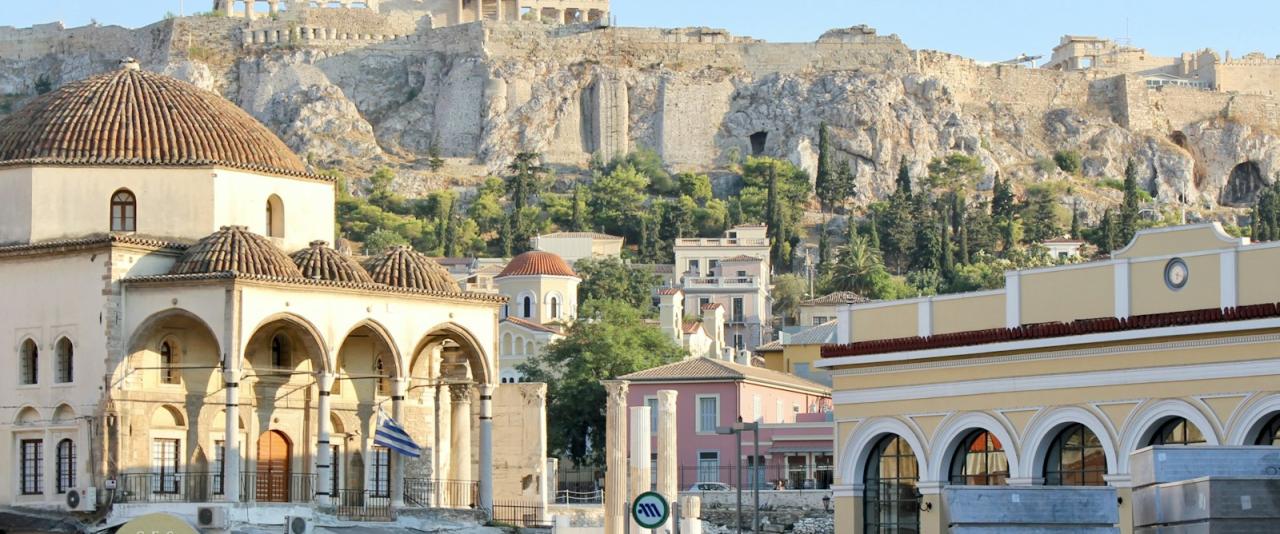
Monastiraki is the area around the square of the same name and the flea market streets, with views of the Acropolis from many rooftops. Psyrri, just north, is full of bars, restaurants and street art and is one of the centres of Athens nightlife.
Best for: Travellers who want to be in the middle of the action, close to the Ancient Agora and the metro. Downsides: Noise can carry late into the night, especially in Psyrri at weekends. Ask for a room away from the street if you sleep lightly.
Residential Neighbourhoods
Kolonaki
Kolonaki, on the lower slopes of Lycabettus Hill east of Syntagma, is the city's upmarket neighbourhood, with designer shops, cafés, galleries and several important museums nearby, including the Benaki Museum and the Museum of Cycladic Art. It is a 15 to 20-minute walk to Plaka.
Best for: Travellers wanting a smart, residential feel and good restaurants. Downsides: Hotel prices are high, and the streets towards Lycabettus are steep.
Pangrati
Pangrati, east of the National Garden and the Panathenaic Stadium, is a residential neighbourhood with a strong local food scene and a lot of everyday life. It is a longer walk to the Acropolis, but Evangelismos metro station and trolley buses help.
Best for: Return visitors and longer stays. Downsides: Few hotels; most accommodation is in apartments.
Piraeus and the Athens Riviera
If you are catching an early ferry, a night in Piraeus near the port makes sense. The port is linked to central Athens by metro lines 1 and 3 and by tram. Along the coast to the south, Glyfada and the Athens Riviera have beaches and seafront hotels, connected to the centre by tram, but they are a long way from the historic sights.
Booking Tips
- Short-term rentals: Since 2025, new short-term rental registrations have been frozen in Athens' first, second and third municipal districts, which cover most of the historic centre. Existing licensed rentals still operate. Check that any apartment you book displays a property registration number.
- Climate resilience fee: Hotels and rentals charge a per-room, per-night fee in addition to the room rate, usually paid on arrival or departure.
- Air conditioning: Athens summers are hot, often above 35 degrees Celsius, so check that your room has air conditioning.
- Street noise: Many central streets are lively late into the night. Rooms facing an inner courtyard are usually quieter.