Foloi
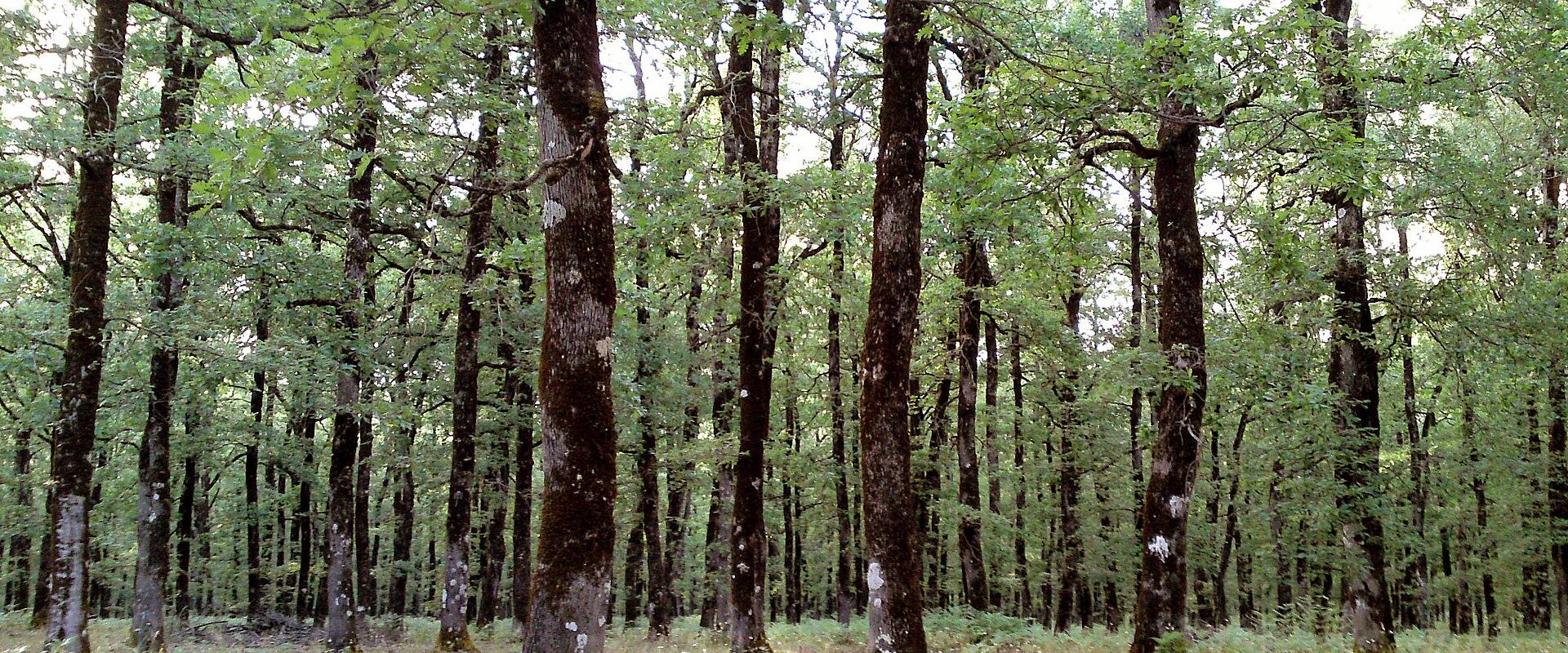
Oak-covered plateau in inland Ilia, with Natura 2000 forest above Ancient Olympia
Foloi is the name of a plateau, a municipal unit and a village in the mountainous inland of Ilia, in the north-west of the Peloponnese. It lies within the municipality of Ancient Olympia and is about 25 kilometres from the site of the ancient Olympic Games, on the way to the high country toward Achaea and Arcadia. The plateau stands at roughly 600 to 700 metres above sea level, and its gentle slopes and valleys are covered by one of the largest deciduous oak forests in Greece.
The Foloi oak forest extends over about 40 square kilometres. Most of it is Hungarian oak, which can grow fifteen to twenty metres tall and live for around two centuries, with downy oak and holm oak mixed in. The understorey includes ferns and asphodels, and the acorns support a whole food chain: hares, squirrels, hedgehogs, badgers and foxes live in the woods, and eagles, owls and many smaller birds nest there. The forest is protected as part of the Natura 2000 network, which recognises its value for wildlife and landscape.
The name goes back to myth. Ancient writers placed the home of the centaur Pholus on Mount Pholoe, and the story of Heracles' visit is linked to it. Pholus, the gentlest of the centaurs, offered the hero a jar of wine on his way to catch the Erymanthian boar, and the smell drew the other centaurs, who attacked, so that the evening ended in a fight. Ancient Greeks also associated the forest with dryads, the spirits of the trees. The plateau is sometimes called the Balcony of Ilia, because of the wide views over the valleys and hills to the west.
The area is quiet and best explored on foot, by bicycle or by car. Forest roads and paths cross the plateau, some following the valleys of the Erymanthos river and its tributaries, with a path toward the Erymanthos gorge. Along the way there are old stone bridges, watermills and small chapels. The surrounding villages keep traditional stone houses, and village tavernas serve local food, with grilled meat, cheese and wild greens among the dishes. In autumn people go into the woods to gather mushrooms, following local rules, and the oaks turn from green to rust and gold.
A car is necessary. Public transport in the area is very limited, and the roads are winding, so allow plenty of time and check the weather, which can change quickly in the hills. Bring water and sturdy shoes, and expect few services inside the forest itself. Ancient Olympia is the usual base, and the plateau makes a good half-day or full-day excursion from there, combined with a visit to the villages of the area.
Spring brings wildflowers and fresh green leaves, and summer offers cooler air than the coast, which makes the plateau a welcome change from the heat of the plains. Autumn is the best season for colour and mushrooms. Winters are cold and wet on the plateau, and some roads can be affected by snow and storms. The forest suits a slow day of walking and picnicking, away from the busier sites of the Peloponnese.
Best time to visit
Autumn for colour and mushroom season, and April to June for flowers and fresh leaves; summer is cooler than the coast.
What to see in Foloi
Our picks first.
Foloi by interest
The same sights, grouped by what you came for.
Did you know?
Checked facts about Foloi, each with its source.
-
Legend
Hercules’ Centaur Friend Folos
According to Greek mythology, the Foloi oak forest (ancient Foloe) was the residence of the centaur Folos, who hosted Hercules during his fourth labor. This is the specific location where Hercules caught the Erymanthian boar alive to present to King Eurystheus.
Source: exploringgreece.tv
Planning a visit to Foloi
Good to know
- Currency
- EUR
- Language
- Greek