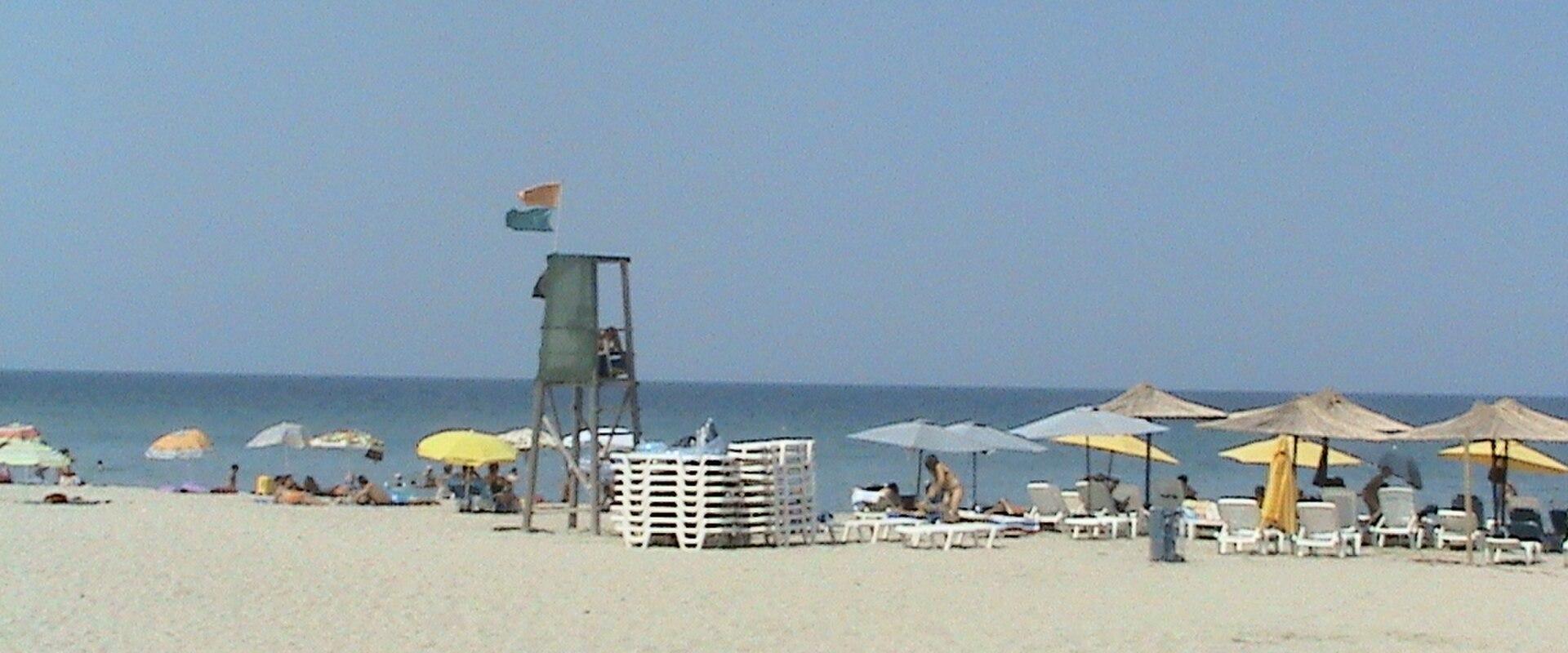
Neoi Poroi lies on the Pierian coast in Central Macedonia, at the southern end of the Pieria prefecture, on the Thermaic Gulf. The village belongs to the community of Poroi and to the municipality of Dio-Olympos, and at the 2021 census it had 716 inhabitants. Its name means New Poroi, which distinguishes it from Paleoi Poroi, the older village built higher on the slope above the coast. The new settlement grew up near the sea and was laid out with a regular street plan, wide roads and open squares, which gives it a tidy, planned look unlike the older villages of the region.
The setting is its main attraction. To the west, the massive ridge of Mount Olympus fills the horizon, and on clear days its summits can be seen from the beach. To the east lies the open water of the Thermaic Gulf, and to the south the land narrows toward the Tempe valley and the Pineios river area, where wetlands and reed beds attract birds. The coastal plain is flat and fertile, and behind the village are olive groves and the foothills of Olympus.
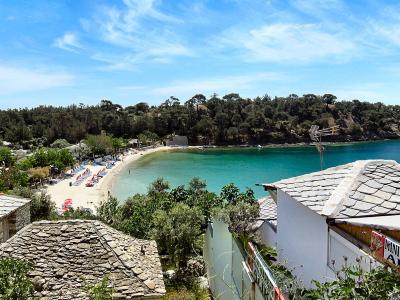
The beach is the centre of village life from June to September. It runs along the front of the settlement, with tavernas, small hotels and rented rooms close to the shore. In July and August the population multiplies, with most visitors arriving from Thessaloniki, other parts of Macedonia and Thessaly, and the atmosphere is that of a Greek family resort. Outside the main season the village is nearly empty, and many businesses close.
Neoi Poroi has a railway station, with intercity trains and the Proastiakos suburban service to Thessaloniki, which makes it easy to reach the village without a car. The main road along the coast links it to Katerini to the north and to the Tempe gorge and Larissa to the south.
Several worthwhile places lie near the village. Platamon, a few kilometres to the north, has a well-preserved castle built in the early thirteenth century by the Crusaders and used by later rulers, set on a hill above the sea and open to visitors, with views along the coast. Further north the archaeological site of Dion lies at the foot of Olympus, with remains of an ancient sanctuary of Zeus, a theatre and a museum. The town of Litochoro, the starting point for the climb to the summit of Olympus and for walks in the Enipeas gorge, is further inland. The Tempe valley to the south is a narrow gorge between Olympus and Ossa, long a route between Macedonia and Thessaly.
Food in the village is straightforward Greek cooking, with grilled fish and meat, salads and local wine, in tavernas near the beach. Mountain honey, cheeses and olive oil from the Olympus foothills are sold in nearby villages.
Summer is the beach season, with warm water from June to September, and the peak weeks of July and August are the busiest. May and September are quieter and still warm, and spring is a good time for hiking in the Olympus foothills, when wildflowers cover the slopes. Winters are mild but damp, and the village is calm.
Best time to visit
June to September for swimming and the beach, May and September for fewer people; spring is good for exploring the Olympus foothills.
What to see in Neoi Poroi
Our picks first.
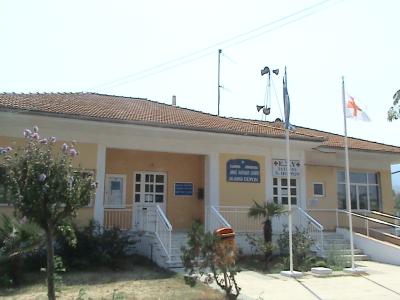
Neoi Poroi by interest
The same sights, grouped by what you came for.
Did you know?
Checked facts about Neoi Poroi, each with its source.
-
Legend
Ancient Half-God Named Poros
According to local tradition, the area is named after Poros, a half-god from ancient Greece, with the name 'Neoi Poroi' translating to 'new resources' or 'new paths'.
Source: en-academic.com -
Notable Person
Birthplace of Greek Independence Officer
Christoforos Perraivos, an author and officer in the Greek War of Independence who was a member of the Filiki Eteria, was born in the nearby mountain village of Poroi (also known as Palaioi Poroi).
Source: en.wikipedia.org
Planning a visit to Neoi Poroi
Good to know
- Currency
- EUR
- Language
- Greek