







- Where
- Larissa, Thessaly
- Directions
- Directions
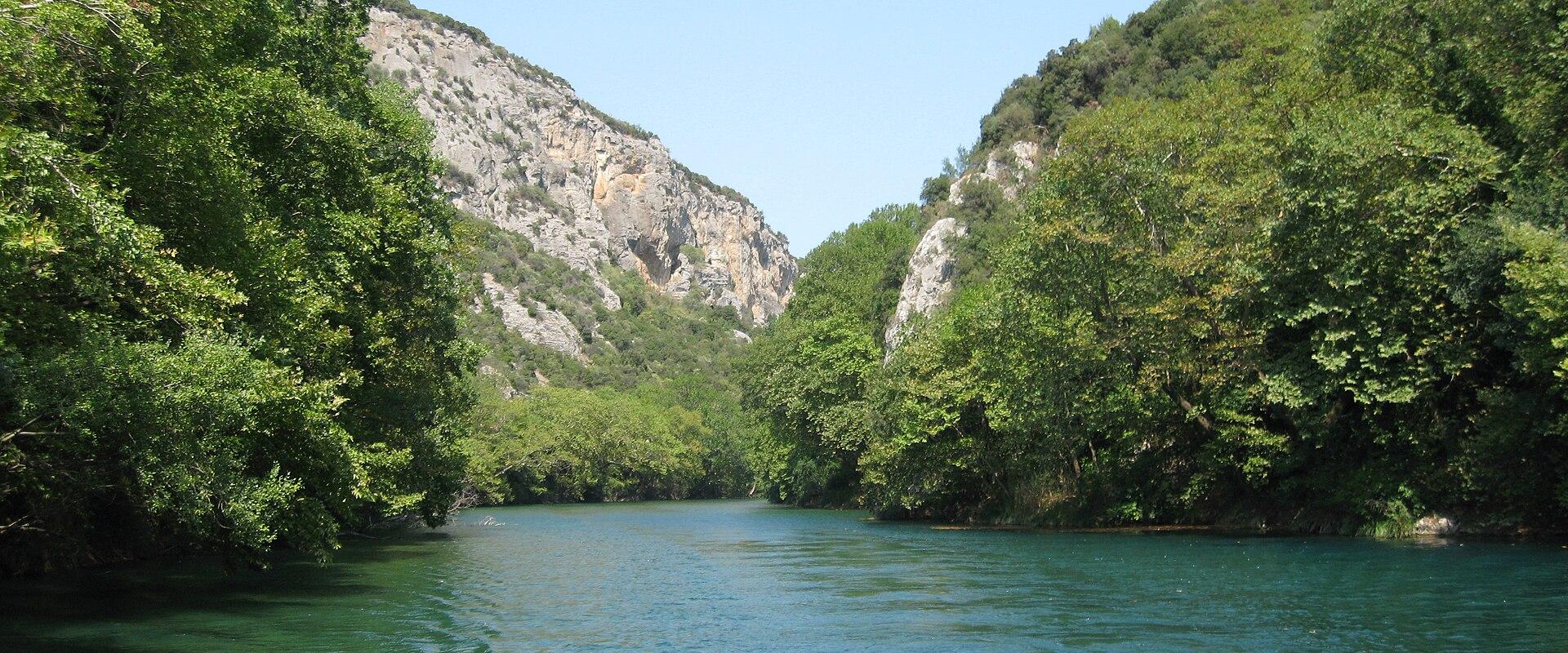
The Pinios, called Peneus in antiquity, is the great river of Thessaly. It rises in the Pindus mountains near Metsovo, flows east across the plain through Trikala and Larissa, and leaves the plain through the narrow Vale of Tempe before reaching the Thermaic Gulf. Over its course of more than two hundred kilometres it has shaped the farmland of central Greece, supplying water to what has been called the country's breadbasket, and it gave the region much of its character.
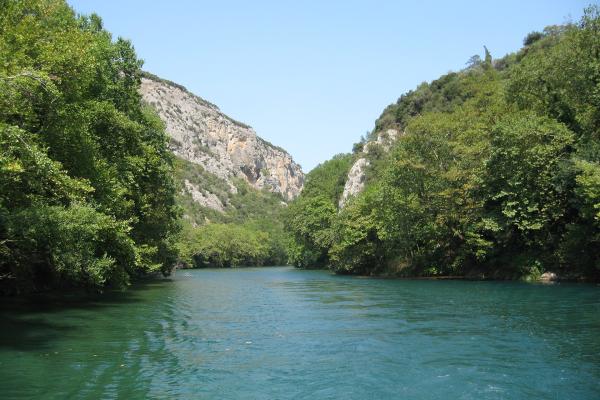
The river has been important since the earliest times. Excavations in the area have turned up Paleolithic tools, including finds from nearby Theopetra Cave, which show that people hunted and camped here in the Stone Age, and the fertile floodplain later supported some of the earliest farming villages in Europe. Ancient writers made the Vale of Tempe, the gorge between Mount Olympus and Mount Ossa, a symbol of natural beauty and a sacred place associated with Apollo and his laurel. Today the gorge still carries the main road and railway from the plain to the north, and a small chapel stands beside the river in a steep, wooded setting.
In Larissa the Pinios flows right through the city, and its banks have been laid out as a long green promenade with trees, paths, cafes and bridges. Locals walk, run and cycle here, and the riverside is the setting for the old quarter, the ancient theatre and the Mill of Pappas. In the Tempe area, near the village of Omolio, the valley narrows into wooded slopes, and near the river's mouth on the Thermaic Gulf the water slows and spreads into marshes, forming a protected wetland. The area is recognised for its birdlife, with many species recorded, and it is a place for birdwatching in spring and autumn when migrants pass through.
Outdoor activities add another dimension on the Pinios River. Rafting, kayaking and canoeing are offered on stretches of the river, and quieter sections suit paddling and fishing. Walkers can follow riverside paths, and cyclists can use flat tracks across the plain. The river is also the setting for a number of small villages with tavernas that serve local fish and farm produce.
For visitors interested in nature, the best conditions are the best conditions in spring, when flows are higher and the surrounding fields are green, and in autumn, for birds. Summer brings low water and heat, so early morning and evening are more comfortable. The river forms a natural thread connecting Trikala, Larissa and Tempe, and a drive along its valley is an easy way to see the landscape of Thessaly.
Categories
More photos coming soon
Nearby Attractions
Other places to visit in Larissa
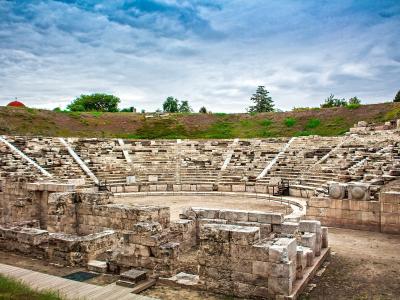
Ancient Theatre Of Larissa
3rd-century Hellenistic theatre in Larissa
Ancient Ruins · Theaters
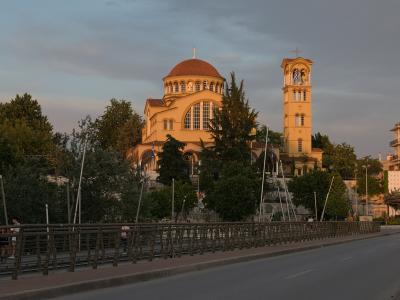
Agios Achillios (The Frourio/ Fortress)
Basilica on the Hill of the Castle in Larissa
Free Historic Sites & Ruins · Religious Heritage
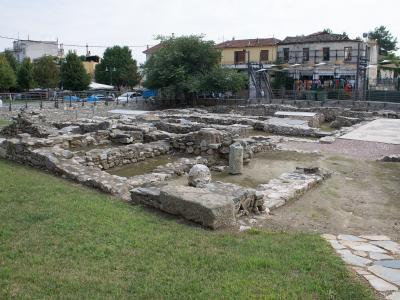
Early Christian Basilica Of Saint Achilles
6th-century basilica with mosaic floors
Historic Sites & Ruins · Religious Heritage
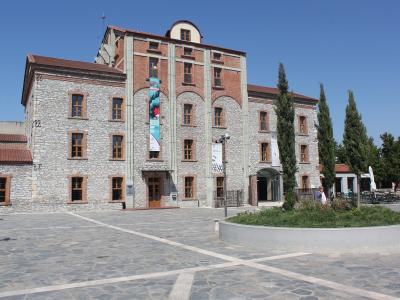
Mill Of Pappas
1893 industrial heritage site and cultural hub
Historic Mansions
Questions people ask
Quick Facts
Best Time to Visit
May and June offer comfortable temperatures and lower humidity, ideal for exploring.