


The Golden Drizzle: A Whisper of Home
Late October in Crete brings a specific crispness to the air, a sharp, clean note that signals the end of one season and the beginning of another. It is the time when the olive harvest begins, and the air fills with the distinct, green scent of crushed leaves. This is not merely a change in weather; it is a shift in the rhythm of the island.
The air is filled with the rhythmic thud of wooden poles striking branches, a sound that echoes through the hills like a heartbeat. Neighbors gather in small, informal groups, working side by side to bring in the year’s harvest. This is not merely labor; it is a communal ritual that binds the community together. From this shared effort, amber oil emerges, carrying the sun’s warmth within its depth. It is a quiet, profound joy that connects us deeply to the land, capturing the essence of Crete in a single, golden drop.
The Art of the Hand-Pick
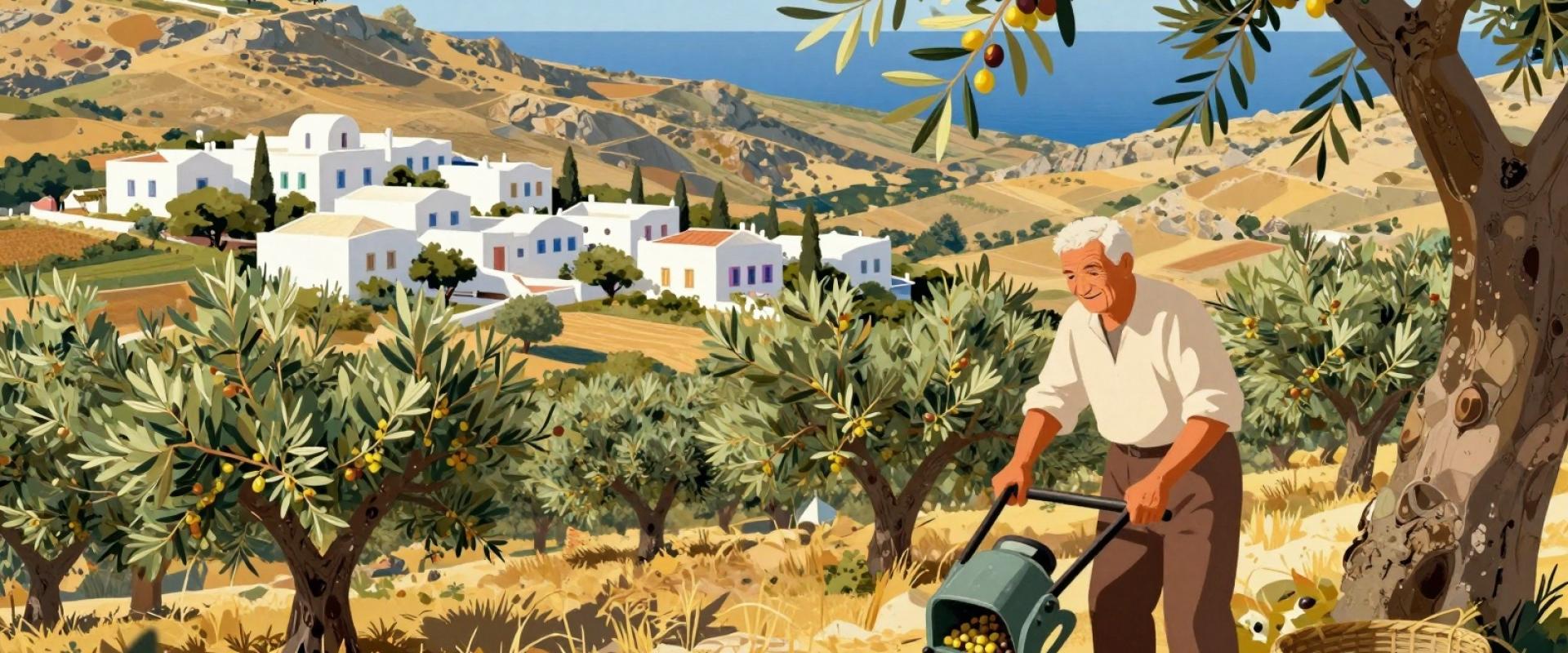
While modern machinery chugs through the groves with brute efficiency, there is a gentle, skilled grace in the traditional methods that still define Cretan agriculture. Here, farmers use long, slender rakes to gently comb the branches, allowing the ripe, grey-green olives to fall into large, woven nets spread beneath the canopy.
This careful approach is not just about tradition; it is practical. Unlike olives that are stripped by machine, which can bruise the fruit and oxidize the oil, these hand-picked treasures are treated with care. The process is slow, requiring patience and a gentle touch to avoid bruising the delicate flesh. This attention to detail ensures that the resulting oil is rich, complex, and vibrant. It is a testament to the skill involved in traditional farming, honoring the land by preserving the integrity of the fruit in every drop.
The First Press: Tasting the Liquid Gold
The act of pressing is treated with a gravity that borders on religious. From mid-October through December, farmers navigate the grey-green hills, their movements precise and deliberate. This is not just agricultural labor; it is a cultural ritual that defines the island’s identity.
When the time comes for the press, the transformation is immediate. The oil that emerges is a vibrant, green-gold liquid, far removed from the muted, filtered oils often found on standard supermarket shelves. The first taste is an experience in itself: bright, grassy, and peppery. This specific flavor profile is no accident; it is the direct result of the unique microclimate and the specific mineral composition of the Cretan soil.
The peppery kick that lingers on the palate is a hallmark of high-quality, extra virgin olive oil. It is a sensory link to the ancient past, a reminder that the food on your plate is a direct connection to the land and the hands that tended it. Each bottle is a unique expression of its terroir, capturing the specific sun, soil, and season of that year.
Beyond the Oil: Wine, Koutso, and Community
The true magic of the harvest, however, lies not in the oil, but in the people. As the sun sets over the grey-green hills, the work pauses, and the real celebration begins. This is where the harvest transitions from a chore to a communal feast.
Locals gather, bringing with them bottles of local wine and simple, savory dishes made from the season’s best ingredients. Strangers become friends over shared plates of dakos or fresh cheese. The air fills with the scent of wild thyme, olive oil, and laughter. It is in these moments, under the open sky, that the true spirit of Crete is revealed. The connection is not just to the land, but to each other, bound by the shared experience of labor and the reward of rest.
This is the heart of the island: a place where tradition is not just preserved, but lived. It is an invitation to slow down, to taste the history in every bite, and to feel the warm, enduring pulse of the land.