Start With One Island Group
Greece has around 200 inhabited islands, but the ferry network is not a grid. Boats run mostly from the mainland out to an island group and along chains of islands within it, and connections between groups are fewer, slower or seasonal. The single most useful planning decision is to stay within one group, or two neighbouring ones, for a trip of one or two weeks.
The main groups are:
- Cyclades: Mykonos, Santorini, Paros, Naxos, Milos, Ios, Syros, Folegandros, Sifnos and many smaller islands. The densest summer ferry network and the classic first trip.
- Dodecanese: Rhodes, Kos, Patmos, Symi, Leros, Kalymnos and others, close to the Turkish coast. Long from Piraeus, so many visitors fly into Rhodes or Kos and hop from there.
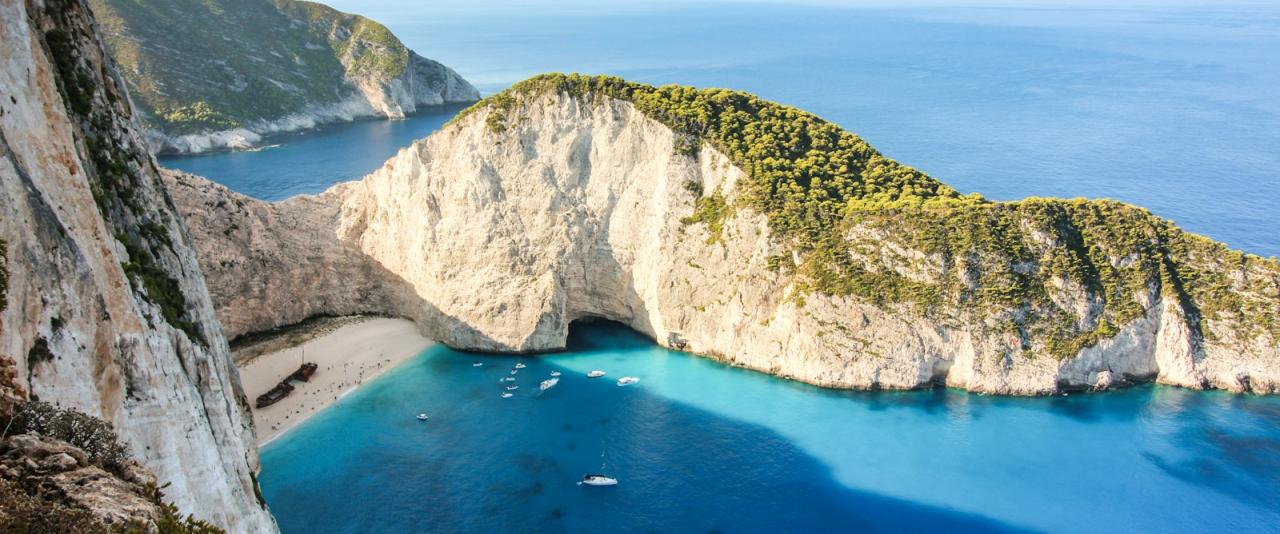
- Ionian: Corfu, Lefkada, Kefalonia, Ithaca and Zakynthos, off the west coast. Connections between them are limited; a car and the mainland ports of Igoumenitsa or Kyllini are often part of the route.
- Saronic: Aegina, Agistri, Poros, Hydra and Spetses, close to Athens and easy for short trips.
- Sporades: Skiathos, Skopelos and Alonissos, reached from Volos or Agios Konstantinos on the mainland.
- North Aegean: Lesvos, Chios, Samos, Ikaria and Lemnos, larger and far apart.
Crete links to the Cyclades by summer fast ferries and to Piraeus by overnight ships, so a Cyclades-then-Crete route works well.
Athens' Three Ferry Ports
Piraeus is the main port for the Cyclades, Crete, the Dodecanese and the Saronic islands. It is large, with departure gates spread along the waterfront; check your gate number in advance and allow time to walk or take the free shuttle along the port. Metro line 1 and line 3 both reach Piraeus.
Rafina, east of Athens and closer to the airport, serves Andros, Tinos, Mykonos and other Cyclades, often with shorter crossings. Lavrio, south-east of Athens, serves Kea, Kythnos and some northern Cyclades routes. Buses from central Athens and the airport run to Rafina and Lavrio.
Fast Ferries or Conventional Ships
Greek ferries fall into two broad types. Conventional ferries are large car-carrying ships that are slower but have open decks, cafeterias and more room, and they cope better with rough seas. High-speed catamarans and hydrofoils can halve the journey time, cost more, and usually confine passengers indoors with assigned seats. In strong wind they are the first to be cancelled or delayed, and the motion can be uncomfortable.
On a long hop, the time saved by a fast boat is real. On a rough day, a big conventional ship is usually the better ride.
Booking Tickets
Most operators sell tickets on their own websites, and aggregator sites show combined timetables across companies, which is useful for seeing every option on a route. Tickets are usually electronic and issued in the passenger's name as it appears on the passport or ID, which you show at boarding.
Summer timetables are typically published in spring. Book ahead for July and August, for car spaces, for cabins on overnight boats and for weekends around Greek public holidays such as Orthodox Easter and the 15 August holiday. Outside peak season, buying a few days ahead is usually fine, but frequencies drop sharply between November and March and some routes stop altogether.
Wind, Delays and Buffers
The meltemi is a strong, dry northerly wind that blows across the Aegean in summer, most often in July and August. When it is strong, the port authorities can ban departures, and fast ferries are cancelled first. Plan a buffer: do not schedule a ferry for the day of your international flight, and if possible return to Athens, or to the island you are flying from, a day early.
Three Sample Routes
- First-time Cyclades (10–12 days): Piraeus to Naxos, then Paros, then Santorini, flying home from Santorini or returning by ferry. Naxos and Paros are connected by frequent short crossings.
- Quieter Cyclades (10 days): Piraeus to Milos, then Folegandros and Sifnos, back to Piraeus. Check that the connections between these smaller islands run on your dates.
- Dodecanese (7–10 days): Fly to Rhodes, take day trips to Symi, then hop north to Kos and Patmos, and fly out of Kos.
Practical Notes
Islands charge the national climate resilience fee per room per night on top of accommodation prices. Cruise passengers arriving at Santorini and Mykonos pay a separate port fee, but ferry passengers do not. Pack light: ramps, gangways and harbour streets are much easier with one bag. And keep an eye on the ferry company's notices on travel days, since departure times can change at short notice.