How to Choose a Greek Beach
Greece has a very long coastline and thousands of beaches, so the useful question is not which beach is best but which kind suits you. The Ionian coast, facing Italy, has green hills and white cliffs above bright turquoise water. The Cyclades are drier and windier, with sand and pebble coves between bare hills. Crete has everything from lagoons to long sandy bays, and the mainland Peloponnese has some of the emptiest beaches in the country.
Two things shape the experience more than the scenery. The first is wind: the summer meltemi blows from the north across the Aegean, mostly in July and August, so south-facing coves are calmer on windy days. The second is access. Many famous beaches are at the end of dirt roads or reachable only by boat, and some fill up completely by late morning.
Crete
Balos, on the Gramvousa peninsula in the far north-west, is a shallow lagoon between the peninsula and Cape Tigani. You reach it by a long unsealed road and a steep path down, or by day boat from Kissamos. It is protected as a Natura 2000 site and very crowded in high season.
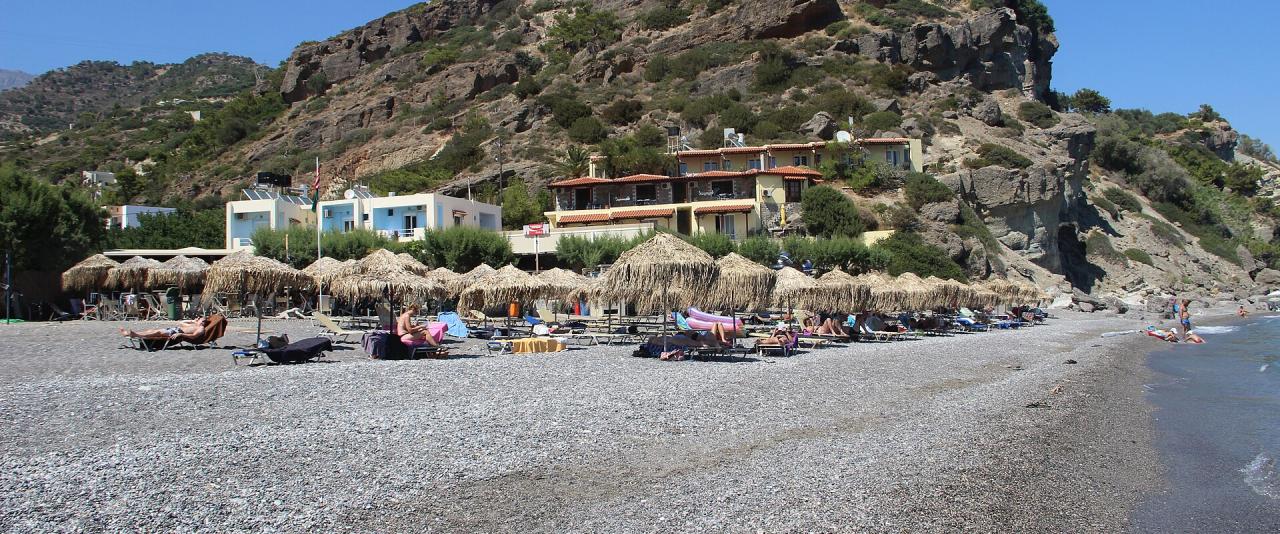
Elafonisi, on the south-west tip, is known for patches of pink-tinged sand and shallow water that suits children. The islet itself is protected; keep to marked areas and do not take sand or shells. Falasarna, on the west coast, is a long open sandy beach that faces the sunset. On the south coast, beaches such as those around Plakias and the boat-only coves near Loutro are quieter and backed by mountains.
The Ionian Islands
Myrtos on Kefalonia is a long white-pebble beach below steep cliffs, seen at its best from the viewpoint on the road above. The pebbles shelve quickly into deep water, so it is better for swimmers than toddlers. Porto Katsiki on Lefkada sits at the foot of white cliffs and is reached by a long flight of steps from the car park.
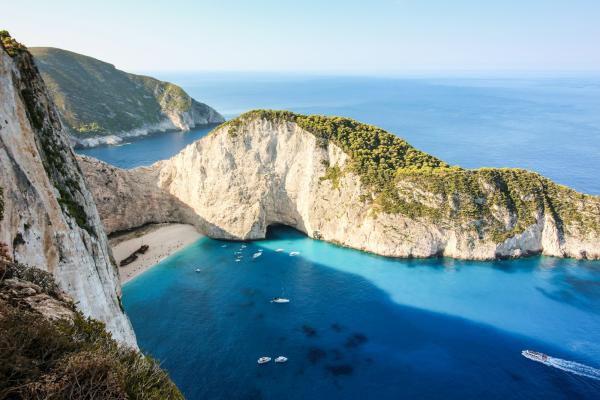
Navagio, the shipwreck beach on Zakynthos, is famous from the clifftop viewpoint. After rockfalls in 2018, the authorities restricted landing and swimming there, and rules have changed several times since; check the current position before booking a boat trip that promises a landing. On Corfu, the west coast around Paleokastritsa has small coves among green headlands.
The Cyclades
Milos is known for its coastline more than its sand. Sarakiniko is a moonscape of white volcanic rock with a narrow inlet; there is little shade and almost no sand, but it is unlike anywhere else. Kleftiko, on the south-west, is a group of sea arches reached only by boat.
Naxos has the longest sandy beaches in the group along its west coast: Agios Prokopios, Agia Anna and Plaka run into each other, with shallow water and space even in August. Paros has Kolymbithres, with rounded granite boulders, and Golden Beach on the east, which is a windsurfing centre. On Mykonos and Ios the best-known beaches are organised with sunbeds and music; quieter options exist on both islands, but you will need a vehicle or a boat.
The Mainland and Nearby Islands
Voidokilia in Messinia, near Pylos, is a semicircular sandy bay with a narrow mouth, below the ruins of a Frankish castle and the cave traditionally linked to Nestor. It lies within a Natura 2000 area around the Gialova lagoon. Simos, on the island of Elafonisos off the south-east Peloponnese, has sand dunes and shallow water and is reached by a short car ferry from Pounta.
Closer to Athens, the Athens Riviera south of the city has organised beaches reachable by tram and bus, and the Pelion peninsula combines forested mountain villages with pebble coves on its eastern Aegean side.
Practical Advice
Sunbed and umbrella sets are rented at most organised beaches, and prices on famous beaches can be high; almost every beach also has a free stretch where you can lay a towel. Bring water and shade to remote beaches, since many have no kiosk outside July and August.
Greece has a large number of Blue Flag beaches, a voluntary award for water quality and services; the absence of a flag does not mean a beach is unsafe. Lifeguards are present only on some organised beaches. Swim within your limits on exposed beaches during the meltemi, when waves and currents build quickly. The sea is warmest from July to early October, and June and September are the best months for space and settled weather.