

Start with Fewer Islands
The most common mistake on a family trip to Greece is trying to see too many islands. Every move means packing, a transfer, a ferry that may be delayed and a new room to settle into. With young children, one island for a week, or two islands in ten days to two weeks, usually works better than a classic island hop.
Choose a base where you can reach a beach without a long drive, ideally an apartment with a kitchenette and air conditioning, and keep one or two day trips for variety.
Islands That Suit Families
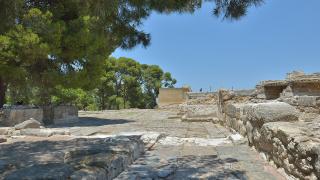
Islands with direct international flights cut out a ferry altogether. Crete, Rhodes, Kos and Corfu all have airports with charter and scheduled flights in summer, plenty of family accommodation and sandy beaches. Crete is large enough for a two-centre trip, with Knossos and the Heraklion museum as an introduction to ancient history.
In the Cyclades, Naxos is the strongest family choice. Its west coast has long sandy beaches with shallow water, such as Agios Prokopios, Agia Anna and Plaka, and the island grows much of its own food. Paros has good beaches and is a hub for onward ferries. Close to Athens, Aegina and Agistri can be reached by short ferries from Piraeus, which is useful if you want a few island days at the end of a city visit.
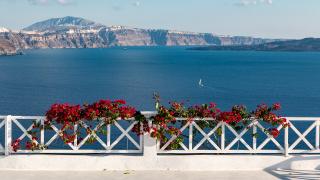
Islands with steep cliffs, long steps and few sandy beaches, such as Santorini, are spectacular but harder work with a pushchair, and they are among the most expensive.
Ferry Days
Domestic ferries are run by several companies and booked through their websites or agents; summer sailings to popular islands should be booked in advance. Large conventional ferries are slower but more stable and roomier than high-speed catamarans, which matters for children prone to seasickness. On a conventional ferry you can walk around, sit on deck and buy food. Children travel free or at reduced fares depending on age and operator; check the conditions when booking.
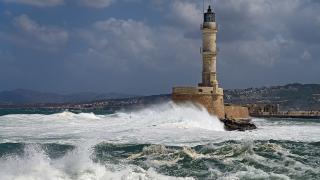
Arrive at the port well before departure, since boarding is quick and vehicles load first. Keep a day bag with snacks, water, hats and seasickness remedies with you rather than in the luggage stored in the hold. Strong summer winds sometimes delay or cancel sailings, so avoid scheduling a ferry on the day before your flight home.
Heat, Sun and Health
July and August are hot, and the midday sun is strong. Follow the local rhythm: beach in the morning, lunch and rest in the shade in the early afternoon, and back out from late afternoon. Many shops close in the afternoon on smaller islands anyway. Use high-factor sunscreen, sun hats and UV swim tops, and carry water everywhere.
Pharmacies, marked with a green cross, are common and pharmacists give advice on minor problems. Larger islands have hospitals or health centres; small islands may have only a clinic, with serious cases transferred elsewhere. EU visitors should carry a European Health Insurance Card, and everyone should have travel insurance. The emergency number is 112.
Beaches with Children
Look for sandy beaches with gently shelving water, and pay attention to the wind. In July and August the meltemi blows from the north across the Aegean, so south-facing beaches are usually calmer. Pebble beaches often shelve steeply into deep water, which is fine for strong swimmers but less suitable for toddlers. Water shoes help on rocky shores and near sea urchins.
Lifeguards are present only on some organised beaches. Organised beaches also rent sunbeds and umbrellas, which provide shade, while free stretches let you bring your own.
Getting Around and Eating Out
If you hire a car, request child seats when booking; they are required by law for young children and supply on islands can be limited in peak season. Some families bring their own. Island roads are often narrow and winding, and drivers can be impatient.
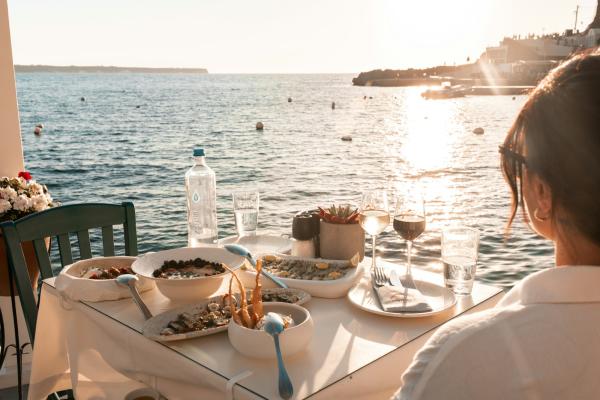
Greek tavernas are generally relaxed about children, and families eat late, often after nine in the evening in summer. Shared plates suit children well: grilled meat, chips, rice-stuffed tomatoes, keftedes (meatballs), cheese pies, yoghurt and fruit. Restaurants rarely have formal children's menus, but kitchens will usually adapt a simple dish. Supermarkets on larger islands stock baby food and nappies; on small islands choice is limited, so bring essentials.