Getting Oriented
Kos is a long, narrow island in the Dodecanese, a few kilometres off the Turkish coast near Bodrum. Its main town, also called Kos, sits at the north-eastern tip, where the harbour is. The airport is near Antimachia in the middle of the island, and the main resorts line the north coast (Tigaki, Marmari, Mastichari) and the south coast (Kardamena, Kefalos). Much of the island is flat, which makes it one of the easiest Greek islands to cycle, and Kos Town has a network of bike lanes.
Three days is enough to see the main sights at a relaxed pace. Base yourself in or near Kos Town for the first two nights; it has the best connections for buses, boats and the island's ancient sites.
Day 1: Kos Town
Kos Town is unusual among Greek island towns because its ancient city lies exposed in the middle of the modern one. Large parts were excavated by Italian archaeologists after an earthquake in 1933 levelled much of the town, which was then under Italian rule.
Start at the Ancient Agora, an open archaeological area beside the harbour with columns, stoas and the foundations of temples. Next to its entrance stands the Plane Tree of Hippocrates, an old, heavily propped plane tree associated by tradition with the physician Hippocrates, who was born on Kos in the 5th century BC; the tree itself is far younger than that. Across the bridge is the Castle of the Knights (Neratzia), built by the Knights of St John. Parts of the castle and other monuments in Kos Town were damaged in the 2017 earthquake, and access has varied during restoration, so check current opening before you go.
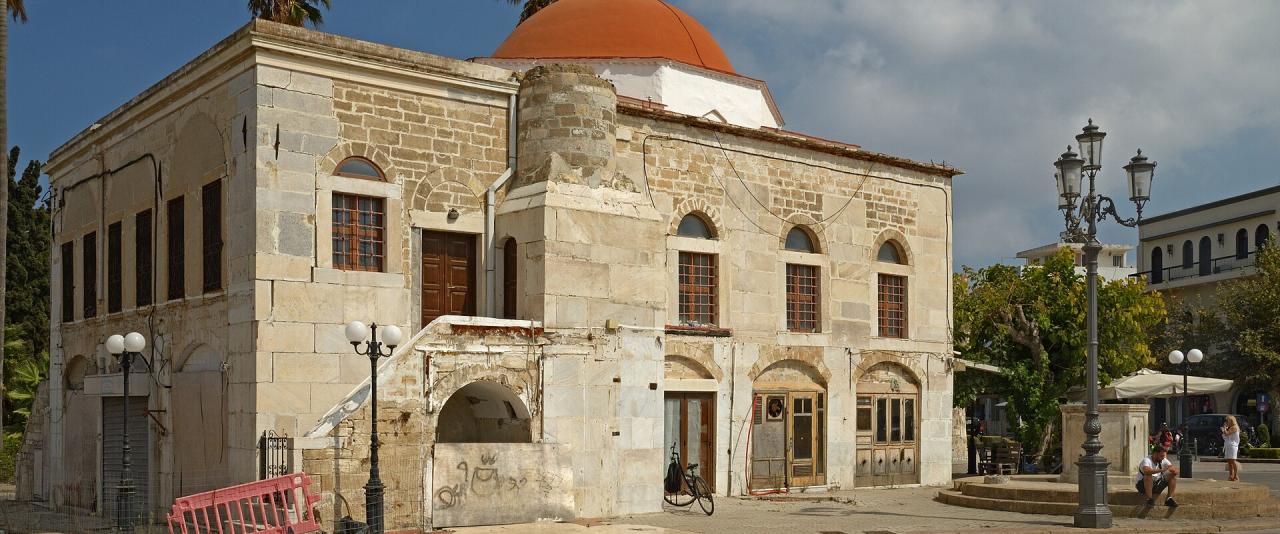
In the afternoon, walk to the western archaeological zone with its Roman mosaics and colonnaded street, and to the Casa Romana, a restored Roman house. The Archaeological Museum on Eleftherias Square holds sculpture and mosaics from the island, including a statue traditionally identified as Hippocrates. The Defterdar Mosque stands on the same square, a reminder of the Ottoman period.
Day 2: The Asklepieion and the Mountain Villages
The Asklepieion, about 4 kilometres south-west of Kos Town, is the island's most important ancient site: a healing sanctuary dedicated to Asclepius, built on three terraces climbing a wooded hillside, with views over the town and across to Turkey. It was a centre of medical treatment and teaching in the Hellenistic and Roman periods. You can cycle there, take a local bus or the small tourist train. Go early in the day, as the terraces have little shade.
In the afternoon, drive or take a bus into the Dikeos mountains. Zia is the best-known of the mountain villages, with tavernas on the slope facing west, and it is busy at sunset for that reason. Further along the mountain road, Old Pyli is an abandoned Byzantine settlement below a ruined castle, reached by a short walk; it is quieter and gives a sense of how the island looked before tourism.
Day 3: Nisyros or the Beaches
Option one: Nisyros. The small volcanic island of Nisyros lies south of Kos and is reached by daily boats in season, mainly from Kardamena and from Kos Town. Day trips usually include a bus up to the caldera, where you can walk down into the Stefanos crater, a hydrothermal crater with steaming fumaroles and a strong smell of sulphur, and time in the harbour village of Mandraki. Wear closed shoes; the crater floor is hot and uneven.
Option two: the beaches. The north coast beaches near Tigaki and Marmari are long and sandy, and the Alykes salt lake behind Tigaki attracts flamingos and other wetland birds in winter and spring. The north coast is windy in summer, which suits windsurfers and kitesurfers. In the south-west, the beaches below Kefalos are more sheltered; Agios Stefanos has the ruins of an early Christian basilica beside the beach, facing the small islet of Kastri with its chapel.
End the day at Therma (Empros Thermes), south-east of Kos Town, where hot spring water runs into a pool of rocks on the beach and mixes with the sea.
Getting Around
- Buses: The KTEL bus network links Kos Town with the main resorts, villages and the airport. Kos Town also has its own town buses.
- Bikes: Bike hire is widely available and the flat north coast is easy to ride. Bike lanes run through Kos Town and along the coast.
- Car or scooter: Useful for Zia, Old Pyli, Kefalos and Therma at your own pace.
- Boats: Ferries connect Kos with Piraeus, Rhodes, Kalymnos, Patmos and other Dodecanese islands, and there are boats to Bodrum in Turkey (a passport is required, and border checks apply when leaving and re-entering the Schengen Area).
Practical Notes
Kos is busiest from June to September, and July and August are hot. May and October suit sightseeing better. Archaeological sites charge entrance fees and tickets can be bought on the official hhticket.gr site. Accommodation on Kos, as across Greece, adds a per-night climate resilience fee to the room rate.