Getting Your Bearings
Rhodes Town sits on the northern tip of the island of Rhodes, the largest of the Dodecanese. It has two distinct parts. The Old Town is the walled medieval city built by the Knights of St John, who held the island from the early fourteenth century until the Ottoman conquest of 1522; it is a UNESCO World Heritage Site and one of the best-preserved medieval towns in Europe. The New Town, around Mandraki harbour, has hotels, shops and public buildings from the Italian period of rule in the early twentieth century.
Diagoras airport lies on the west coast, around 20 minutes by taxi from town, and buses run into the centre. Inside the Old Town, the lanes are cobbled and largely car-free, so stay inside or near the walls and walk.
Day 1 Morning: The Knights' Quarter
Start at the top of the Old Town, in the Collachium, the quarter reserved for the Knights. The Street of the Knights (Ippoton) runs downhill from the palace and is lined with the inns of the Order's different "tongues", grouped by language and nationality, with their coats of arms over the doorways.
At its top stands the Palace of the Grand Master. The original building was badly damaged by an explosion in 1856, and what you see is largely an Italian reconstruction of the 1930s, furnished with mosaics brought from Kos and other sites. It is impressive as a building, but treat it as a twentieth-century interpretation rather than an untouched medieval interior.
At the bottom of the street, the Hospital of the Knights now houses the Archaeological Museum, with finds from ancient Rhodes and the island's other ancient cities in a medieval building built around a courtyard.
Day 1 Afternoon and Evening: The Wider Old Town
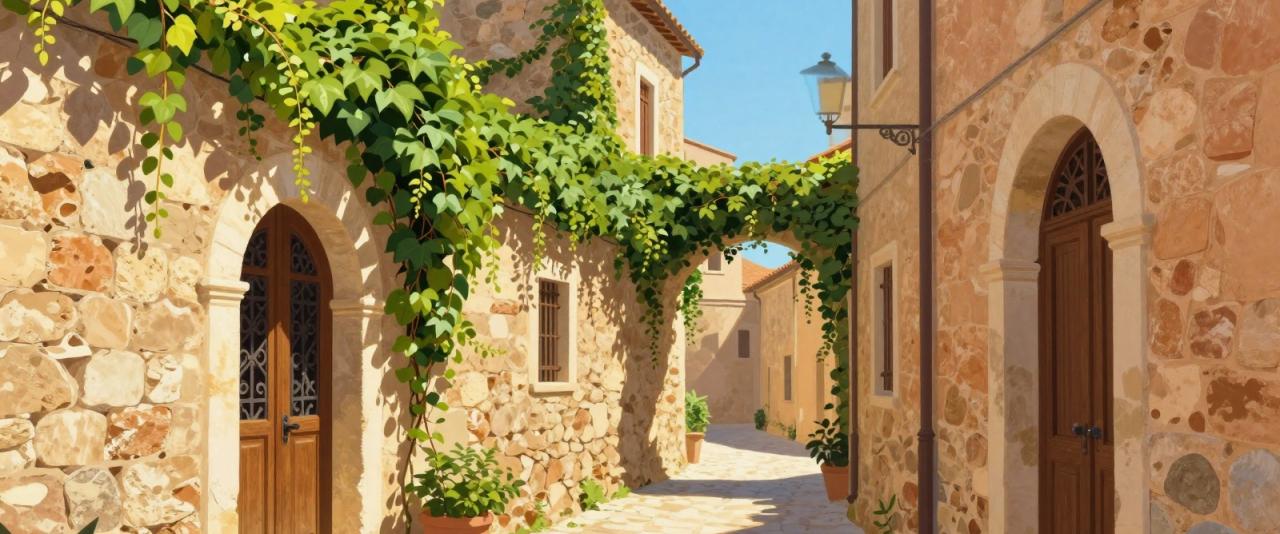
South of the Collachium, the Old Town becomes a residential maze. Sokratous Street is the main commercial lane, busy with shops; the Mosque of Suleiman with its striped minaret stands at its western end. The Ottoman period left mosques, fountains and a hammam throughout the town.
In the east is the Jewish Quarter. The Kahal Shalom Synagogue, dating from the sixteenth century, is considered the oldest synagogue still standing in Greece, and the adjoining museum tells the story of Rhodes's Jewish community, most of which was deported and murdered in 1944. The Square of the Jewish Martyrs nearby commemorates them.
In the evening, walk part of the city walls or the dry moat if open, and eat in the Old Town or in the lanes just outside it, where prices tend to be lower than on the main squares.
Day 2 Morning: Mandraki and the New Town
Mandraki harbour is lined with yachts and excursion boats. At its entrance, two columns topped by bronze deer mark the spot where tradition places the Colossus of Rhodes; in fact the statue's location is unknown, and it is unlikely to have straddled the harbour. The harbour mole carries three medieval windmills and the Fort of St Nicholas.
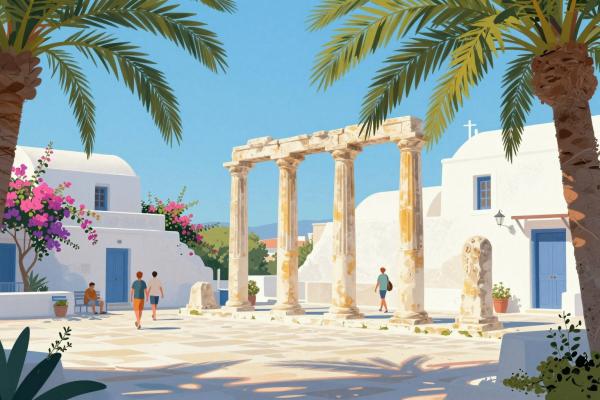
Along the waterfront are buildings from the Italian period, including the Governor's Palace, the church of the Annunciation and the market hall known as the Nea Agora. A short bus or taxi ride uphill, Monte Smith holds the ancient Acropolis of Rhodes, with a partly reconstructed stadium, a small theatre and the columns of the Temple of Apollo, and views over the west coast.
Day 2: Lindos or Symi
For the rest of the second day, choose one excursion. Lindos, about 50 kilometres south on the east coast, is a white village below an acropolis crowned by the Temple of Athena Lindia, with a Knights' castle wrapped around it. Go early: the climb is short but steep and exposed, and the village fills with day visitors by late morning. Buses run from Rhodes Town, and boats run along the coast in summer.
Alternatively, take a ferry or excursion boat to Symi, a small island with a harbour of neoclassical houses climbing the hillsides. Day trips allow a few hours in the port and sometimes a stop at the Monastery of Panormitis. Closer to town, the Italian-era spa buildings at Kallithea, on the coast a short drive south, are an easier half-day option.
Practical Notes
Wear comfortable shoes with grip; the Old Town's pebble paving is uneven and slippery when polished by use. Museum and site opening hours are shorter in winter and some sites close one day a week, so check current hours and tickets with the official ticket service before planning. Summer afternoons are hot, so use them for a museum or a swim at Elli beach, the town beach on the northern tip.