Why Patmos at Easter
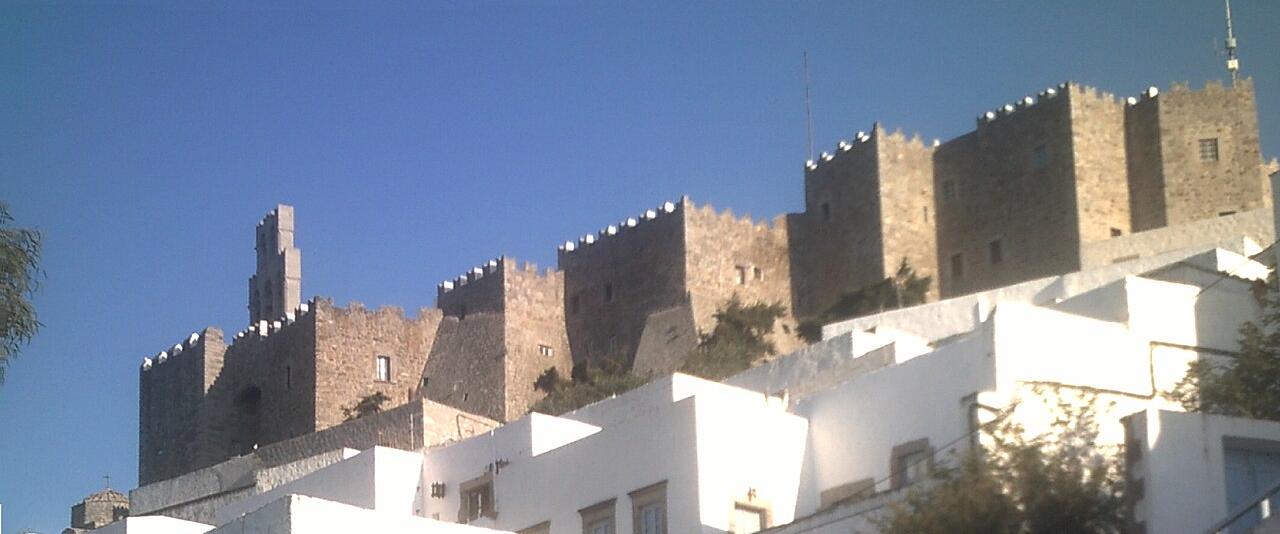
Patmos is a small island in the northern Dodecanese, with around three thousand residents. Christian tradition holds that John received the visions recorded in the Book of Revelation here, in a cave on the hillside between the port of Skala and the hilltop village of Chora. The fortified Monastery of St John the Theologian, established after the Byzantine emperor Alexios I Komnenos granted the island to the monk Christodoulos in 1088, dominates Chora. The monastery, the Cave of the Apocalypse and the historic centre of Chora are together a UNESCO World Heritage Site.
Easter is the most important festival in the Greek Orthodox year, and on Patmos the monastery keeps ceremonies that have largely disappeared elsewhere. That makes Holy Week here unusually rich for visitors, and also unusually busy for such a small island.
When Orthodox Easter Falls
Orthodox Easter follows the Julian calendar method of calculation, so it usually falls later than Western Easter and only sometimes on the same day. In 2026 it was on 12 April. In 2027 Orthodox Easter Sunday is 2 May, which puts Holy Thursday on 29 April and Holy Saturday on 1 May. In 2028 it falls on 16 April.
Plan to arrive by Wednesday of Holy Week at the latest if you want to see the Thursday ceremony, and stay through Easter Sunday afternoon.
Holy Thursday: the Washing of the Feet
The best-known event is the ceremony of the Washing of the Feet, the Niptir, held on the morning of Holy Thursday. After the liturgy at the monastery, the clergy process down to a square in Chora, where a wooden platform decorated with branches has been set up. The abbot, representing Christ, washes the feet of twelve monks representing the apostles, and the dialogue from the Gospel is read and chanted, including Peter's refusal. The abbot then withdraws to pray, recalling Gethsemane. The ceremony has been held on the island for centuries.
Space around the square is limited and fills well before the procession arrives. Arrive early, keep the platform and procession route clear, and avoid using flash. Recent years have used Emmanuel Xanthos square, but confirm the location locally.
Good Friday and the Resurrection
Over Thursday and Friday, the monastery holds services marking the Crucifixion and the Deposition from the Cross. On the evening of Good Friday, as across Greece, the epitaphios, the flower-covered bier symbolising Christ's tomb, is carried in procession from churches through the lanes of Chora and Skala, with processions meeting in the main squares.
Late on Holy Saturday night the Resurrection service is held, including at the monastery, which opens to locals and visitors. Lights are extinguished, then the Holy Light is passed from candle to candle, and at midnight the priest proclaims "Christos Anesti" (Christ is risen) and fireworks go off. Afterwards people return home or to tavernas to break the Lenten fast, traditionally with magiritsa soup and red-dyed eggs, which are cracked against each other.
Easter Sunday at the Monastery
On Easter Sunday afternoon the monastery holds the Vespers of Love, a service dedicated to the Second Resurrection. A distinctive feature on Patmos is that the Resurrection Gospel is read in several languages, a tradition symbolising the spread of the message to all peoples. Red eggs are handed out to those attending. The rest of the day is for family meals; many families roast lamb.
Respectful Visiting
These are living religious services, not performances. Dress modestly for the monastery and churches, with shoulders and knees covered. Stand back from processions, keep phones quiet, and ask before photographing people. Inside churches, follow the lead of local worshippers about where to stand. Candles are sold at churches for the Resurrection service; bring one with a protective holder or paper cup to shield the flame.
The monastery and the Cave of the Apocalypse have their own opening hours, which change during Holy Week because of services. Ask locally or at your accommodation rather than relying on standard times.
Getting There and Where to Stay
Patmos has no airport. Ferries run to Skala from Piraeus, a long trip, and from other Dodecanese islands such as Kos, Leros and Rhodes, as well as Samos. A common approach is to fly to Kos, Leros or Samos and continue by sea. Schedules in April and early May are thinner than in summer and can be disrupted by wind, so leave a buffer day.
Easter is one of the busiest periods of the year on Patmos, and Greek visitors book well in advance. Reserve accommodation several months ahead. Chora puts you closest to the ceremonies but involves a steep climb from the port; Skala has more choice and a bus and taxis up to Chora, though during the main events roads may be closed or congested, so walking is often easier.