How to use this itinerary
Central Athens is compact. Most of the ancient sites sit around the Acropolis rock and can be walked between, while the metro covers longer hops. This plan groups sights by area so you spend your time looking rather than travelling. It suits a first visit from late spring to autumn; in July and August, when average highs in central Athens reach about 34°C, do the outdoor sites early and save museums for the afternoon.
Tickets for the Acropolis are sold for timed entry slots on the official Hellenic Heritage e-ticket site. Prices for state sites and museums rose in April 2025, and the old combined ticket for the Acropolis and several other sites was withdrawn, so check current prices and buy single tickets as you go.
Day 1: The Acropolis and its museum
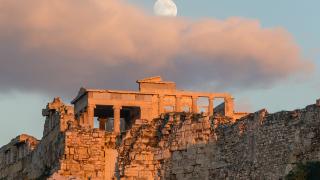
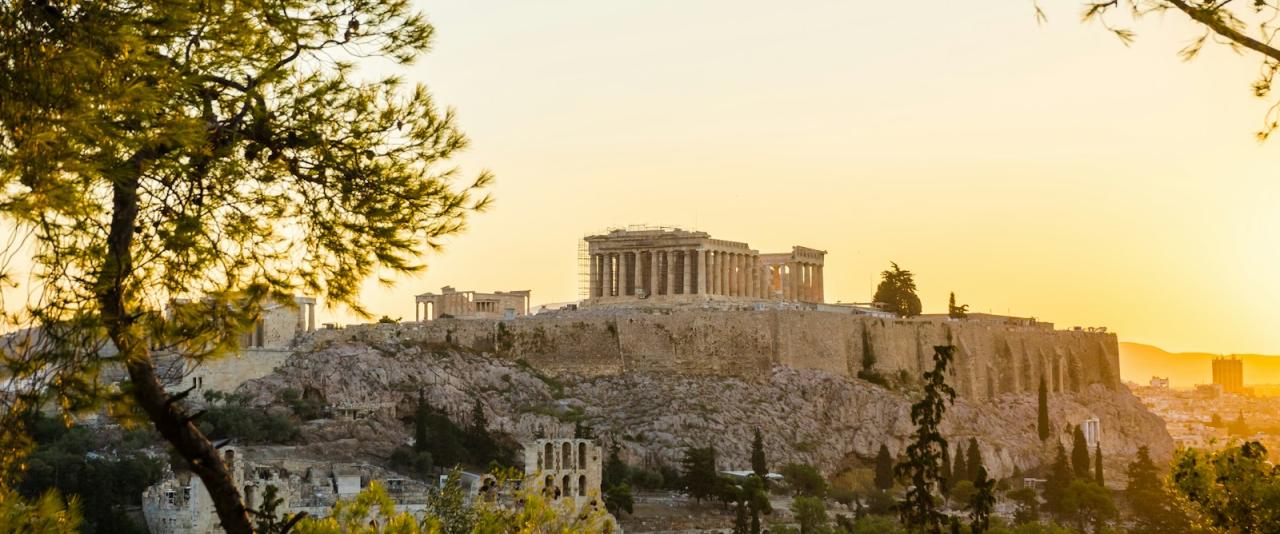
Start at opening time. The Acropolis is busiest from mid-morning, when cruise groups arrive, and the rock has very little shade. Enter from the south slope near Akropoli metro station (Line 2) and walk up past the Theatre of Dionysus and the Odeon of Herodes Atticus. On the summit, the Propylaia leads to the Parthenon, the Erechtheion with its caryatid porch, and the small Temple of Athena Nike.
In the afternoon, cross to the Acropolis Museum, a few minutes' walk from the south slope. It opened in 2009 and holds the original sculpture from the rock, including the caryatids and the Parthenon frieze displayed in a glass gallery aligned with the temple. Seeing the museum after the site makes both easier to understand.
End the day on Philopappos Hill, west of the Acropolis, for a view back to the Parthenon, then eat in Koukaki or along the pedestrian street of Dionysiou Areopagitou.
Day 2: The ancient city below the rock
Begin at the Ancient Agora, the civic centre of classical Athens. The Temple of Hephaestus on its western edge is one of the best-preserved Greek temples anywhere. The Stoa of Attalos, rebuilt in the 1950s on its original foundations, houses the Agora museum.
Walk east to the Roman Agora and the Tower of the Winds, then into Plaka, the old district on the northern slope of the Acropolis. Above it, the lanes of Anafiotika were built by islanders from Anafi in the 19th century and still feel like a Cycladic village.
After lunch, continue to the Temple of Olympian Zeus and Hadrian's Arch, then the Panathenaic Stadium, the marble stadium used for the first modern Olympic Games in 1896. Finish at Syntagma Square, where the Evzones guard the Tomb of the Unknown Soldier in front of Parliament; the change of guard happens on the hour, with a larger ceremony on Sunday mornings.
Day 3: Museums and neighbourhoods, or a day trip
The National Archaeological Museum is the most important museum in Greece for ancient art. Its collection runs from Cycladic figurines and the gold of Mycenae to the bronze statues recovered from shipwrecks and the Antikythera mechanism. Allow at least three hours. It is a short walk from Omonia or Victoria metro stations.
In the afternoon, visit Kerameikos, the ancient cemetery outside the city walls, which is usually quiet, then walk through Psyrri and Monastiraki. The Varvakios central market on Athinas Street shows everyday Athens food shopping. For the evening, climb Lycabettus Hill, the highest point in central Athens at 277 m, on foot from Kolonaki or by the funicular when it is running.
Day trip alternatives: the Temple of Poseidon at Cape Sounion, at the tip of Attica, is popular at sunset and is reached by KTEL bus or tour. Delphi is a long but rewarding day trip, about three hours each way by road, and most visitors go by organised tour or hired car.
Getting around
The metro is the easiest way to move between areas. Line 3 runs to the airport, Line 1 links Monastiraki and Thissio with Piraeus, and Line 2 serves Akropoli and Syntagma. The OASA 90-minute ticket costs 1.20 euros and a 24-hour ticket 4.10 euros; a 3-day tourist ticket for 20 euros includes a return trip to the airport. Several central stations, including Syntagma, Monastiraki and Akropoli, display finds from the excavations made during construction.
Practical tips
- Book the Acropolis slot first and build the rest of the plan around it.
- Wear shoes with grip; the marble paths on the Acropolis are worn smooth.
- Carry water; drinking fountains exist but queues are long in summer.
- During heatwaves, archaeological sites have closed during the hottest hours, so check the day's announcements.
- Many state sites have reduced hours in winter and are closed on some public holidays.