Samos at a Glance
Samos is a large, green island in the eastern Aegean, separated from the Turkish coast by the Mycale Strait, which is under two kilometres wide at its narrowest point. Unlike the dry, bare islands of the Cyclades, Samos has pine forests, vineyards and two high mountains: Mount Kerkis in the west, at 1,434 metres, and the Ampelos (Karvounis) range in the centre.
In antiquity Samos was one of the richest city-states in the Greek world, particularly under the tyrant Polycrates in the 6th century BC. The mathematician Pythagoras and the philosopher Epicurus were born here, as was the astronomer Aristarchus, who proposed that the Earth goes around the Sun. That history is the main reason to visit, alongside walking, wine and beaches.
Pythagoreio and the Heraion
The ancient city of Samos lies under and around the modern harbour village of Pythagoreio on the south-east coast. Together with the sanctuary of Hera nearby, it was inscribed as a UNESCO World Heritage Site in 1992 as "Pythagoreion and Heraion of Samos".
The Heraion, about 6 kilometres west of Pythagoreio, was one of the great sanctuaries of the Greek world, dedicated to Hera, who according to local tradition was born on Samos. Only a single standing column remains of the huge archaic temple, but the extent of the foundations conveys its scale. Bring water and a hat; there is little shade.
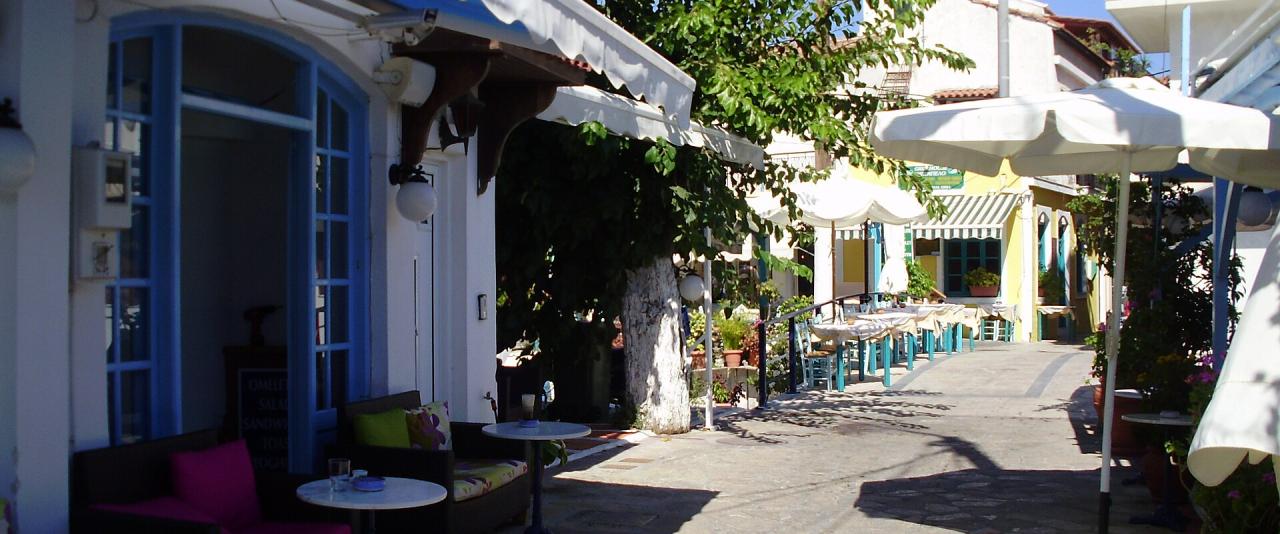
In Pythagoreio itself, the ancient harbour mole still forms part of the modern harbour, and sections of the city walls climb the hill above. The village has a small archaeological museum, and the waterfront is lined with cafés and tavernas.
The Tunnel of Eupalinos
Just above Pythagoreio is the Tunnel of Eupalinos, a 6th-century BC aqueduct dug through a mountain to bring water to the ancient city. It is just over a kilometre long and was dug from both ends at once, with the two teams meeting close to the middle, a remarkable achievement of ancient engineering and surveying. Visits are in small timed groups and only part of the tunnel is open, with routes that differ in length and difficulty. The passages are narrow and low in places, so it is not suitable for anyone claustrophobic. Check visiting arrangements and book ahead in summer.
Vathy and the Archaeological Museum
The island's capital is Samos Town, also known as Vathy, set at the end of a deep bay on the north-east coast. Its Archaeological Museum is one of the best in the Aegean islands, holding finds from the Heraion including a marble kouros about five metres tall, the largest surviving statue of its type. The older upper town, Ano Vathy, has steep lanes and traditional houses worth a walk.
Kokkari, Potami and the North Coast
Kokkari, a former fishing village west of Vathy, is the most popular base on the north coast, with a pebbly town beach and a string of larger beaches to the west, including Lemonakia and Tsamadou. The north coast catches the summer wind, which makes it popular with windsurfers.
Further west, near the port of Karlovasi, Potami beach is backed by a short river walk to a series of small waterfalls and pools. Beyond it, a coastal footpath leads to the Seitani coves, Mikro and Megalo Seitani, within a protected area that is a habitat for the Mediterranean monk seal. They are reachable only on foot or by boat, so take water and leave no trace.
Mountain Villages and Muscat Wine
Inland, villages such as Manolates, Vourliotes and Ambelos sit on the slopes of the Ampelos range among vineyards and forest, connected by old footpaths. Pyrgos in the south-west is known for honey.
Samos is famous for its sweet Muscat wine, made from small-berried Muscat grapes grown on terraced vineyards. Most of the island's production is handled by the Union of Winemaking Cooperatives of Samos, which runs a wine museum in Malagari near Vathy. Dry whites from the same grape are also worth trying.
Getting There and Around
Samos has an airport near Pythagoreio with flights from Athens year-round and international charter flights in summer. Ferries from Piraeus are long, typically calling at Ikaria on the way, and in season there are connections to Fourni, Patmos and other Dodecanese islands. Passenger boats also run to Kusadasi in Turkey, near Ephesus; take your passport, as you leave and re-enter the Schengen Area.
The island is large, so a rental car is the most practical way to combine the south-coast sites with the north coast and the mountain villages. Buses link the main towns but are infrequent. May, June and September are the most comfortable months for walking and sightseeing.